
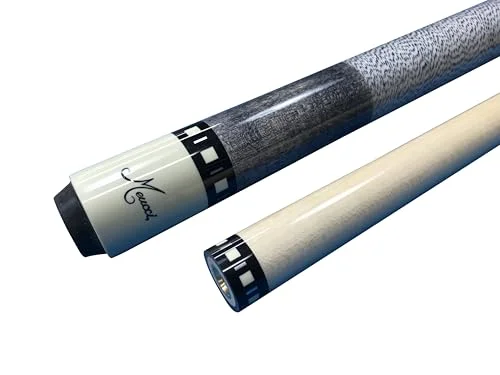
- Soft, communicative hit that rewards a developed stroke
- Robot-tested Pro Shaft for shaft-to-shaft consistency
- American-made with a long pro tournament pedigree
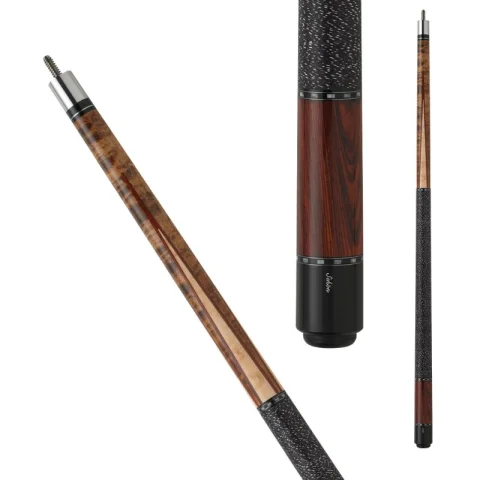
The best pool cue brands pair quality materials with shaft consistency you can feel from the first shot to the five-hundredth. After years of playing with cues across every price range, here are the 10 brands that consistently deliver for players at every level.
I’ve owned cues from five of these brands and played extensively with all ten. Price separates them less than you’d expect. What actually matters is whether the cue feels the same on shot 1 and shot 500, and whether the shaft stays straight through a humid summer. After that it comes down to whether the company still answers the phone three years later.
Pool cue brands at a glance
| Brand | Founded | Origin | Signature tech | Price range | Best for |
|---|---|---|---|---|---|
| Meucci | 1978 | Olive Branch, MS | Soft hit, robot-tested shafts | $400 to $1,500+ | Position players |
| Schon | 1981 | Wisconsin | Handmade, exotic-wood inlays | $700 to $2,500+ | Custom-cue buyers |
| Lucasi | 2002 | Imported (US-designed) | Zero Flex Slim hybrid shaft | $150 to $700 | Intermediate value |
| Pechauer | Early 1980s | Wisconsin | Engineered joint + ROGUE carbon | $300 to $1,200 | League players |
| Jacoby | 1997 | Wisconsin | 35-lamination Black Dot maple | $400 to $1,500 | Wood-shaft loyalists |
| Predator | 1994 | USA / Mexico mfg | 314 + Revo low-deflection | $400 to $1,500+ | Competitive players |
| Mezz | 1998 | Japan | WX700 + Ignite carbon | $300 to $1,500+ (shafts from $269) | Precision-focused players |
| McDermott | 1975 | Menomonee Falls, WI | G-Core hybrid + lifetime warp warranty | $50 to $1,200+ | Widest range, first quality cue |
| Players | 1990s | Imported (US-designed) | HXT low-deflection at value prices | $50 to $200 | Beginners, backups |
| Balabushka | 1960s (originals) | NY (originals); licensed today | Historical reproductions | $200 to $900 (repro) | Collectors |
Pool cue brands by price tier
| Tier | Budget | Brand picks |
|---|---|---|
| Entry / first cue | Under $200 | Players, Viking Valhalla, Lucasi Hybrid (low end), Viper |
| Mid-tier league | $200 to $500 | Lucasi Hybrid, McDermott G-Series, Pechauer JP, Predator Aspire |
| Serious player | $500 to $1,000 | Meucci, Predator Sport 2/P3, Mezz, Jacoby HB, McDermott G-Core upgrades |
| Premium / collector | $1,000+ | Schon CX/STL, Jacoby custom, Predator P3 + Revo, Meucci Casino |
How to choose the right brand for you
Most people overthink this. Three questions narrow it fast:
1. How often will you actually play? Once a month at a friend’s house: a Players HXT or a Viking Valhalla 100 covers it, and our best cues for beginners guide digs into that first-cue tier. Once a week in a league: step up to a Lucasi Hybrid, a McDermott G-Series, a Pechauer JP, or a Predator Aspire. Three-plus times a week or competitive tournaments: Predator, Mezz, Meucci, or a Jacoby/Schon if you prefer wood.
2. Wood shaft or carbon? A wood shaft from any brand on this list will outlast you if you treat it well. Carbon (Predator Revo, Mezz Ignite, Pechauer ROGUE, McDermott Defy) eliminates the seasonal feel changes wood goes through with humidity, but the hit feel is firmer and the cost is higher. If you live somewhere with stable indoor climate and you’re under $400 budget, stick with wood.
3. What’s the warranty? This separates good brands from great ones. McDermott replaces warped shafts for life. Lucasi and Players carry lifetime limited warranties.
Pechauer and Jacoby do limited lifetime on construction. Meucci is one year. Schon and Mezz are limited manufacturer’s warranties, so read the fine print.
A warranty tells you what the company believes about its own work, which is worth knowing even if you never file a claim.
If you’re shopping by budget rather than brand, see our budget-friendly cue picks for cues organized by price tier. The $200-to-$500 window is where most league players land, and our best cues under $300 narrows the lower half of that band to specific McDermott and Viking models. If you’re stuck between wood and carbon, the best carbon fiber pool cue guide breaks down deflection numbers across the major carbon shafts.
How I ranked these brands
Four things move a brand up or down this list. Shaft consistency: does cue #1 feel like cue #100? Hit feel: does it transmit feedback you can actually use?
Warranty support: do they stand behind a warped shaft three years later? Last, where the brand lands on the price-to-performance curve.
I’m weighting real-world playing experience over spec-sheet bragging. A $500 cue with a flaky pin and a marketing-grade carbon shaft loses to a $300 American-made hybrid every time.
1. Meucci
Bob Meucci is one of the original quality cue makers in the United States. Every Meucci cue is still made in America using Hard Rock maple and exotic woods. The company recently released a carbon fiber shaft that has been getting strong reviews from players who were previously skeptical of non-wood shafts.
Meucci cues are known for a soft hit and low deflection. The company uses their “Myth Destroying Robot” to test every shaft for straightness and consistency before it ships. Their joint and ferrule design prioritizes feel and finesse over raw power.
The list of tournament winners using Meucci cues is long. Skylar Woodward, Dennis Orcollo, John Morra, Jayson Shaw, and Devin Poteet have all competed with Meucci. According to Bob Meucci, his cues have won more tournament money than any other cue line. Meucci cues come with a one-year limited warranty against manufacturer defects.
I’ve played with a Meucci 97-21B for over two years. The hit is noticeably softer than Predator or Mezz cues, which I prefer for position play.
- Soft, communicative hit
- Long pro pedigree
- American-made
- One-year warranty is shorter than competitors
- Carbon shaft is newer and less proven than Predator’s Revo
Meucci ME9715 Pro Shaft (from $910)
The ME9715 is the cue I’d buy if I were stepping up from a Lucasi to a Meucci today. The Pro Shaft is the one Meucci sends through the Myth Destroying Robot. Classic 5/16 x 18 joint, and a soft Lepro tip that rewards a developed stroke.
Shop at BPC →The ME9715 is also listed on Amazon if you’d rather buy there.
2. Schon
Schön is the German word for “beautiful,” and the name fits. Founded in 1981 by Terry Romine Sr. in Wisconsin, Schon cues are handcrafted and never mass-produced. The family-owned company focuses on using only the highest-quality materials with an emphasis on precision and playability.
Shane Van Boening, Buddy Hall, Dallas West, and Minnesota Fats have all played with Schon cues during their careers. In 2017, Stephen Janes (following in his father’s footsteps) was named Cuemaker of the Year by the American Cuemakers Association.
Schon offers several lines. The STL series is popular among both amateurs and pros. The CX line is made exclusively for Cuestix International.
Their SP (Special) and Limited lines are produced in small numbers, as are the Elite cues. The Unique line is truly one of a kind.
Prices start around $700 and climb well past $2,000 for collector pieces.
- Handmade, never mass-produced
- Pro pedigree
- Collector resale value holds
- Entry price is high
- Production timelines are long
- Lead times of 6 to 12 months on custom orders
Schon CX01 Pool Cue (from $1,116)
Off the rack, the CX line is as close as you get to a Schon without commissioning one. Hard Rock maple shaft. Phenolic-lined stainless steel joint with brass insert, and a 13mm proprietary leather tip. Call it the entry door to Wisconsin-made handmade.
Shop at BPC →Amazon stocks the Schon CX line as well.
3. Lucasi
In the under-$700 tier, Lucasi is what I recommend most often for intermediate players ready to leave house cues behind. The Lucasi Hybrid line in particular offers low-deflection performance that competes with cues costing twice as much.
Their shafts are known for staying straight. Lucasi uses a multi-piece construction with a solid maple core that resists warping even in humid conditions. The Zero Flex Slim technology in their Hybrid series reduces cue ball deflection on off-center hits, which helps players who are still developing their stroke.
Lucasi cues are imported rather than American-made, which keeps prices lower. You can find quality Lucasi Hybrid cues in the $150-400 range. The higher-end Lucasi Custom line tops out around $700 and uses Kamui Original tips on radial-construction shafts. For players who want performance without the premium price tag of a Meucci or Pechauer, Lucasi is hard to beat.
- Strongest mid-tier value on the market
- Zero Flex Slim shaft technology
- Lifetime limited warranty
- Imported (matters to some buyers)
- Resale value lower than American-made
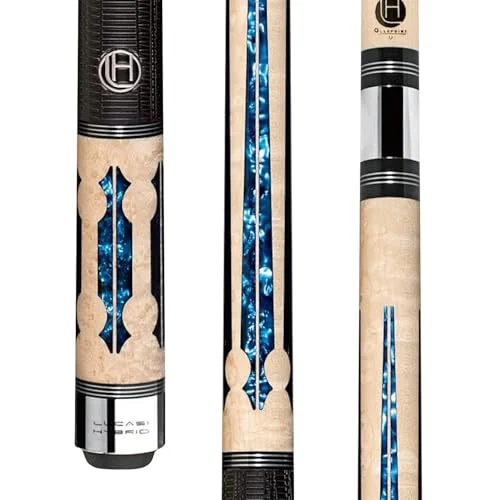
Lucasi Hybrid LHC97 (around $250)
The LHC97 is the Lucasi I’d hand most intermediate players without a second thought. Zero Flexpoint LD shaft, 11.75mm Kamui Black soft tip out of the box, genuine Irish linen wrap, tight stainless steel joint. At around $250 it plays with cues a hundred dollars more expensive. BPC stocks the Hybrid line broadly; Amazon is where you’ll find the LHC97 itself.
Shop the Lucasi Hybrid line at BPC →You can also pick up the LHC97 on Amazon.
4. Predator
Predator changed the pool cue industry when they introduced their low-deflection shaft technology. Their 314 shaft (now in its third generation) became the standard that other brands measure themselves against. Many professional players use Predator shafts even if their butt is from a different maker. If deflection is the spec you’re actually shopping on, our guide to low-deflection cues explains what squirt is and which shaft designs genuinely reduce it.
The company’s Revo carbon fiber shaft is widely considered the best carbon shaft on the market. It eliminates wood grain inconsistency entirely and delivers the same hit characteristics regardless of temperature or humidity. Predator cues tend to have a firmer hit than Meucci, which some players love and others find too harsh.
Predator sits at the higher end of the price spectrum. Entry-level Aspire models start around $400 and mid-tier Sport 2 cues run about $700. The flagship P3 with Revo runs $999 for the butt alone. On the cross-shop question that comes up most often, see the McDermott vs Predator buyer’s verdict for a profile-based comparison covering home and league play as well as tournament use.
- Revo carbon shaft is the industry benchmark
- Widely available
- Consistent across units
- Firmer hit isn’t for everyone
- Pricing for top-line P3 + Revo gets steep ($1,500+ as a complete cue)
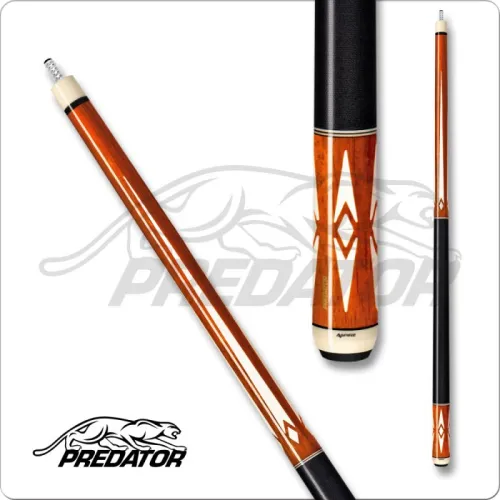
Predator Aspire and P3 Series (from $399)
The Aspire line gets you into Predator territory without paying $700 for the butt that normally comes attached to a Revo shaft. The P3 is the sweet spot for league players who actually use their cue five nights a week.
Shop at BPC →Amazon carries the Aspire line too.
5. Pechauer
Pechauer is a family-run operation based in Wisconsin that has been building cues since the early 1980s. What sets Pechauer apart is their obsessive focus on joint and ferrule engineering. Every component is designed and manufactured in-house, giving them complete control over how the cue feels at impact.
Their Pro Series and JP Series are popular among competitive league players. Pechauer recently introduced their own carbon fiber shaft, the ROGUE, which has earned solid reviews. I’ve tested a Pechauer JP-S at a friend’s house and was impressed by how clean the hit felt, especially on center-ball shots.
Pricing falls in the $300-1,200 range depending on the line. For players who care about precision engineering and want to buy American-made, Pechauer is an excellent choice.
- In-house joint engineering
- American-made
- ROGUE carbon shaft is competitive with Revo at lower price
- Brand recognition is lower than Predator/McDermott
- Smaller distribution network
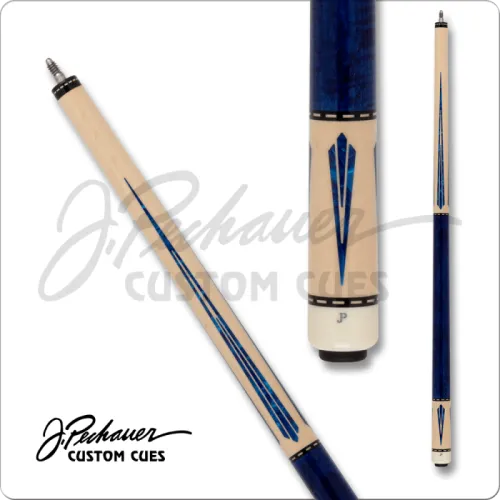
Pechauer JP and Pro Series (from $324)
Most people who buy a Pechauer end up on the JP Series, and for good reason. American-made and built by a family that actually plays the game. The hit is clean. At $324 to start, it’s one of the best deals in domestic cues right now.
Shop at BPC →Pechauer JP cues on Amazon are the other route in.
6. Jacoby
Dave Jacoby and his son David Jr. build every cue by hand in their Wisconsin shop. The Jacoby Black Dot Bullseye Shaft uses 35 Northern Hard Rock maple laminations, which gives it exceptional strength and resistance to warping. The construction process is time-intensive but produces one of the most consistent shafts available.
Jacoby cues are popular among players who value a traditional wood-shaft feel combined with modern low-deflection performance. The family takes pride in building cues that play as well as they look, and their inlay work is among the best in the industry.
Prices range from $400 to $1,500 depending on the model and customization. Jacoby is a great option for players who want a handmade American cue with proven performance.
- Father-and-son shop
- 35-lamination Black Dot shaft is among the most consistent wood shafts made
- Aftermarket carbon shaft option exists
- Premium pricing
- Lead times for customs run 4 to 8 months
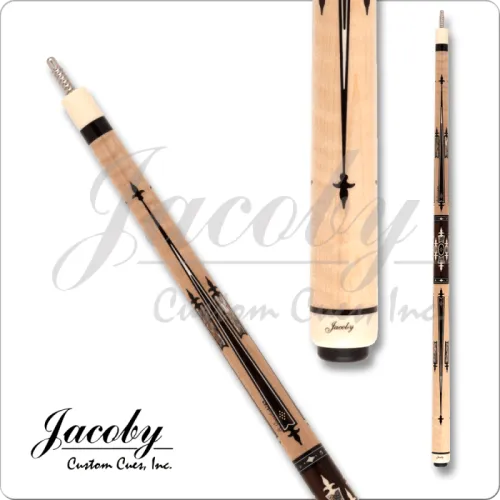
Jacoby Heritage and HB Series (from $835)
Jacoby cues cost real money. What you’re paying for is a father-and-son shop in Wisconsin hand-building every one. The Black Dot shaft alone is worth the price of entry if you’re a wood-shaft loyalist who refuses to go carbon.
Shop at BPC →Amazon lists Jacoby cues as well.
7. Mezz
Mezz is a Japanese brand that has gained a strong following among professional players worldwide. Their cues are known for precision machining and extremely tight manufacturing tolerances. The WX700 shaft is one of the most popular aftermarket shafts in competitive play.
What makes Mezz stand out is consistency. Because their manufacturing process is so tightly controlled, two cues of the same model will feel virtually identical. That level of quality control is rare, even among high-end brands.
Complete Mezz cues run from $300 to over $1,500, with most competitive players landing in the $400-600 range. The Ignite carbon shaft and the WX700 wood shaft cover both ends of the modern shaft debate.
- Tightest manufacturing tolerances of any major brand
- WX700 is a benchmark wood shaft
- Ignite carbon competes with Revo
- Mezz products do not ship outside the USA from US distributors, complicating international buyers
- Brand-direct support is slower than US makers
Mezz WX700 Wavy Joint Shaft (from $269)
Most players’ first taste of Mezz is the WX700 shaft retrofitted onto an existing butt. 12.5mm Kamui Original Soft tip on an NX ferrule, with ISS Technology pro taper. For anyone who already owns a cue with a Mezz Wavy joint, or is willing to add one, the WX700 is the cheapest way into Mezz quality.
Shop at BPC →The WX700 shaft is on Amazon too.
8. McDermott
McDermott has been making cues in Menomonee Falls, Wisconsin since 1975. They offer one of the widest product ranges in the industry, from entry-level cues under $100 to high-end custom builds. Their G-Core shaft provides solid low-deflection performance at a mid-range price point.
What makes McDermott stand out for many buyers is their lifetime warranty against warping. If your McDermott shaft develops a warp at any point, they will replace it. That warranty alone makes them a popular recommendation for players buying their first quality cue. I’ve recommended McDermott G-Series cues to at least four friends who were upgrading from house cues.
McDermott runs four distinct shaft lineages: traditional maple, G-Core hybrid, Intimidator i-Shaft, and Defy carbon. The right one depends on how often you play; see what shaft material does McDermott use for the side-by-side comparison. If you’re cross-shopping the other Wisconsin production brand, our Viking vs McDermott verdict settles it tier by tier.
- Lifetime warp warranty (industry-leading)
- Broadest range of any single brand
- American-made
- Lucky and Star sub-brands sit at the low end of the McDermott badge but aren’t built like G-series
- Do your research on specific lines
McDermott G201 (from $400)
Start here if you want into McDermott’s main G-Series. G-Core shaft, 13mm Navigator Black tip, lifetime warp warranty, made in Wisconsin. When friends ask me which McDermott to buy first, the G201 is what I point them at.
Shop at BPC →McDermott G-Series cues on Amazon are the alternative.
9. Players
Players brand cues are the best value option on this list. Made by the same parent company as Lucasi (Cue & Case Sales), Players cues deliver surprisingly good performance at prices that start around $50. Their HXT series offers a low-deflection shaft at a fraction of what Predator or Meucci charges.
Nobody collects these. They are functional, well-built cues designed for recreational players and beginners who want something better than a house cue without spending $300. I’ve used a Players HXT as a backup cue for league nights, and it performs well above its price point.
- Unbeatable price-to-performance under $200
- HXT low-deflection tech
- Lifetime limited warranty
- Higher production tolerances than premium brands
- Resale value near zero
Browse Players on Amazon. For Players HXT break/jump cues at BPC, see the PureX HXT break/jump line at Billiard & Pool Center. If a break/jump cue is what you’re actually after, our best break cues guide covers the $265 to $500 range across brands.
10. Balabushka
George Balabushka built custom cues in New York from the 1960s until his death in 1975. Original Balabushka cues are now rare collector items that can sell for thousands of dollars. The brand lives on through licensed reproductions that capture the look and feel of George’s original designs.
Balabushka cues represent pool history. The craftsmanship of the originals set a standard that modern cue makers still aspire to. If you find an original Balabushka for sale, verify its authenticity carefully since forgeries exist. The modern reproductions are solid playing cues in their own right, with current GB-series models priced from $200 up to about $900 for inlay-heavy editions.
- Historical brand with collector cachet
- Modern reproductions include lifetime warranties on the GB series
- Mother-of-pearl and exotic wood inlays
- “Balabushka” today is a licensed brand rather than a working custom shop
- For actual handmade pedigree, look at Schon or Jacoby instead
Balabushka GB01 (from $819)
Among the licensed Balabushka reproductions, the GB01 is the clean place to start. Birdseye maple forearm, African Ebony and Bacote veneers, mother-of-pearl diamond inlays, 13mm 5-layered tip, lifetime warranty. Comes with a Certificate of Authenticity.
Shop at BPC →FAQ
What makes a pool cue brand worth buying?
The best pool cue brands use quality wood like Hard Rock maple and hold their shaft straightness over years of play. American-made brands tend to have better quality control, but imported brands like Lucasi deliver strong performance at lower price points. The other thing that matters is warranty: McDermott replaces warped shafts for life, which is rare in the industry.
Are expensive pool cues actually better?
Up to a point, yes. A $300 cue from a reputable brand will outperform a $30 house cue on shaft consistency and deflection, and you feel it on every stroke. But past the $500-600 range, you start paying more for cosmetics and collectibility than for measurable performance gains. A $1,200 Schon and a $400 Pechauer JP play closer to each other than the price suggests. What the Schon buys you is handmade inlays and exotic woods. The shots come out the same.
Which pool cue brand do professionals use?
Meucci and Predator are the most popular brands among touring professionals, with Mezz also widely used. Skylar Woodward plays with Meucci, while many pro events feature Predator and Mezz shafts. Shane Van Boening played with Schon cues for years before switching. On the BCA Pool League and APA circuits, you’ll see McDermott and Lucasi far more often, with Pechauer close behind, because the price-to-performance ratio fits a working amateur’s budget.
Should beginners buy a brand name pool cue?
A mid-range cue from a known brand (Lucasi, Players, or an entry-level Pechauer) is a solid investment for any beginner who plays at least once a week. A $500 cue is overkill to start with. A $100-200 branded cue will still feel noticeably better than house cues. The two upgrades that matter most for a new player are a straight shaft and a quality leather tip, both of which house cues fail at consistently.
Where are the best pool cues made?
American-made cues from Wisconsin (Schon, Pechauer, Jacoby, McDermott) and Mississippi (Meucci) lead the industry in handcrafted quality and warranty support. Japanese brand Mezz competes at the top end on manufacturing precision. Lucasi and Players are produced in Asia under quality programs run by US-based parent companies. That is why they outperform anonymous Amazon imports at the same price.
Lucasi vs Players: which is the better budget brand?
Both are made by the same parent company (Cue & Case Sales), but they target different price points. Players cues run $50-200 and are best for beginners and recreational play. Lucasi runs $150-700 and competes with mid-tier brands like McDermott on shaft technology. If you have $80 to spend, buy a Players. If you have $200+, the Lucasi Hybrid is a noticeable step up in shaft consistency and hit feel.
Related Articles
Shopping by budget: pool cue reviews, best cues for beginners, best pool cues under $100, best pool cues for the money, and best cues for intermediate players.
Going deeper on a brand: carbon fiber cues, are Viking cues any good, Viking Valhalla 100 review, Players cues answered, McDermott vs Predator, does cue weight matter.
The #1 recommendation from this guide, chosen for quality, value, and real-world performance.