


You’ve been playing for a while now. You own a cue and can run a few balls, and you know what draw and follow feel like. But lately something’s been nagging you. You’ll line up a shot with left english, pocket the ball, and the cue ball ends up six inches from where you planned. You compensate, but you’re guessing at that compensation rather than calculating it.
That’s the intermediate wall. And nine times out of ten, it’s a shaft problem.
Your beginner cue got you here. It taught you stroke mechanics and the basics of position play. But beginner cues use standard maple shafts with higher deflection, which means the cue ball squirts sideways more when you apply spin. At the beginner level, you don’t notice because you’re not using much english. At the intermediate level, deflection becomes the ceiling on your game.
What Changes at the Intermediate Level
The biggest technical shift is intentional cue ball control. Beginners pocket balls. Intermediate players pocket balls AND put the cue ball where they need it for the next shot. That requires spin and speed control with a precision that a $50 maple shaft can’t reliably deliver.
These are the things that matter in a cue at your level, ranked by actual impact on your game:
Shaft deflection is number one. A low-deflection (LD) shaft reduces the sideways push on the cue ball when you hit off-center. Standard maple shafts deflect the cue ball 2-3 inches at medium speed with one tip of english. A quality LD shaft cuts that to under an inch. That’s the difference between shape and no shape on your next shot.
Tip quality is number two. Beginner cues ship with Le Pro or generic pressed leather tips. These work but they compress inconsistently over time, which means your spin application changes week to week. A layered tip (Kamui, Tiger Everest) holds its shape for months and gives you repeatable contact.
Joint precision matters more now because you’re hitting harder and using more spin. A loose joint absorbs energy at the connection point and introduces micro-vibrations that affect cue ball behavior on finesse shots. Tight joints transfer energy cleanly. You’ll feel this as a “solid” hit versus a “mushy” one.
Wrap and balance are about comfort over long sessions. If you play league matches (2-3 hours), an uncomfortable grip or front-heavy balance will fatigue your bridge hand and degrade your stroke by the third rack.
The Picks
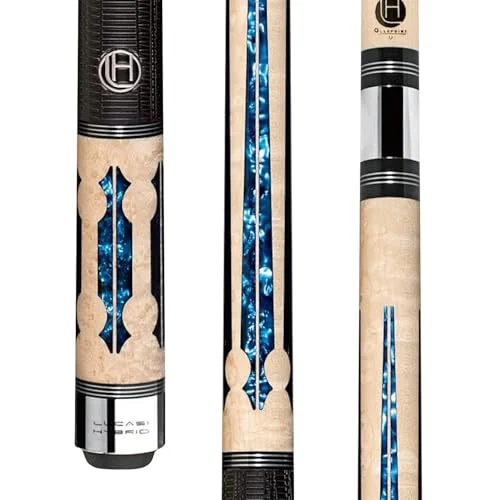
The cue I'd hand most intermediate players without hesitation.
- Zero Flexpoint LD shaft
- Kamui Black tip out of the box
- Genuine Irish linen wrap
Lucasi built the Hybrid LHC97 for league players jumping from recreational gear, with genuine Irish linen wrap and a tight stainless steel joint. The 11.75mm shaft is the slimmest in this lineup, which rewards a precise stroke. What you’re paying for is legitimate LD engineering without marketing fluff.
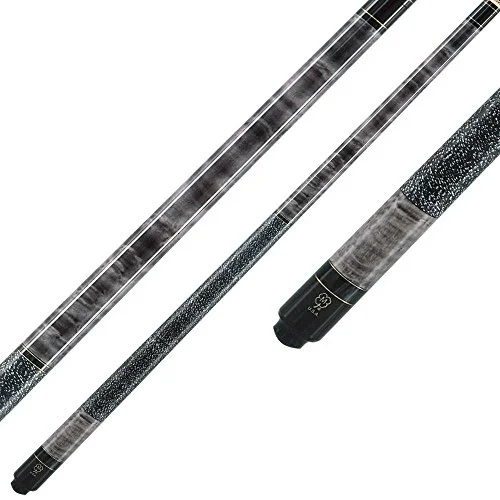
The cue you see in local league play and amateur tournaments. Looks great, plays great, holds its value.
- G-Core shaft
- Lifetime warranty
- Great resale value
McDermott’s G209 pairs a G-Core shaft (12.75mm, lower deflection than standard maple) with a lifetime warp warranty. The slightly stiffer hit and 12.75mm diameter make it a less jarring transition from standard cues. At around $430 it’s the priciest wood-shaft pick here, but the lacquer work and build quality would look at home on cues costing considerably more.
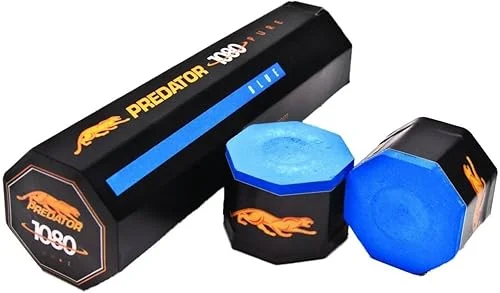
You'll eventually replace the butt. You'll keep the 314-3 shaft.
- 314-3 shaft is the industry benchmark
- 10-piece spliced maple shaft
- Uni-Loc joint precision
Predator has spent two decades refining the 314 shaft, and the payoff is radial consistency: rotate the cue in your bridge and the hit doesn’t change. That sounds like a spec-sheet detail until you notice you’ve stopped micro-adjusting for a stiff side mid-match. The plain looks are the trade Predator made to keep a shaft of this caliber under $350.
Note: The Roadline has been difficult to find on Amazon in 2026. Check specialty retailers or consider a Predator Sport 2 as an alternative.
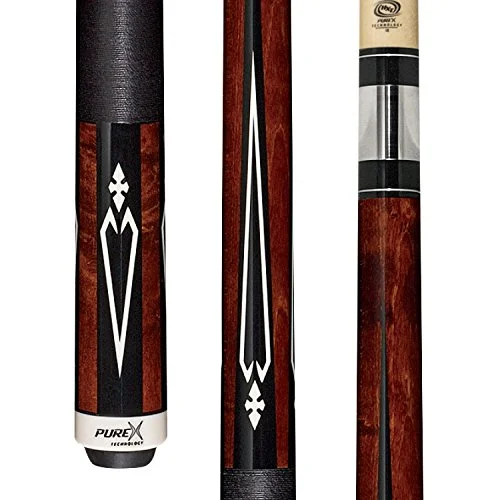
70% of the Lucasi's performance at 65% of the price.
- Hybrid LD shaft
- Kamui Black tip standard
- Wood-to-wood joint
The wrapless design is the one real gamble with the Players HXT-P2; bare finish feels clean to some players and slippery to others, especially in humid rooms. The savings come out of the butt construction and cosmetics rather than the hitting surface, which is why it holds its own against cues that cost more. The practical choice for league players who want LD performance without paying for looks.
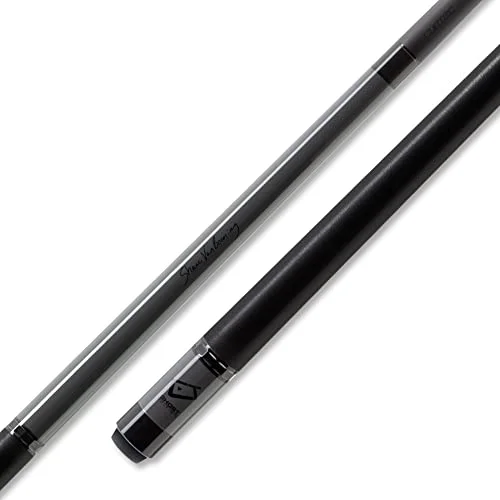
Carbon without full custom pricing, strong performance tier.
- Extremely consistent
- Warp-resistant
- Strong tour presence
Carbon is the whole story with the Cuetec Cynergy SVB: a 15K carbon fiber shaft on a premium butt. Carbon fiber eliminates wood’s inconsistencies, so the shaft never warps and hits the same in every direction. The trade-off is feel: a stiffer hit and less warmth through the bridge. Try before committing; most pro shops let you test. It’ll feel like cheating for a week, then you’ll realize the shaft was always right and you were just compensating.
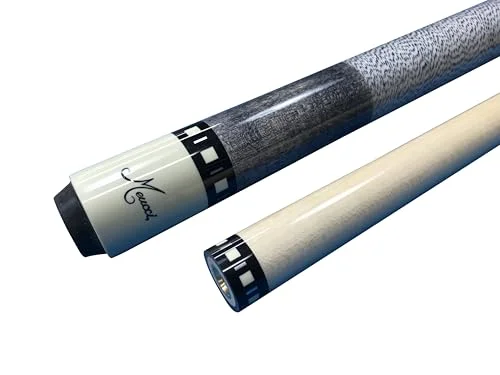
A well-maintained Meucci sells for 60-70% of retail. That's rare.
- Black Dot LD shaft
- Hollowed-core ferrule
- Holds resale value
Meucci fits the 97-21B with their Black Dot shaft (12.9mm LD) and a hollowed-core ferrule for familiar feel without sacrificing deflection reduction. Meucci cues also hold resale value better than competitors; a used Players or Lucasi typically fetches 40-50% of retail, and a maintained Meucci runs well ahead of that. Signature aggressive styling you’ll love or hate, but the playing quality is undeniable.
Quick Comparison
| Cue | Price | Shaft | Tip Size | Deflection | Best For |
|---|---|---|---|---|---|
| Lucasi LHC97 | $225-275 | Zero Flexpoint | 11.75mm | Low | Best all-around |
| McDermott G209 | ~$430 | G-Core | 12.75mm | Med-Low | Best warranty + finish |
| Predator Roadline | $250-350 | 314-3 Spliced | 12.75mm | Low | Best shaft investment |
| Players HXT-P2 | $150-200 | HXT Hybrid | 12.75mm | Med-Low | Budget LD option |
| Cuetec Cynergy SVB | ~$695 | Carbon fiber | 12.5mm | Very Low | Best carbon fiber |
| Meucci 97-21B | $200-300 | Black Dot | 12.9mm | Med-Low | Best resale value |
Upgrade the Shaft or the Whole Cue?
If your current cue has a solid butt section and a standard 5/16x18 or Uni-Loc joint, you can upgrade just the shaft. A Predator Z-3 shaft ($200-$250) or an OB Classic ($175-$225) will bolt onto most aftermarket cues, and Lucasi’s Zero Flexpoint ($150-$200) covers the budget end. This gets you 90% of the benefit at 50-60% of the cost of a whole new cue.
Check your joint type first. The most common types are 5/16x18 and Uni-Loc, followed by Radial and 5/16x14. If you don’t know yours, take your cue to a pro shop or check the manufacturer’s specs online. Wrong joint type = wrong shaft, and adapters introduce play that defeats the purpose.
If the butt section is warped or the balance feels wrong, replace the whole thing. Putting a $200 shaft on a damaged butt is wasting money.
The Mistakes Intermediate Players Make
Buying too much cue. A $600 Predator with a REVO shaft is wasted on a player who can’t consistently draw the cue ball two table lengths. Master the fundamentals with a $250 cue first (our under-$300 guide covers that tier in depth). The expensive gear matters when your technique is solid enough to exploit it.
Ignoring tip maintenance. Your $40 Kamui tip needs shaping and scuffing every 5-10 hours of play. A mushroomed or glazed tip kills spin application regardless of how good the shaft is. Invest $15 in a tip tool and use it.
Switching shaft diameters too fast. Going from 13mm to 11.75mm changes your sight picture and bridge spacing, and your stroke mechanics have to adjust with them. If you make the jump, commit to at least 20 hours of play before judging it. The first 5 hours will feel wrong. By hour 15, it feels normal. Read about shaft tapers to understand why.
Chasing technology over practice. No shaft compensates for a crooked stroke. If your bridge hand shakes or your backswing wanders, no amount of low-deflection engineering will fix that. Spend half the money on a cue and the other half on table time.
The Bottom Line
The Lucasi LHC97 ($225-$275) is the best cue for most intermediate players. It has the low-deflection shaft and quality tip without an inflated price. The Predator Roadline ($250-$350) is the pick if you want a shaft you’ll keep for a decade. The Players HXT-P2 ($150-$200) gets you into LD territory if budget is tight. If you’d rather compare across every price band, our best pool cues for the money guide stretches from $30 budget sticks up to $500 players. For configurations Amazon doesn’t list, the Lucasi Hybrid line at Billiard & Pool Center is the place to start; they carry 400+ cues across all the brands above with free shipping over $99.
Whatever you buy, commit to it for at least six months before judging. A new cue takes 20-30 hours of play before it feels like yours. Your game might dip for the first week as you adjust. That’s normal, and the improvement shows up around hour 15.
The #1 recommendation from this guide, chosen for quality, value, and real-world performance.