


You’re shooting the 8-ball. The angle is tight and your tip is mushroomed out like it’s been through a war. Somewhere in the back of your head you’re wondering whether the tip is the problem or whether you’re just making excuses.
It’s the tip more often than you’d like.
I’ve been around pool tables for two decades and I’ve watched players blame everything except the obvious culprit. Choosing between the best pool cue tips is simpler than most people make it out to be, because the real decision is hardness and upkeep rather than brand.
Why Your Tip Matters More Than Your Cue
Everyone wants to talk about cue wood, ferrule quality, joint type, and that perfect break stick. Those things matter. But your tip is the only part of your cue that actually touches the ball, and it’s where all your skill gets transferred.
Picture a $3,000 custom cue wearing a tip that’s been mushroomed for six months. That cue is dead weight until you fix the tip, and a $200 cue with a fresh, properly scuffed tip will outshoot it every single time. This is also why chasing a better stick before you’ve sorted out your tip is backwards; if you are genuinely ready to upgrade the cue itself, our best pool cues for the money picks start at the tier where it’s worth doing.
Your tip controls:
- How the hit feels and how much feedback reaches your hands
- How consistently you hit the sweet spot without miscuing
- How much time you spend shaping and scuffing it
- Your confidence on delicate shots
Let a tip go long enough and you lose all four at once.
Hard Tips vs Soft Tips vs Medium: What You Actually Need
Hardness changes feel and maintenance far more than it changes what the cue ball does. Most pool forums will tell you the opposite, so let me be specific about each grade.
Soft tips compress more on impact and feel grabbier, which a lot of players read as better control on draw and delicate position play. The cost is upkeep. They spread out over the edge of the ferrule faster than harder tips do, which means more time with a shaper and roughly 6-9 months of life at five hours of play a week.
I use soft tips. Once you get used to the feel you won’t want to go back, though they punish carelessness in a way a harder tip never will.
Hard tips hold their dome and wear down slowly instead of spreading out, which is why breakers and jumpers use them. Expect 12-18 months out of one at the same five hours a week. What you give up is feedback, and if your bank shot depends on feeling a whisper of contact, a hard tip makes that harder to judge.
Medium tips are where most players should live. Shape retention is good without costing you much in feel, and 8-12 months is a normal lifespan. Three of the five picks below sit in medium or medium-hard territory, which is not an accident.
The spin question deserves a straight answer, because it drives most of the bad advice out there. High-speed camera work by Dr. Dave Alciatore, the Colorado State engineering professor, suggests you can get equal spin from a soft tip and a hard one as long as each is properly maintained. His conclusion is that hardness within the normal playing-cue range should have no direct effect on how much english you can apply, and our full write-up on soft vs hard cue tips quotes it in context. So pick on feel and on how much maintenance you’ll realistically do, and stop shopping for spin.
Size Matters: 12mm vs 12.75mm vs 13mm
Tip diameter is set by your shaft, since the tip gets trimmed down to whatever the ferrule underneath it measures. A 13mm shaft takes a 13mm tip, so changing size means changing shafts. Our carbon fiber cue guide covers what that swap actually costs.
Bigger tips forgive more. At 13mm you get more surface area and a wider sweet spot, so an off-center hit that would miscue on a slim shaft just goes slightly thin instead. Most house players and beginners should sit at 13mm and stop thinking about it.
The 12.75mm middle ground ships on a lot of production cues and there’s nothing wrong with it.
A 12mm tip demands precision, because the margin for error on contact point shrinks with the surface area. Pros use 12mm sometimes, but they’re also the kind of players who can draw a line on the cloth with the cue ball. If you’re thinking about switching to 12mm because you saw a pro use it, you’re probably not ready.
Stay at 13mm while you’re learning. Leave a 12.75mm alone if that’s what your cue shipped with and it’s working for you, and only drop to 12mm after years of serious play, once you actively want the smaller margin.
Best Pool Cue Tips by Category
Five tips worth buying, grouped by the job they do. Every price below is what the linked Amazon listing costs, which is why the budget entries look so cheap per unit: Le Pro and Elk Master ship in multipacks while the other three are sold as single tips. Lifespans assume roughly five hours of play a week.
If you want the short version, the Tiger Sniper is the pick for most players. Laminated construction means it plays the same in month eight as it did in week one, and that consistency is exactly what single-layer budget tips can’t promise you.
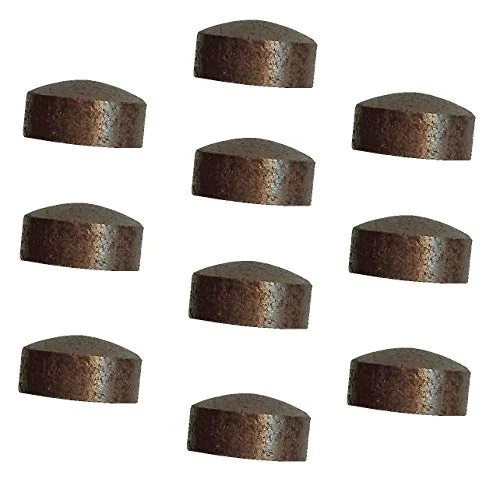
Le Pro Pool Cue Tips (~$8-15)
If your current tip is destroyed and you need something functional on the shaft this week, Le Pro Pool Cue Tips are the answer. You get single-layer leather in a medium hardness that should give you 8-12 months, at a price low enough that ruining one during a DIY install barely stings.
Consistency is where they give ground. Single-layer leather varies tip to tip inside the same box, so every so often you’ll fit one that goes soft and mushrooms early. At this price you shrug and reach for the next one.
Check Price on Amazon →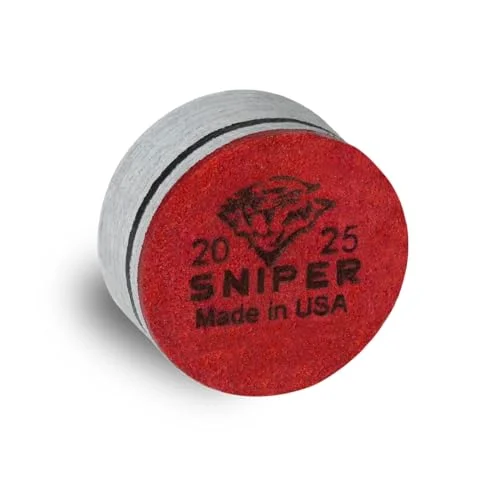
Tiger Sniper Tips (~$15-22)
This is the tier where a tip stops being a consumable and starts being equipment. Tiger Sniper gives you medium-hard laminated leather for $15-22, and laminating is what keeps the hit identical from the first rack to the last one before you swap it.
It doesn’t hide anything, though. Sloppy technique shows up more clearly on a firmer laminated tip than on something soft and grabby, so a beginner may genuinely be happier on the Le Pro until their stroke settles down.
Check Price on Amazon →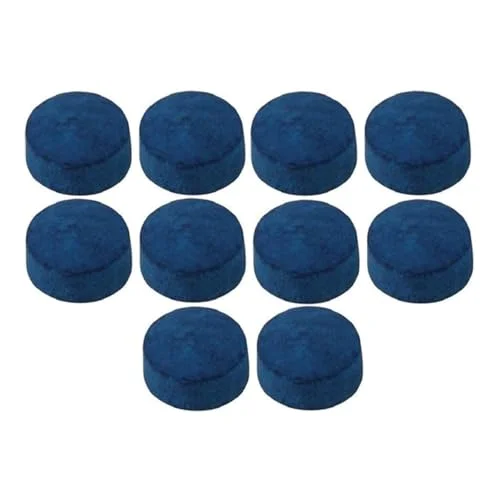
Elk Master (~$5-10)
Plenty of players wonder whether they’d prefer a softer hit and never test it because the good soft tips cost real money. Elk Master removes that excuse at $5-10 for properly soft elk leather with respectable quality behind it.
Upkeep is the price of admission. Any soft tip spreads over the ferrule faster than a medium does, so you’ll be reaching for a shaper more often and replacing it inside 6-9 months. Casual players and backup shafts are where these make the most sense.
Check Price on Amazon →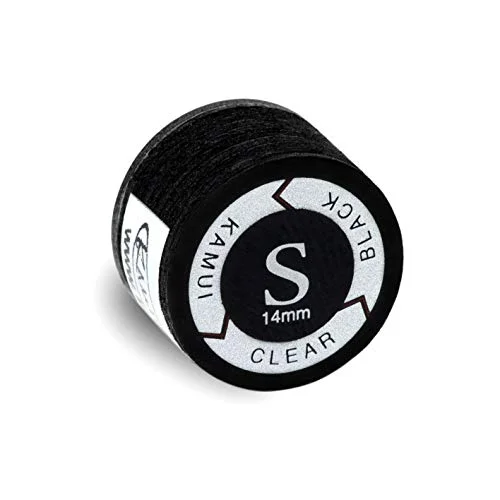
Kamui Black (~$15-30)
Kamui is the benchmark brand in laminated tips, and the Black line is what serious players graduate to. Kamui Black runs $15-30 depending on grade and seller, and it holds chalk beautifully while giving you more feedback through the hit than anything else on this list.
Check which grade you’re ordering before you click. Kamui Black ships in soft through hard, and that choice sets everything: a soft will want replacing around 6-9 months while a hard can run 12-18. It’s a demanding tip at any grade, wanting regular scuffing and shaping to stay at its best, so buy it if you enjoy maintaining equipment and skip it if you don’t.
Check Price on Amazon →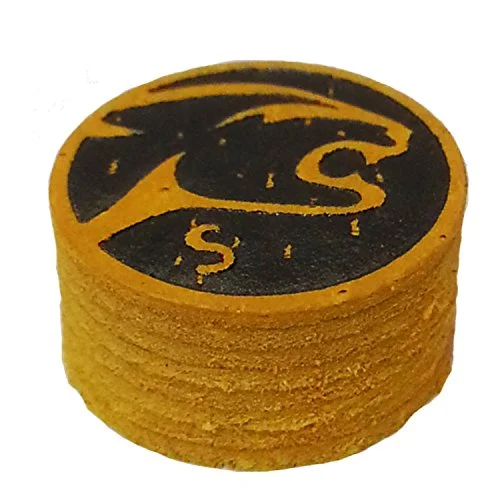
Predator Victory (~$18-25)
Consistency is the whole pitch with Predator Victory tips. At $18-25 you get layered leather in a medium hardness, engineered so the tenth rack of the night plays like the first, and it holds its dome across a normal 8-12 month run.
You give up character for that. Next to a Kamui they feel flat and anonymous, and players who chase feel tend to find them dull. They also cost nearly as much as a Kamui without the same ceiling, so buy these for reliability and buy the Kamui for the hit.
Check Price on Amazon →How to Install and Maintain Your Tips
Installing a tip yourself requires a lathe. If you don’t have one and aren’t comfortable with power tools, don’t DIY this. A cue repair shop charges $15-25 for a straight tip swap and they’ll do it right.
If you’re going to install tips yourself, the job breaks into four stages:
Removal: Use a lathe to carefully sand off the old tip, slowly, aiming to take the glue and tip off without touching the ferrule. One slip and you’ve got a damaged ferrule that costs $40-100 to put right.
Shaping: Most tips come oversized, so you’ll sand the new one down on the lathe until it matches your ferrule diameter exactly. That final fraction of a millimetre is where the finesse lives.
Gluing: Use cue tip epoxy rather than regular wood glue. Apply a thin layer to both the ferrule and the tip and press firmly, then leave the whole thing alone for a full 24 hours before you shoot with it.
Scuffing: Once the glue is dry, scuff the tip with sandpaper to restore grip. Skipping this is the classic first-timer mistake, because a smooth tip will slide right off the cue ball.
Weigh all that against $15-25 at a shop and the math usually favors the shop.
Maintenance Between Replacements
A scuffer is the best $5 you’ll spend on pool. Every few sessions, run it over the tip to rough the leather back up so it holds chalk instead of sliding across the cue ball.
Shape is the other half of it. Once a tip starts to mushroom, meaning it flattens and spreads over the edge of the ferrule, a shaper cuts it back to a dome and buys you months. Let the mushrooming run too long and there’s no dome left to recover, at which point you’re buying a new tip.
Humidity swells leather, so if your tip gets wet, let it dry all the way before you play on it. And a tip that wobbles is a tip whose glue has already failed. Get that one replaced before it comes off mid-match, because it will pick the worst possible moment.
Quick Comparison
| Tip | Price | Hardness | Best For | Lifespan |
|---|---|---|---|---|
| Le Pro | $8-15 | Medium | Beginners and casual play | 8-12 months |
| Tiger Sniper | $15-22 | Medium-hard | All-around players | 8-12 months |
| Elk Master | $5-10 | Soft | Trying a soft tip cheaply | 6-9 months |
| Kamui Black | $15-30 | Soft through hard | Feel and feedback | 6-18 months by grade |
| Predator Victory | $18-25 | Medium | Tournament consistency | 8-12 months |
FAQ
Q: What’s the difference between hard and soft pool cue tips?
A: Feel and maintenance, mostly. Soft tips compress more on impact and feel grabbier, while hard tips hold their dome and last far longer. High-speed camera work by Dr. Dave Alciatore suggests that hardness within the normal playing-cue range should have no direct effect on how much spin you can apply, provided each tip is properly maintained. Choose on feel.
Q: How often should I replace my pool cue tip?
A: At five hours of play a week, a soft tip lasts about 6-9 months. Mediums run 8-12 months and hard tips stretch to 12-18. Casual players who shoot a few hours a month can get considerably longer out of any of them.
Q: Does tip size really matter?
A: Yes, but less than people think. Bigger tips at 13mm give you more surface area and forgiveness on off-center hits. Smaller 12mm tips demand precision. Your shaft sets the diameter anyway, since the tip gets trimmed to the ferrule underneath it.
Q: Can I install a cue tip myself?
A: You can, but it needs a lathe and the right tools. Most players take tips to a cue repair shop for $15-25. A botched DIY install can damage the ferrule, which costs $40-100 to put right.
Q: Are expensive tips worth it?
A: Premium tips like Kamui feel better and perform more consistently, but beginners won’t notice the difference. Spend the money once you can consistently pocket balls and you’ve started caring about how the hit feels.
Q: Should I buy multiple tips and rotate them?
A: Only if you’re at a professional level with the maintenance routine to support it. For everyone else, one good tip that you actually maintain beats three mediocre ones.
Q: Do I need to replace the whole tip if the glue fails?
A: Yes. You can’t reglue a tip without removing it completely. If the glue is failing, it’s replacement time.
Q: What if I can’t afford Kamui or Predator?
A: Buy Tiger Sniper or Elk Master. They’re solid tips at reasonable prices. Upgrade once you’re winning matches and have money in your pocket from it, and don’t go broke on equipment you’re not using at a pro level.
Related Articles
Learn more about choosing the right equipment:
The #1 recommendation from this guide, chosen for quality, value, and real-world performance.