

- Elite break performance
- Brand service
- Resale
Every time you break with your playing cue, you’re doing slow, cumulative damage. The ferrule absorbs shock it wasn’t designed for. The tip compresses unevenly. The shaft develops micro-stress fractures that affect straightness over months.
One day you notice your playing cue doesn’t hit as true as it used to, and the break is why. I’ve watched enough league players warp a shaft inside a season of weekly 8-ball to know this isn’t theoretical.
A dedicated break cue costs $265-$500. A replacement shaft for your playing cue costs $200-$400. The math is simple.
If you want to understand the full difference between break cues and playing cues, we have a detailed comparison. This article is about which break cue to buy. If you also need to clear obstructing balls, see our jump cue picks, a different specialty with shorter lengths and harder tips.
What Makes a Break Cue Different
Break cues are built for one thing: transferring maximum energy into the cue ball on a center-ball hit. Everything about them is optimized for power over finesse.
The shaft is stiffer. Playing cue shafts flex slightly on impact, which gives you feedback and feel. Break cue shafts resist flexing to push more energy forward. Some use carbon fiber, some use reinforced maple with thicker walls. The result is the same: more of your stroke energy reaches the cue ball instead of being absorbed by the shaft.
The tip is hard. Playing tips are soft or medium leather designed to grip the cue ball for spin. Break tips are phenolic resin or hard polymer designed to repel the cue ball with maximum force. Dr. Dave Alciatore’s coefficient-of-restitution testing (Technical Proof A.30) puts the phenolic-tip advantage at roughly 17% more break power versus a medium-hardness leather tip.
The joint is reinforced. The joint between shaft and butt absorbs the most stress during a break. Break cue joints use heavier hardware and tighter tolerances to prevent loosening over thousands of impacts.
Weight distribution favors the back. Most break cues are slightly butt-heavy compared to playing cues. This encourages a pendulum-style break stroke where the weight of the cue does more of the work, reducing strain on your wrist and forearm.
Quick Comparison
| Break Cue | Price | Shaft | Tip | Weight | Best For |
|---|---|---|---|---|---|
| Poison VX-BRK | ~$265 | Reinforced maple | Phenolic | 19-20 oz | Best value entry |
| Lucasi Hybrid Break | ~$275 | Reinforced maple | Phenolic | 19-21 oz | Traditional feel |
| McDermott Sledgehammer | ~$325 | Break-tuned maple | Phenolic | 19-21 oz | Brand trust |
| Players HXT-BRK | ~$390 | Stiff maple/HXT | Phenolic | 19-21 oz | Proven performer |
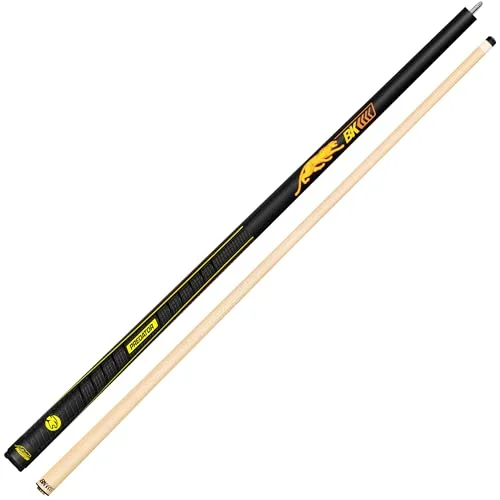
| Predator BK Rush | ~$500 | Carbon fiber | Phenolic Victory | 17-25 oz | Best carbon break |
Note: Break cues are specialty items. Many cycle in and out of stock on Amazon. The McDermott Sledgehammer break cue at Billiard & Pool Center is one of the more reliable picks specialty dealers carry through stock cycles.
The Picks
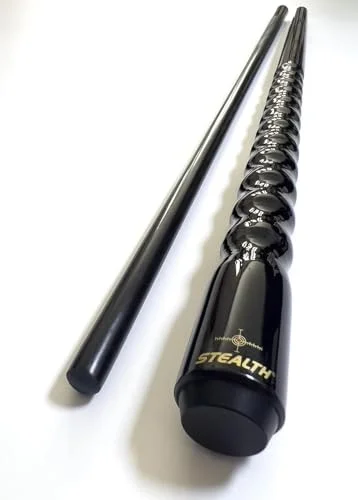
Great mid-tier breaker with brand backing.
- Strong value
- Modern look
- Stiff hit
Poison is part of the Predator family, and the VX-BRK uses the same phenolic tip technology as Predator’s premium models, paired with a reinforced maple shaft. At ~$265, it’s the cheapest dedicated break cue worth buying from a major manufacturer. Stock has been inconsistent, so check availability before assuming you can grab one.
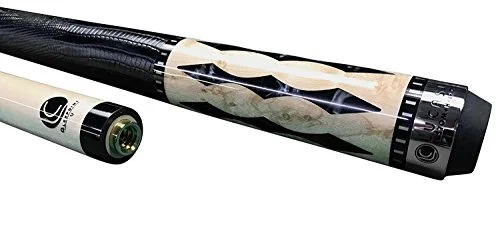
Premium break without jumping to absolute flagships.
- Lucasi quality
- Strong energy transfer
- Nice finish
The Lucasi Hybrid break cue is built by CCSI (the same company behind Players and PureX). The reinforced maple shaft is stiffer than standard maple without going full carbon, which some players prefer for the more traditional feel on the hit. The stainless steel joint is built to handle thousands of break impacts without loosening.
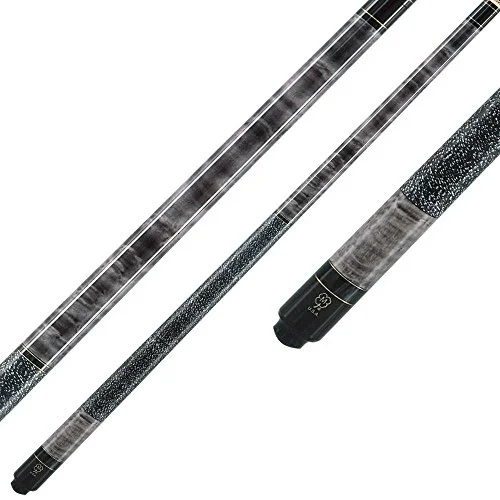
When you want a name-brand break cue with serviceability.
- Brand trust
- Serious breakers upgrade path
- Resale
McDermott’s Sledgehammer is built specifically for the break: a stiff maple shaft tuned for power transfer and a phenolic tip on a reinforced joint. The McDermott name means a real warranty and a service network that exists in the US. If you already play with a McDermott and trust the brand, this is the natural break cue addition.
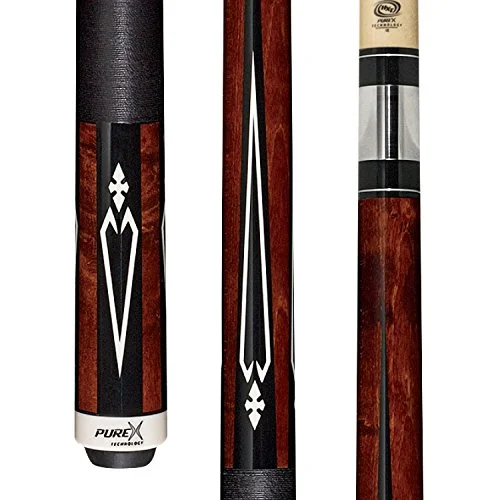
Best budget-friendly dedicated breaker we routinely recommend.
- Great value
- Saves playing shaft
- Stiff transfer
The Players HXT-BRK brings the same HXT shaft engineering from their playing cue line into a dedicated break format. The stiff maple shaft and phenolic tip produce consistent racks, and it ships in weights from 19 to 21 oz so you can match your preferred break feel. Built by CCSI with the same quality standards as their Lucasi line.
If you break hard weekly, this is endgame gear.
- Elite break performance
- Brand service
- Resale
Predator markets the BK Rush as delivering a higher coefficient of restitution and faster cue ball speed than maple break cues, the result of an optimized fused-maple butt paired with a REVO-derived carbon-composite shaft. Wider racks and more consistent spreads under tournament pressure are the practical payoff. The carbon shaft is immune to humidity warping, the same durability edge that runs through our carbon fiber cue picks. This is the break cue serious competitors end up with.
How to Break Better (Regardless of Cue)
The cue is half the equation. Mechanics are the other half.
Hit the head ball full. A lot of players try to cut the rack or hit the second ball. In 8-ball and 9-ball, a full hit on the 1-ball with center cue ball produces the widest, most consistent spread. Standard collision physics (and Dr. Dave Alciatore’s break-shot analysis at drdavepoolinfo.com) work out cleanly here: a full hit transfers nearly all of the cue ball’s kinetic energy into the rack, while a half-ball hit leaves the cue ball with roughly half its incoming speed and transfers about three-quarters of its energy on.
Grip the cue loosely. A death grip on the butt creates tension in your forearm that slows your stroke. The fastest break strokes come from a relaxed grip that tightens naturally at the moment of impact.
Stand closer than you think. Most players stand too far back on the break, which forces a longer stroke and introduces accuracy problems. Moving 6-8 inches closer shortens the stroke and steadies your bridge, and most players actually gain cue ball speed from it.
Follow through. The cue tip should finish 4-6 inches past where the cue ball was. A punched or stabbed break (stopping at contact) wastes energy. Let the cue travel through the ball.
Keep your bridge hand flat and solid. Your bridge takes the full recoil of a power break. A wobbly bridge lets the shaft bounce on impact, which costs energy and sends the cue ball unpredictably. Use a closed bridge with your hand flat on the cloth. If you’re not sure about bridge technique, our guide on how to hold a pool cue covers the fundamentals.
The Bottom Line
The Poison VX-BRK (~$265) is the right break cue for most home and league players. It protects your playing cue and breaks well enough that you won’t blame the equipment. If you play competitively and the break matters to your win rate, the Predator BK Rush (~$500) justifies its premium with measurably better energy transfer through its carbon fiber shaft. The McDermott Sledgehammer (~$325) and Players HXT-BRK (~$390) split the difference with proven maple-based designs.
Whatever you pick, using a separate break cue is the single cheapest way to extend the life of your playing cue. Your shaft stays straighter and your tip lasts longer, for less than the cost of one replacement shaft.
The #1 recommendation from this guide, chosen for quality, value, and real-world performance.