

- CCSI support
- Consistent pop
- Good finish
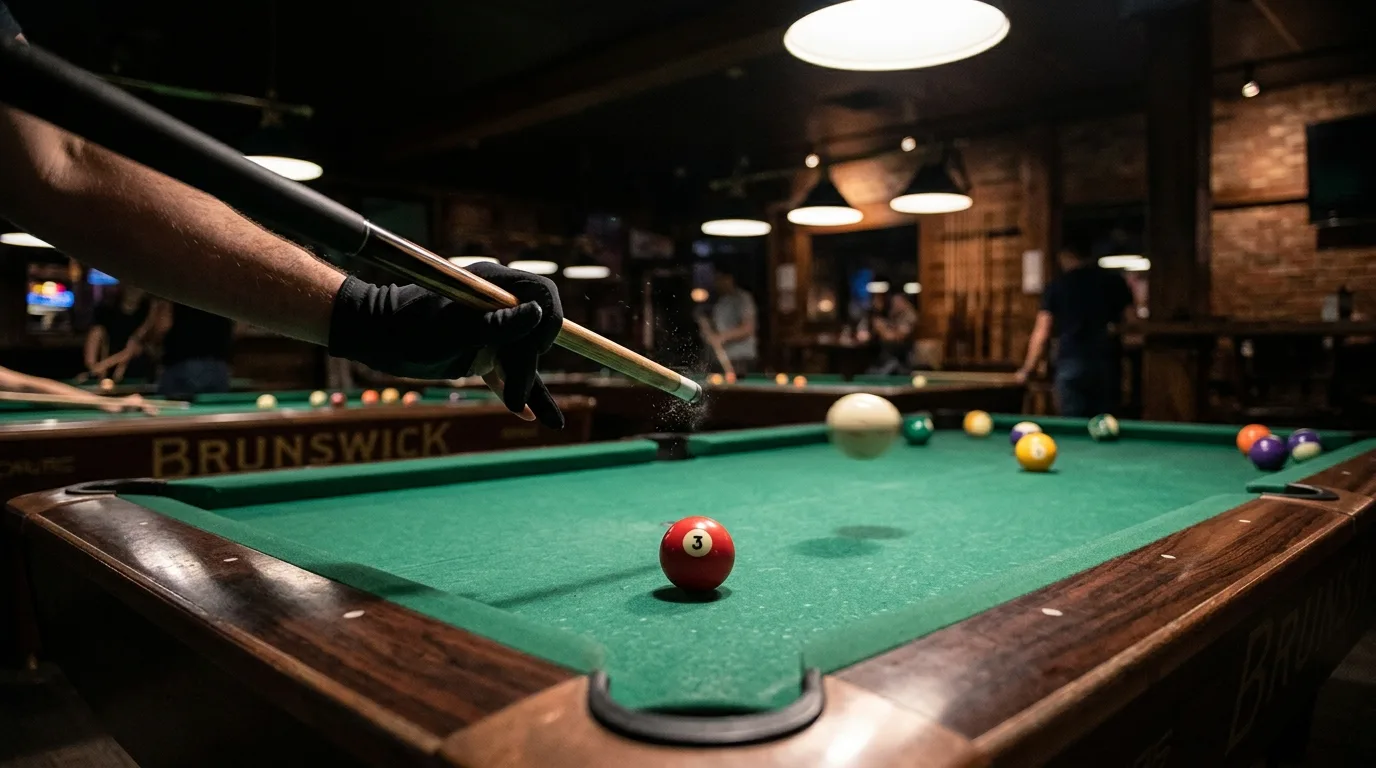
Your opponent just played safe and parked the cue ball behind a wall of solids. You’ve got two choices: kick at the ball from three rails away and probably sell out, or pull out 40 inches of phenolic-tipped fiberglass and jump clean over the blocker.
The jump shot changes the safety game entirely. A player with a reliable jump cue turns a defensive masterpiece into a one-shot problem. That’s why every serious league player carries one.
The catch: most people buy the wrong jump cue. They either spend $40 on a gas station jumper that miscues every third attempt, or $400 on a designer piece that doesn’t jump any better than a $179 cue. The sweet spot sits right in the middle, and the differences between the good cues come down to tip hardness, weight, shaft stiffness, and length.
The quick take
The Lucasi Custom L-2000JC at ~$179 is the best jump cue for most league players. Phenolic tip and solid pop, with multiple wrap colors at a price that won’t sting. The Jacoby Jumper at ~$245 is the step up. It breaks down to a 24-inch section for tight spots and has a smoother stroke feel. If money isn’t a factor, the Predator Air 2 (~$350) is the lightest and fastest of the bunch.
What makes a jump cue work
Tip hardness, cue weight, shaft stiffness, and length determine how cleanly a jump cue pops the cue ball over obstacles at 7-9 mph of downward stroke speed. You jack the cue butt up to 45-60 degrees and strike down through the cue ball at about 7-9 mph. The ball compresses into the slate and bounces up over the obstacle. A typical jump shot pops the cue ball 1-2 inches off the surface for about 6-12 inches of horizontal travel.
Four things in the cue affect how cleanly this happens.
Tip hardness. Phenolic resin tips (basically hard plastic) are the standard. They transfer energy faster than leather with almost zero compression on impact. G-10 composite is the other option, slightly softer with marginally more grip. Predator builds around phenolic and Mezz around G-10, and both hold up fine on the table. Leather tips on a jump cue are a mistake. (For more on how tips affect performance, check out our guide to pool cue tips.)
Weight. Jump cues run 6-10 oz. Lighter cues need less force to accelerate, which gives you more control on soft jumps (hopping over one ball at close range). Heavier cues carry more momentum for distance jumps. The Predator Air 2 sits at the light end of that range, while the Lucasi Custom at 8.5 oz is on the heavier side of dedicated jumpers.
Shaft stiffness. A stiffer shaft transmits more energy to the cue ball. Fiberglass and carbon fiber are stiff. Wood is less stiff but has better feel. Most jump cues use fiberglass or some composite layup.
Length. BCA minimum is 40 inches. Most jump cues are 40-42 inches. Shorter cues let you get steeper in tight spaces but sacrifice reach. The Jacoby Jumper breaks down to a 24-inch jumping section, which is the shortest practical length.
| Cue | Price | Weight | Tip | Length | Best for |
|---|---|---|---|---|---|
| Lucasi Custom L-2000JC | ~$179 | 8.5 oz | Phenolic | 41” | Best value entry point |
| Jacoby Jumper | ~$245 | 9 oz | Phenolic | 41” (breaks to 24”) | Versatility and quality |
| Predator Air 2 | ~$350 | 7-9 oz | Phenolic | 41” | Tournament players wanting max pop |
The cues, ranked
Three jump cues from $179 to $350, ranked by value and performance.
Safe premium jump pick with familiar brand service.
- CCSI support
- Consistent pop
- Good finish
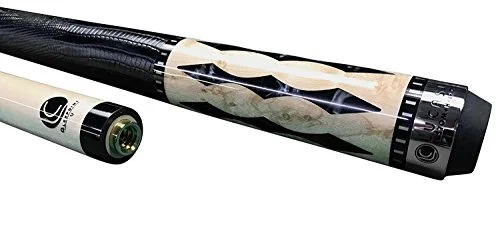
Lucasi (part of the Cue & Case Sales family, same parent company as Players and Scorpion) makes their jump cue with the same phenolic tip and fiberglass shaft combination as the more expensive competitors. The performance is good. Pop height and control land in the B+ range, which puts it a notch under the Predator while staying plenty for league play.
Where Lucasi earns its spot is customization. They offer multiple wrap colors and butt designs at the ~$179 price point. If aesthetics matter to you, and you want your jump cue to match your playing cue or just look good in your case, Lucasi gives you more options than Jacoby or Predator without charging extra.
The 8.5 oz weight is on the heavier side for a dedicated jump cue. It works fine for standard jump shots over one or two blockers, but soft finesse jumps require a cleaner stroke than lighter cues demand. According to the BCA equipment specifications, any jump cue used in sanctioned play must be at least 40 inches long and cannot have a screw-on tip wider than 14mm. The L-2000JC meets both requirements.
For a player buying their first dedicated jump cue, this is the entry point. It won’t hold you back until your jump stroke is good enough to notice the difference between this and the Jacoby or Predator.
Underrated alternative to mass-market jump handles.
- Craftsmanship
- Predictable pop
- Strong mid-premium value
Dave Jacoby has been making cues in Wisconsin since the 1980s. The Jacoby Jumper is his most popular product, and for good reason: it jumps cleanly and the breakdown feature is genuinely useful.
The full-length cue is 41 inches with a standard joint in the middle. Unscrew the butt section and you’ve got a 24-inch dedicated jump stick. That short configuration is where this cue shines. In tight spots where a 41-inch cue can’t get steep enough without hitting the ceiling or a light fixture, the 24-inch section lets you nearly vertical the stroke.
The phenolic tip pops clean. The 9 oz weight feels familiar to anyone who’s used a sneaky pete or short cue. The shaft is a wood-fiberglass hybrid that’s stiffer than pure maple but has more feel than pure fiberglass.
At ~$245, the Jacoby costs about $65 more than the Lucasi. You’re paying for the breakdown feature and slightly tighter construction. APA league players especially love this cue because APA rules allow dedicated jump cues, and the 24-inch configuration comes up more often than you’d expect.
One minor gripe: the joint between the two halves has a touch more play than the Predator. During jump shots it doesn’t matter, since the stroke loads the joint straight down with no lateral stress on it. It still bugs some players who notice the difference.
Top-tier when jumps decide matches.
- High pop
- Quality control
- Tour-proven line
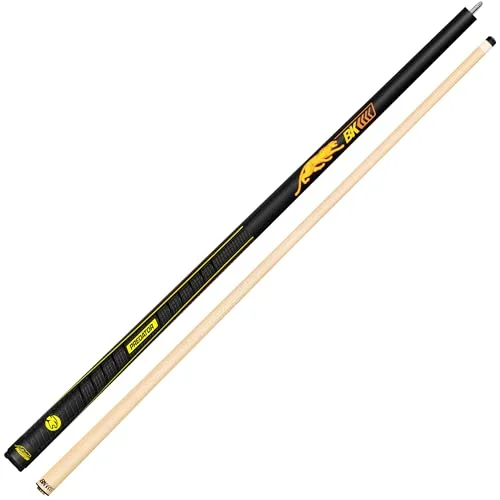
The Air 2 is the jumper you’ll find in the cases of Predator-sponsored pros. It’s absurdly light for a full-length cue, and the first time you pick one up your brain thinks something is missing. Then you hit a jump shot and the cue ball launches off the table like it’s spring-loaded.
The lightness is the whole point. Less mass to accelerate means the ball pops with noticeably less arm force, and the carbon composite construction keeps the shaft stiff at that weight. In practice, you can execute soft, controlled jumps that barely clear a blocker, the kind of finesse jumps that win matches.
The phenolic tip is aggressive. It gives you near-perfect energy transfer on a clean center-ball strike and very little margin when you catch the ball off-center. If your jump stroke is inconsistent, this cue will show you exactly where.
At ~$350, this is the most expensive cue on the list. Whether that premium is worth it depends on how often you jump. If you’re in competitive 9-ball or one-pocket where jump shots come up multiple times per session, the Air 2 pays for itself in won safeties. If you jump twice a month at your Tuesday night league, the Jacoby does the same job for $100 less.
Note: The Predator Air 2 cycles in and out of Amazon stock. Check specialty retailers if unavailable.
How to actually hit a jump shot
Raise the butt to 45-60 degrees and strike down through the cue ball’s equator, letting the slate do the bouncing. Scooping under the ball is a foul.
Stand slightly to the side of the shot line instead of behind it. Jack the butt of the cue up to 45-60 degrees. Grip the cue near the balance point with your back hand, well up from where you’d hold it for a normal shot. Your bridge hand goes on the table, close to the cue ball, with a tight V-bridge.
Now drive the cue down through the cue ball rather than straight at it. Hit the ball at its equator or just above, pressing it into the slate. For a split second the ball squashes against the cloth, then it rebounds and sails over the blocker.
The most common mistake is trying to scoop under the ball, which is a foul in every organized league. The legal pop comes from driving the cue down into the slate, so the ball jumps off the bounce instead of off any lift. Practice on a bare table first: put a piece of chalk 8 inches in front of the cue ball and jump over it. Once that’s consistent, add a ball. That chalk drill is what finally cured my own scoop habit, and it saves you the embarrassment of tearing cloth while you learn.
Do you actually need a dedicated jump cue?
Yes if you play league and face safety battles regularly, no if you’re a casual player who shoots at bars or at home on weekends. A $179-245 jump cue converts 2-3 “I’m stuck” situations per night into offensive opportunities. Over a season, that’s the difference between winning and losing close matches.
If you play casually at home or at a bar, probably not. You can learn to jump with a regular playing cue (carefully), and most casual games don’t feature the kind of tactical safety play where jumping matters.
The tipping point is usually around your second season of league play. That’s when you’ve seen enough expert safes to know what you’re missing, and $179 starts feeling like a bargain compared to the racks you’ve lost to players who can jump and you can’t.
A jump cue rarely travels alone. The players who carry one usually keep a dedicated breaker in the case too, so the break isn’t beating up their playing cue. If that’s you, our break cue picks sort out which breakers actually spread the rack. And once you’re hauling three cues to league night, a single-butt tube stops cutting it. Our pool cue case roundup covers the 2x4 and 3x5 cases built for exactly this problem.
The #1 recommendation from this guide, chosen for quality, value, and real-world performance.