

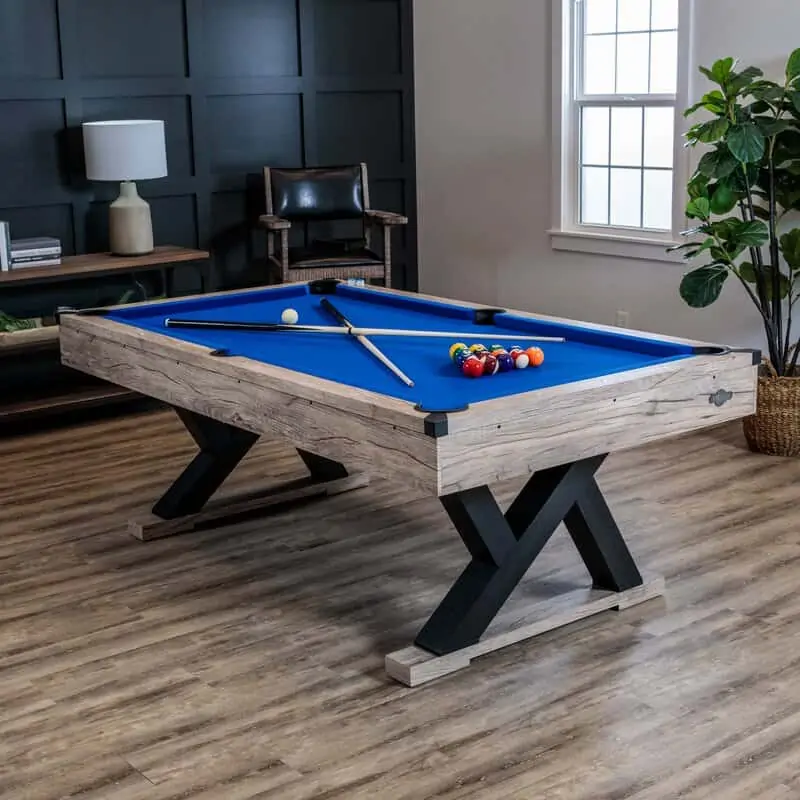
You should not leave pool balls sitting on the table for extended periods. Over time, the weight of the balls creates small indentations in the felt, and sunlight causes uneven discoloration around each ball. The damage is gradual rather than sudden, but storing your balls off the table between sessions keeps your cloth in better condition for longer.
I’ve owned two home tables over the years. On the first one, I left the balls racked on the table for months at a time because I didn’t know any better. When I eventually refelted that table, I could see faint circular marks where each ball had been sitting. It wasn’t dramatic, but it was visible. On my second table, I started storing the balls off the surface after every session, and the felt has held up noticeably better.
What Happens When Balls Sit on the Table
Each standard pool ball weighs about 6 ounces. A full set of 16 balls puts roughly 6 pounds of concentrated pressure on 16 small contact points across the cloth. Over days, that’s nothing. Over weeks and months, those contact points start to show.
Felt indentation is the most common issue. The weight of each ball compresses the cloth fibers in a small circle. When you eventually move the balls, those compressed spots play slightly differently than the surrounding cloth. Balls rolling over an indentation can deflect off-line, especially on slow shots. The effect is subtle, but it’s there.
Cloth discoloration happens when sunlight hits the table unevenly. The areas covered by balls stay protected from UV light while the exposed cloth fades. When you move the balls, you end up with darker circles on a lighter background. This is purely cosmetic but hard to reverse without refelting.
Dust and chalk accumulation is less obvious but still matters. Balls sitting in place collect a ring of dust and chalk residue around their contact point. That grime works its way into the cloth fibers and is harder to brush out than surface dust.
Best Ways to Store Pool Balls
There’s no single right answer here. The best storage method depends on how often you play and how much you care about preserving your equipment.
A ball case or tray is the best option for protection. Hard cases keep the balls from banging against each other and prevent dust accumulation. Soft trays or velvet-lined boxes work too. If you own premium balls like Aramith, a proper case is worth the small investment. I use a simple wooden tray that sits on a shelf next to my table. Loading and unloading takes about 30 seconds.
A wall-mounted ball rack keeps balls organized and off the table while putting them on display. These racks hold all 16 balls in individual slots and often have cue holders built in. They look good in a game room and make setup quick. The balls do collect some dust on open racks, but a quick wipe before racking solves that.
The table pockets are a convenient option that most players default to. After a game, just drop the balls into the pockets instead of leaving them scattered on the playing surface. This eliminates the indentation and discoloration issues because the balls aren’t resting on the cloth.
The main concern with pocket storage is that heavy balls can stretch out cheaper pockets over time. Faux leather and string pockets are the most vulnerable. Real leather pockets handle the weight well and maintain their shape for years. Even if the pockets stretch slightly, it’s an aesthetic issue rather than a gameplay one.
The racking triangle works as temporary storage if you’re playing again within a day or two. Rack the balls tight, lift the triangle off, and store the racked set on a shelf or table. This keeps the balls together and ready for the next session.
Using a Table Cover
A quality table cover protects against dust and sunlight (plus the occasional spill), but it doesn’t prevent indentation if balls are left on the surface underneath. Think of the cover as protecting the cloth from environmental damage, not from the weight of the balls.
I use a fitted vinyl cover on my table and still store the balls off the surface. The cover handles dust and keeps the cat off the felt. The balls go in their tray. Between those two habits, my current felt is three years old and still plays like new.
If you only do one thing, use a cover. If you do two things, use a cover and store the balls off the table. Both habits together add real life to your cloth.
Cleaning Your Balls Extends Their Life
Storage matters, but so does maintenance. Dirty balls transfer grime to the felt every time you play. Chalk dust, oil from your hands, and ambient dirt all accumulate on ball surfaces and then grind into the cloth during normal play.
A quick wipe with a microfiber cloth after each session removes surface residue. For a deeper clean, warm water with a few drops of mild dish soap, a 5-minute soak, and a thorough dry does the job. I do a full wash about once a month and a quick wipe after every session. The felt stays cleaner and the balls roll more consistently.
Avoid storing balls in extreme temperatures. Leaving them in a hot garage or near a window with direct afternoon sun can affect the resin composition over time. Room temperature in a climate-controlled space is ideal.
Worth checking out: If you’re shopping for a solid home table, take a look at the Barrington Billiards 7.5ft Table on Amazon.
FAQ
Should you leave pool balls on the table?
No. Leaving pool balls on the table for extended periods causes cloth discoloration (sun-faded spots around the balls) and small indentations in the felt. Store balls in a case, on a rack, or in the table’s pockets when not playing. A table cover also helps but does not prevent indentation.
How long can you leave pool balls on the table?
A few days between games is fine. The damage is cumulative and happens over weeks and months of sitting in the same position. If you play regularly, racking the balls in the triangle and storing them off the table between sessions is the safest approach.
Do pool balls damage the felt?
Over time, yes. Each ball weighs about 6 ounces, and that weight pressing on the same spot creates small impressions in the felt. Sunlight causes uneven fading around the balls. The damage is cosmetic and gradual, not catastrophic, but it shortens the lifespan of your cloth.
Is it okay to store pool balls in the pockets?
Yes, the pockets are a fine storage spot. The main concern is that heavy balls can stretch out cheaper pockets over time, especially faux leather or string pockets. Leather pockets hold up well. Even if the pockets stretch slightly, it does not affect gameplay.
Related Articles
For more on this topic, check out how to clean billiard balls, pool table reviews, how to refelt a pool table, billiard ball colors, and how many balls in pool.
Check out our top-rated gear picks — selected and reviewed by billiards enthusiasts.