

A good pool cue costs $100-150 for beginners and $300-500 for intermediate to advanced players. That’s a wide range, and it depends entirely on your skill level and what you need from the cue. I’ve owned cues at both ends of that spectrum, and the honest truth is that spending more does get you a better cue, but only up to a point.
The jump from a $30 bar cue to a $150 cue is enormous. The jump from a $300 cue to a $600 cue is much smaller. Knowing where the money actually goes helps you figure out what’s worth paying for.
The $50-100 Range: Entry Level
At this price, you’re getting a basic two-piece maple cue with a glue-on tip and a simple wrap. These cues come from brands like Players and Action. They’re a massive upgrade from house cues at bars and pool halls, which are usually warped and weigh whatever they weigh, with screw-on tips that hit like rocks.
A solid pick in this range is the Players Classic C-960. It’s a straight, reliable cue with a standard maple shaft. Nothing fancy, but it hits clean and holds up well. I’ve recommended this cue to friends who were buying their first stick, and none of them have complained.
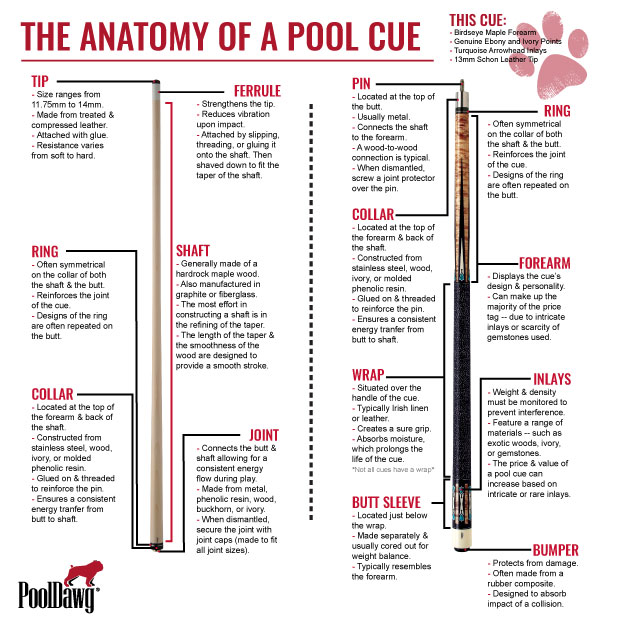
The limitations at this price: the shaft is a standard-taper maple with no deflection-reducing technology. The ferrule and joint are basic. The wrap is usually Irish linen or faux leather. These things affect playability at higher skill levels, but for someone learning fundamentals, they’re perfectly fine.
The $150-300 Range: Serious Hobbyist
This is the sweet spot for most players. Cues in this range come from McDermott and Lucasi, with Predator’s entry lines sitting at the top end. The build quality jumps noticeably. The joints are tighter and the balance is better, and the shafts are usually higher-grade maple with better taper profiles.
Some cues at the top of this range start including upgraded shafts with reduced deflection. That’s the biggest performance difference you’ll feel. A low-deflection shaft means the cue ball goes where you aim it more consistently, especially on shots with english (side spin). I’ve played with standard shafts and low-deflection shafts back to back, and the accuracy difference on cut shots with spin is real. For specific tested picks at this tier, our best pool cues under $200 walks through models worth considering.
You also get better tips at this price. Kamui and Predator Victory tips hold chalk better and shape more consistently than the generic tips on budget cues. They last longer, too.
The $300-500 Range: Advanced Player
At this level, you’re paying for performance. Most cues in this range come standard with a low-deflection or carbon fiber shaft, which is the single biggest upgrade in modern cue technology. Predator and Mezz dominate this space, with Lucasi Hybrid also competing well. If you’re shopping the lower edge of this tier, our best pool cues under $300 rounds up the models that punch above their price.
The Lucasi Custom Sneaky Pete is a good example. It looks like a simple bar cue but plays like a high-end stick. Sneaky Petes are popular among players who want performance without drawing attention to their equipment.
Carbon fiber shafts (like the Predator REVO or Cuetec Cynergy) are increasingly common in this price bracket. They’re more consistent than wood: they don’t warp or react to humidity, and the hit stays the same for years. Some players prefer the feel of wood. Others swear by carbon fiber. Both are legitimate choices at this level, and our best carbon fiber pool cue guide ranks the full-carbon options if that’s the direction you’re leaning.
For $300+ cues, a dedicated cue shop beats Amazon on selection. The Predator REVO 12.4mm shaft at Billiard & Pool Center is the benchmark for this tier, and BPC stocks the Predator and Lucasi lines at a depth Amazon doesn’t match.
The $500+ Range: Collector and Professional
Above $500, you’re paying for craftsmanship and brand prestige as much as performance. Cues from Schon and Southwest can run $1,000 to $3,000, while full-custom builds from independent makers go even higher.
The playing performance at $500+ is excellent, but it’s not dramatically better than a well-made $400 cue with a good shaft. The extra money goes toward inlays (decorative patterns set into the butt using exotic woods or mother of pearl), rare wood species, hand-carved details, and limited production runs.
For professional tournament play, most pros use cues in the $400-800 range with aftermarket shafts. The shaft matters far more than the butt for actual performance, and a $300 low-deflection shaft on a $200 butt will outplay a $2,000 collector cue with a standard shaft.
What Actually Affects the Price
The shaft is the most important cost factor. Standard maple shafts cost manufacturers $20-40. Low-deflection technology pushes shaft costs to $100-300, whether that’s spliced wood construction or full carbon fiber. This is where the real performance lives.
The butt is where aesthetics drive cost. Plain maple with a simple wrap is cheap to produce. Exotic woods and complex inlay patterns add cost, and so do branded joint systems. A basic butt might cost $30 to make. An inlaid custom butt can cost $500 or more in materials and labor alone.
The tip matters more than people think. A good tip ($10-25) outperforms a cheap tip ($2-5) in feel and durability, and it holds chalk noticeably better. Most cues above $150 come with quality tips, but it’s worth checking what’s included.
The joint connects the shaft to the butt. Different joint types affect how the cue feels at impact, from crisp stainless steel to softer wood-to-wood connections. This is a personal preference more than a quality issue, but proprietary systems like Uni-Loc do add to cost.
How to Choose
If you’re a beginner playing once or twice a week, spend $100-150 on a reputable brand and don’t overthink it. You’ll be learning fundamentals, and any decent cue will serve you well for the first year or two.
If you’ve been playing regularly for a year and you’re starting to work on spin and position play, consider moving to the $200-400 range and getting a cue with a low-deflection shaft. That’s the upgrade that will actually make you play better.
If you’re competing in leagues or tournaments, invest in the best shaft you can afford. You can always upgrade the butt later, but the shaft is where accuracy lives.
For specific recommendations, check our affordable cues worth buying guide or our best pool cues for beginners guide.
Worth checking out: A new cue won’t fix a beat-up house set of balls. If yours are chipped or yellowed, the Aramith Pure Phenolic Pool Balls on Amazon are the standard upgrade.
FAQ
How much should a beginner spend on a pool cue?
A beginner should spend $100-150 on their first cue. That range gets you a solid maple shaft and a glue-on leather tip in a two-piece design from a reputable brand like Players or Lucasi. You don’t need more than that to start improving.
What makes expensive pool cues cost more?
The shaft is the biggest cost driver. Low-deflection shafts with carbon fiber or specially tapered wood reduce cue ball deflection and cost $150-300 on their own. Decorative inlays and exotic wood add to the price of the butt section, and brand reputation does the rest.
Is a $500 pool cue worth it?
For intermediate to advanced players, yes. A $500 cue typically comes with a low-deflection shaft that genuinely improves accuracy on off-center hits. For beginners, the performance difference over a $150 cue isn’t noticeable enough to justify the cost.
Can you get a decent pool cue for under $100?
You can, but options are limited. The Players C-960 and similar budget models offer a maple shaft and glue-on tip for around $50-80. They’re a huge upgrade from house cues but won’t have the shaft technology or build quality of cues at $150 and above.
Related Articles
For more on this topic, check out cues for intermediate players, best cues for beginners, best pool cues under $100, best pool cues for the money, best pool cue brands, and screw-on tips.
Browse our full Cues hub for tested picks, buying guides, and head-to-heads.