

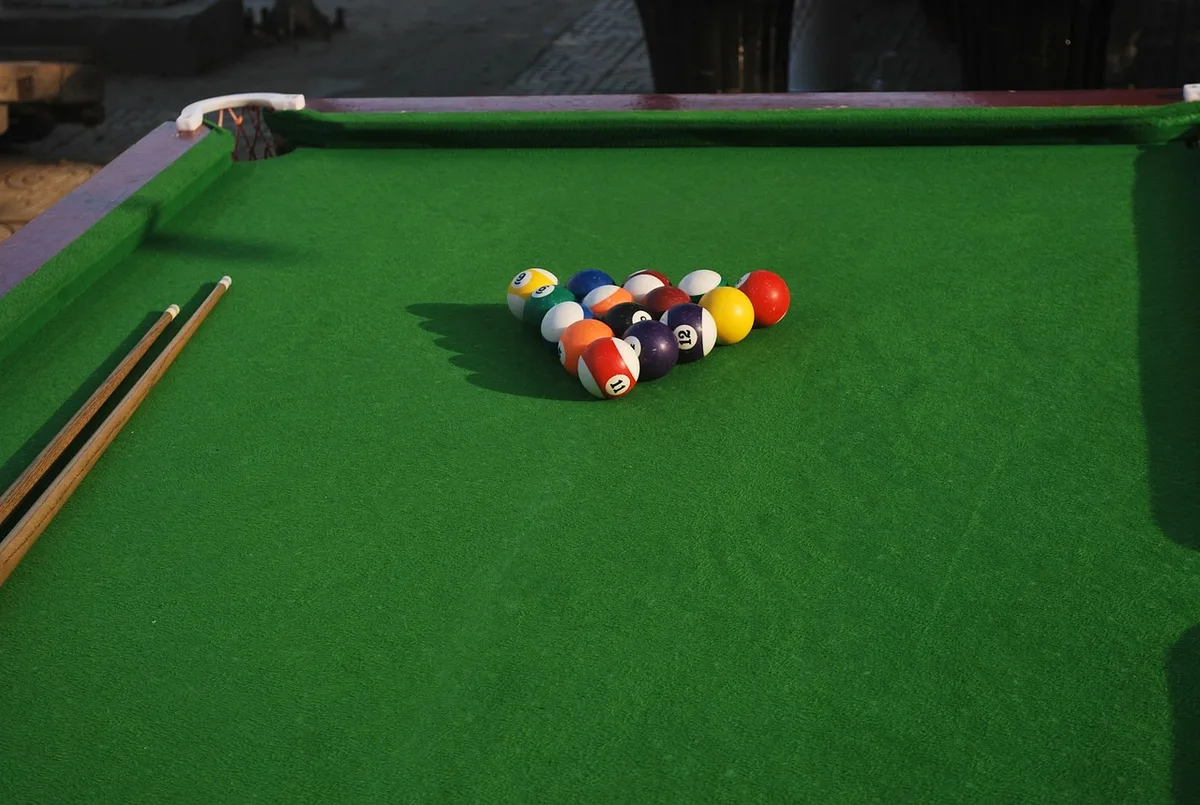
No, pool chalk color does not affect performance. Blue, green, red, and black chalk all create the same amount of friction between your cue tip and the cue ball. The only reason to choose a specific color is aesthetics: matching your chalk to your felt color makes chalk marks less visible on the table. Quality separates cubes more than color ever will. Premium chalk like Kamui holds longer and produces less dust than budget chalk, though even a cheap cube does the job.
Still, there’s a reason most pool halls stock blue chalk, and the why is worth knowing.
What Chalk Actually Does
A pool cue tip is leather. The cue ball is perfectly smooth and hard. When you hit the ball, you want the tip to grip it momentarily. Chalk provides that grip.
Without chalk, the tip slides across the ball’s surface like ice on ice. You lose your english: the spin you’re trying to impart. The ball behaves unpredictably, and your shot feels weak and uncontrolled.
Chalk fills the microscopic pores of the leather tip, creating friction. With every shot, some chalk rubs off onto the cue ball. Some rubs off onto the table. The leather tip constantly needs a fresh chalk coating to maintain that grip.
The color of that chalk doesn’t change the friction coefficient one bit. Blue chalk creates the same amount of grip as green or black chalk. The science is identical.
Why Blue Became the Standard
Blue became the default for a few unglamorous reasons.
Partly tradition. Blue chalk has been the norm for decades, so manufacturers keep making it and players keep buying what they already know from every bar and pool hall they’ve walked into.
Partly practicality: blue looks fine on both green and blue felt (the two most common cloth colors). A green chalk mark on a blue table stands out more. A blue mark on a green table is subtle. Blue is the compromise color.
The rest is manufacturing. Blue dye is standard and cheap, and makers have been refining the blue formula for so long that it just works.
None of this makes blue chalk better than the other colors. It’s the familiar choice, and familiarity is sticky.
The Aesthetic Argument
Color actually matters in exactly one place, and that’s how the table looks.
Pool tables get marked up. When you miss a shot and the tip glances the cue ball, chalk dust flies. When you chalk between shots, dust settles on the felt. No matter how careful you are, chalk marks accumulate.
If you play on a green table with green chalk, those marks blend in and the table keeps looking clean. Play on the same table with red chalk, and every mark screams at you.
So some players and venues choose chalk that matches the felt. The benefit is purely visual: the table stays presentable while playing exactly the same.
Professional tournaments use the chalk provided, usually blue or green depending on the table cloth. Players don’t get to choose because consistency matters for competition.
Does Chalk Quality Actually Matter?
For most players, no. Budget chalk and premium chalk perform almost identically. All chalk creates friction, and a $0.50 cube and a $3 premium cube both do the job. They both grip the leather tip and put english on the ball.
Quality makes a small difference in two areas, consistency and mess. Premium chalk holds together better and spreads more evenly across the tip. It also kicks up less dust than a cheap cube.
But these are marginal differences that don’t change your shooting ability. A pro playing with cheap chalk will beat an amateur with premium chalk every single time.
What does matter is chalking regularly. A well-worn tip that’s been used 50 times without chalking will perform worse than a freshly chalked tip, regardless of chalk quality. The fix is using enough chalk, and using it often.
If you’re curious what the premium cubes actually deliver for the money, our best pool chalk guide puts them side by side, from $2 Master cubes on up.
How Often to Chalk
Chalk before every shot.
After you strike the cue ball, the tip loses some of its coating, so pick up the cube and roll the tip across it one time before your next shot. A single gentle roll does the job. There’s no need to mash the cube or twist it like you’re sharpening a pencil.
If you’re playing seriously, you might chalk twice: before and after a particularly delicate shot. But once is the standard. You’re not creating a thick coating. You’re just maintaining the thin layer that gives you friction.
Some players chalk more often out of habit or nervousness. That’s fine. Chalking often won’t hurt your game; the worst it does is waste chalk and dust up the felt.
The mistake is going multiple shots without chalking. After three or four shots without chalk, your tip is bare and slippery. You’ll miss english and feel like you’re playing poorly.
The Psychology Factor
Chalk color affects your mental state more than it affects physics.
If you prefer blue chalk and someone hands you black, you might feel off and shoot a touch worse because you’re slightly uncomfortable. That reaction lives entirely in your head.
This is why some pros are picky about chalk. They’ve played with the same color for years. The ritual of using their specific chalk centers them. It’s superstition mixed with habit. And that’s okay. If it helps you feel confident, use it.
Just be honest about what the ritual does. It calms you down. The chalk itself has no idea what color it is.
Color Options in Today’s Market
Master is the most famous chalk brand, and they make tons of colors:
Black, blue, brown, gold, green, gray, rust, sky blue, and spruce are all available. Some billiard supply shops stock all of them. Some only stock blue and green because that’s what sells.
You can experiment by buying a few colors and seeing what feels right. Just don’t expect performance differences. You’ll only find out which color makes you feel most confident.
FAQ
If I use green chalk on a blue table, will it damage the felt?
No. Chalk is basically crushed rock with pigment mixed in, and it wipes away easily without hurting the cloth.
Should I match my chalk to my table cloth?
Matching looks tidy on the table, and that’s the whole benefit. Choose whichever color you prefer and enjoy playing with it.
Is expensive chalk worth buying?
Only if you notice the difference in consistency or feel. A $3 premium cube holds a bit longer and dusts less than a $0.50 one, and if that makes you feel more confident, the upgrade costs almost nothing. It won’t transform your shooting.
Do I need to use the same brand as the pool hall?
No. Most pool halls won’t care what chalk you bring. Some venues prefer you use their chalk for hygiene reasons, so ask before you play.
Does cheap chalk damage my cue tip?
Chalk is chalk. It won’t damage the leather. Using no chalk damages the tip (it becomes slippery and wears unevenly), while cheap chalk treats the leather the same way expensive chalk does.
What if I’m colorblind?
Buy one color and stick with it; which one truly doesn’t matter for performance. Just remember to chalk before your shots.
Can I make my own chalk?
Technically yes, but you’d need crushed talc or calcium carbonate and a binding agent. It’s easier to just buy it. Commercial chalk is cheap.
Using Chalk Effectively
Chalk is just one small part of the game. A good tip and solid technique matter far more. But since you’re going to use chalk anyway, use it consistently before every shot and don’t stress about the color.
If you want a complete understanding of cue setup, read about cue tips and what pros actually use, and know how long a cue tip lasts so you can swap it before it costs you games.
Chalk dust ends up on the cloth and the cue ball too, so read up on how long pool table felt lasts and how to keep it clean. And if your cue ball never seems to come clean no matter what you wipe it with, check whether upgrading to Aramith balls makes sense for your table.
Beyond that, buy whatever color makes you happy and chalk before every shot. Your technique will carry the rest.
Browse our full Cues hub for tested picks, buying guides, and head-to-heads.