
If you’re new to pool, the word “English” gets thrown around a lot, usually right next to “squirt,” “left English,” and “right English.” It sounds like jargon. The idea behind it is simple, though, and once you see what it means you’ll realize you’ve probably been using English already without knowing the name for it.
What is English in Pool?
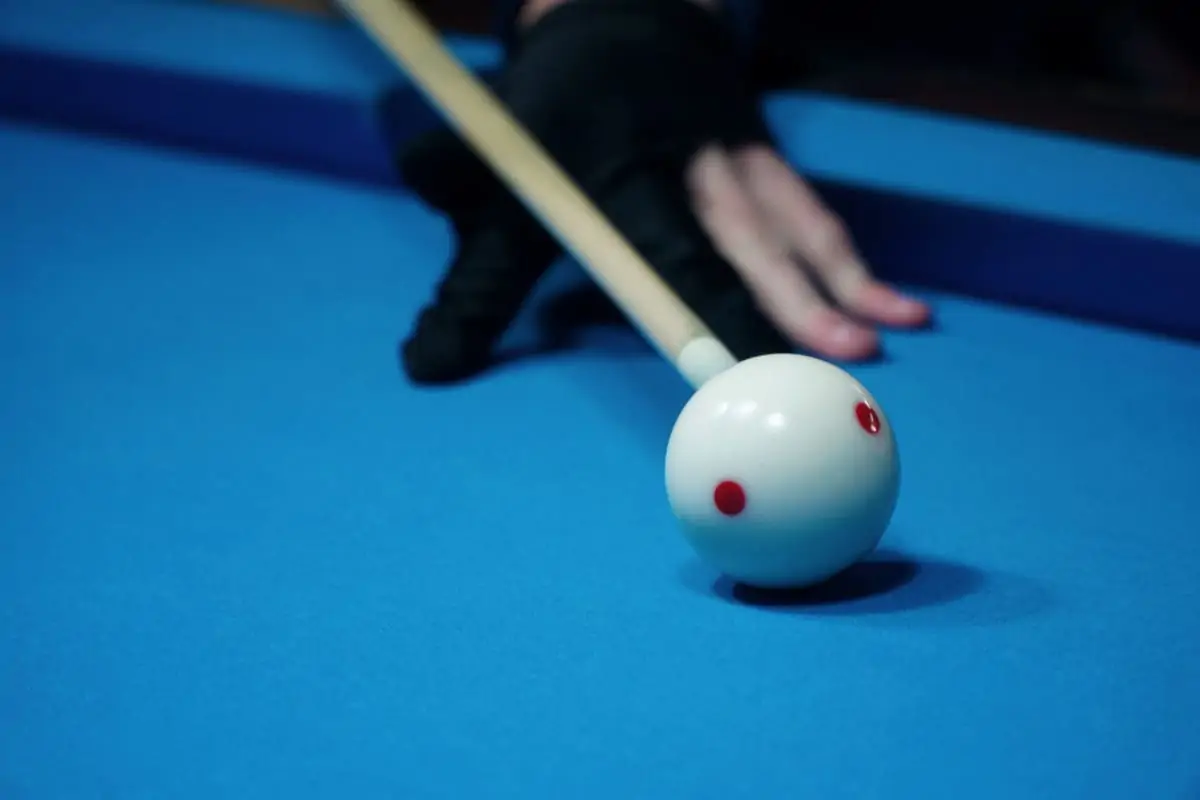
In short, English is the spin you put on the cue ball when hitting it anywhere but dead center. Whether you know it or not, English is used all the time in pool and is one of the main ways to control where the cue ball ends up after coming into contact with an object ball.English is Sidespin
When you hear people talk of sidespin in pool, they’re talking about English (sometimes spelled english) under a different name. Any time you hit a cue ball even slightly off-center, you create English or sidespin. The further away you get from center, the more pronounced the English.
Setting Up Your Next Shot
English earns its keep when you’re already thinking about the next shot. Hitting left or right of center changes the angle the cue ball takes off a rail compared to a center-ball hit, so you can steer it toward where you want to shoot from next instead of leaving it wherever it happens to die. Good players plan a whole rack this way. For a beginner, just getting the cue ball to drift a few inches in the direction you chose is a real step up.
Playing Defense
English is one of your best defensive tools. When you don’t have a makeable shot, you can use sidespin to park the cue ball somewhere ugly, behind a blocker or tight against a rail, and hand your opponent a problem instead of a setup. A good safety is often worth more than a low-percentage swing at a ball you’ll probably miss anyway.
Hitting Partially-Obscured Object Balls
When an object ball is partly blocked, English gives you a way to reach it. A touch of sidespin throws the object ball slightly off the natural line of contact, which can be enough to cut a ball that a dead-center hit would clip or miss. If the ball is hidden behind another ball along the cue ball’s path, players elevate the cue and curve around it, the swerve shot covered further down.
Changing an Object Ball’s Direction
Most people think of English as a way to steer the cue ball. It also changes where the object ball goes. The spin transfers a little on contact and “throws” the object ball a few degrees off its natural path. It’s subtle, but on a thin cut or a ball sitting near the pocket it’s the difference between a make and a rattle. Strong players account for throw on nearly every shot; most casual players never notice it’s happening.
Tips for Accurate English
Start close to center and work your way out. The biggest beginner mistake is loading up on spin before they can control it, which is what sends shots flying wide. Chalk every single shot, since a clean tip is what keeps English from turning into a miscue. And learn how squirt affects your aim, covered below, so you can adjust your aim point instead of fighting it. A low-deflection cue shrinks that adjustment and makes it far more predictable.
Rail Shots
Rail and bank shots lean on English more than almost any other shot. On a bank you have to hit the cushion at the right angle and put the right amount of spin on the ball so it comes off where you want it. This is probably the most common place English gets used on purpose.
Other Terminology
I mention the terms “throw” and “swerve” above, which I define below. “Squirt” is another term you should be familiar with in order to understand English.
- Throw: When an object ball moves in a sideways direction due to the cue ball’s spin and impact. Essentially, throw is the effect that the cue ball has on an object ball. Great players can avoid or create throw on their shots.
- Swerve: When the cue ball curves during travel because of spin combined with the angle of cue impact. Essentially swerve is used to circumvent balls in the cue ball’s path. This is called a massé shot, and is done by elevating the cue stick and hitting the cue ball on its side.
- Squirt: Also known as deflection, squirt happens when using English on a shot. Since the cue tip hits the ball off-center, physics states that the ball will deflect or “squirt” in the opposite direction. So left English will result in right squirt, and vice versa. When you know how squirt works, you can compensate for it and use it to your advantage. You can reduce squirt by using a low-deflection pool cue.
If you’re serious about using English consistently, a low-deflection cue makes a real difference. Less squirt means your aim point stays closer to where you actually want the cue ball to go.
Worth checking out: A quality cue helps you practice better, take a look at the Players Technology Series HXT15 Cue on Amazon.
Once English starts behaving, the next thing to sharpen is where you’re actually aiming. Our guide to aiming in pool pairs naturally with this one.
Related Articles
For more on this topic, check out holding a pool cue, beginner’s guide, pool table reviews, pool cue reviews, and billiard game types.
Browse our full Cues hub for tested picks, buying guides, and head-to-heads.