

- Forgiving
- Huge model range
- Easy tip swaps
You already own a cue. Maybe it’s a budget stick you picked up after reading our best cues for the money guide. Maybe it’s a hand-me-down that came with the table. Either way, you’ve been playing long enough to know this: the cue matters.
Gear snobs will tell you the cue is most of the game. It isn’t. A $175 cue will do nothing for your stroke. What it will do is quit punishing you for a good one, so that when you pocket a clean cut and the cue ball still drifts two inches wide, you can stop blaming yourself and start blaming the stick.
The $130-$200 range is where cues quit being “good enough” and get good. Construction tolerances tighten up. Wraps survive past six months. Joints stay straight instead of developing that faint click you learn to ignore. For most players this is the last cue purchase they ever actually need to make, which is why I’d rather see someone spend $175 once than $60 three times.
Why $130-$200 Is the Sweet Spot
The performance jump from a $50 cue to a $150 cue is enormous. The jump from $150 to $400 is noticeable but much smaller. That’s the math that matters here.
Under $100, cues use acceptable maple and basic construction. They work. Our under-$100 picks are honest about what you get for the money, which is a functional joint and loose tolerances. Cross $200 and your dollars start going into exotic wood inlays and premium finish work, plus a share of whatever the brand spends telling you about them. The playing improvements up there arrive in much smaller increments.
Between $130 and $200, manufacturers put the money into the parts you actually feel, which means shaft grading and joint precision ahead of finish work. CCSI is a major manufacturer that owns the Players brand, and by their own account the $130-$200 cues draw on the same Canadian hard rock maple stock as the $300+ lines. Most of what separates the tiers is cosmetics and marketing budget. Our rundown of pool cue brands has the full picture of who builds what for whom.
Quick Comparison
Every cue in this bracket runs a 13mm tip on maple. What separates them is wrap material and shaft grading, plus whether a case comes in the box.
| Cue | Price | Shaft | Tip | Wrap | Best For |
|---|---|---|---|---|---|
| McDermott Lucky L3 | ~$135 | Maple | 13mm | Irish linen | Budget McDermott + case |
| Viking Valhalla 100 | ~$150 | Hard rock maple | 13mm | Irish linen | Most popular, proven |
| McDermott Lucky L9 | ~$150 | Maple | 13mm | Irish linen | Best value with case |
| Viking Valhalla 200 | ~$160 | Maple | 13mm | Leather | Step-up from V100 |
| Players G4121 Traditional | ~$175 | Canadian maple | 13mm | Irish linen | Best shaft quality |
| Players Classic Birds-Eye | ~$179 | Birds-eye maple | 13mm | Irish linen | Premium look + performance |
The Picks
Six cues, listed cheapest first rather than best first, because the right answer here turns on whether you already own a case more than on which stick wins a spec sheet. The shortlist is drawn from what our readers actually buy through the site, then checked against current specs and street prices for each model. I haven’t spent a season with all six and I’m not going to pretend otherwise, so where the build and the price settle a question, I let them settle it.
Budget McDermott entry with case, hard to beat the total value.
- McDermott name
- Case included
- Built in Wisconsin
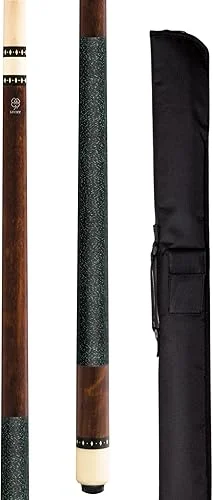
McDermott has been making cues in Menomonee Falls, Wisconsin since 1975. The Lucky L3 is their entry point: solid maple construction with an Irish linen wrap and a 1x1 soft case included. The case alone would cost $25-35 separately. At $135 for cue plus case, the value math works out well for players who need everything in one purchase.
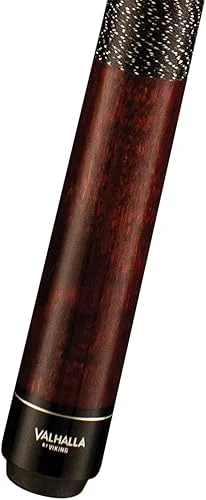
The go-to recommendation at ~$150, and the cue our readers buy more than any other: 49 Valhalla 100s sold through our affiliate links in 2025, ahead of every other stick we cover. Viking builds it around hard rock maple under an Irish linen wrap, in weights from 18 to 21 oz. That last detail matters more than people expect, because a 21 oz cue in the hands of someone who strokes at 18 will scatter position play all night. I gave the Valhalla 100 its own full review covering the tip prep it needs out of the box, and there’s a broader look at whether Viking cues are any good across the wider lineup.
The smart buy at $150, McDermott build quality plus a case.
- McDermott name
- Case included
- Amazon's Choice
The L9 is a step up from the L3 on cosmetics and finish, and every Lucky series cue ships with a 1x1 soft case. That’s the whole argument at $150. The Valhalla 100 costs exactly the same and arrives bare, so a buyer starting from nothing takes the L9 and pockets the $25-35 a case would have cost. For anyone who already owns one, the Valhalla 100 edges it on shaft quality, and I’d take the Viking.
The natural upgrade from the V100, better feel, better looks.
- Leather wrap
- Exotic wood accents
- Better shaft than V100
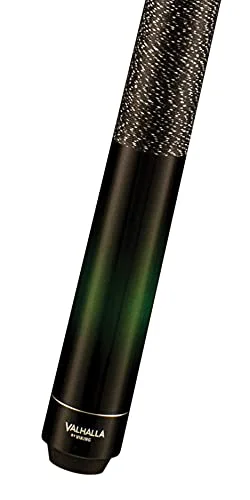
The upgrade from the 100 is a leather wrap in place of the linen, plus exotic wood accents and cleaner cosmetics that make it read as a more expensive cue than it is. Leather suits players with dry hands; linen suits players who sweat. For a lot of people that one detail decides it. At $160, ten dollars over the V100 buys you a materially different cue, which is not something you can say about most $10 gaps in this hobby.
The "safe pick" when you want classic feel and broad support.
- Forgiving
- Huge model range
- Easy tip swaps
Players is owned by CCSI, the same company behind Lucasi. The G4121 runs Canadian hard rock maple into a stainless steel joint with no detectable wobble, and the Le Pro tip holds chalk about as well as any factory tip in this bracket. This is the cue I point people to when they’re stepping up from something sub-$100, because the jump is obvious inside a rack. Crisper hit. Straighter shaft. It feels built to a spec, which is not how a $60 cue feels.
Best aesthetics under $200 without sacrificing playability.
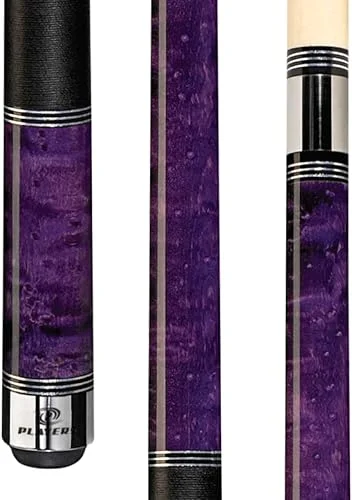
- Distinctive grain pattern
- 811+ Amazon reviews
- CCSI quality
Birds-eye maple has a distinctive grain pattern that makes every cue unique. The triple silver ring accents add a touch of class without the gaudy look some decorated cues fall into. Underneath it’s the same CCSI build as the G4121 in a nicer package, which means you’re paying $4 for the grain. Fine trade if you like looking at your cue. If you don’t care how it looks, buy the G4121 and skip this one.
What you gain at $130-200 over sub-$100: Better wood grading, tighter joints, wraps that feel good after an hour of play, and tips that hold chalk consistently. The cue ball starts going where you aim it instead of somewhere in the neighborhood.
Quick pick: The Players G4121 at ~$175 for the best shaft quality, or the McDermott Lucky L9 at ~$150 if you need a case included.
What Changes When You Spend $130-$200
Consistency is the difference you’ll actually notice moving up from a sub-$100 cue. Power and speed barely change.
A cheap cue hits one way when you grip it high and another way when the humidity moves overnight. A $150+ cue hits the same every time, and that repeatability is the entire reason muscle memory forms at all. You stop compensating for the stick. What’s left is your actual game.
Specific upgrades at this price: tighter joint tolerances (less energy lost at the connection), better-graded maple (fewer imperfections that cause micro-vibrations), higher-quality tips (better chalk retention, more consistent contact), and wraps that don’t deteriorate after 200 hours of play.
Tips for Buying Your First Upgrade Cue
Test it if you can. Thirty minutes at a pro shop will teach you more about whether you want the balance of a Players or a Viking than twenty reviews will, and nobody is going to charge you for the privilege. They want the sale.
Match your shaft preference. Stay at 13mm. Your muscle memory is built around that diameter, and moving off it costs you weeks of feel that you’ll spend re-learning aim on shots you already owned outright. Every cue here is 13mm, so this list can’t burn you. The ones who get burned jump to an 11.75mm shaft because a forum told them to.
Consider the case question. A $150 cue left leaning against a wall will warp, because maple answers to gravity and humidity whether or not you paid attention in shop class. The McDermott Lucky series ships with a soft case, which is worth $25-35 and makes the L9 the better total value if you’re starting from nothing. Going the hard-case route instead costs a bit more, and our cue case picks cover what’s worth buying.
Don’t buy based on color. The Vikings come in dozens of finishes and the Players Birds-Eye Maple is gorgeous, and none of that has ever sunk a ball. Buy whichever cue feels right in your hands. You’ll stop noticing the finish inside a week, and by month two you’ll be looking at the tip and the ferrule and nothing else, the same as everyone else who plays enough to care.
The Bottom Line
Play once a week or more and you should be spending $150-$180 on a cue. The Players G4121 at ~$175 plays best of anything here. Still need a case? Then the McDermott Lucky L9 at ~$150 is better total value, and for anyone already shooting a Valhalla 100, the Valhalla 200 at ~$160 is the smallest amount of money that buys a meaningfully different cue.
Want to spend less? Our best cues for the money guide covers picks starting at $50, and the under-$100 list goes lower still. Ready to go higher? Check out our best cues under $300 guide for low-deflection shaft options and premium builds, or the intermediate players guide if you’re shopping on playing level rather than price.
The #1 recommendation from this guide, chosen for quality, value, and real-world performance.