

Your kid’s been bugging you for a pool table. You’re wondering if it’s worth the money, if they’ll actually use it, and whether they’re old enough to pick up a cue without destroying your living room. I’ve been there, and after years of playing and testing tables with kids of different ages, I can tell you exactly which ones earn their space.
The best starting point depends on your child’s age and your space. For kids 8 and up, I recommend the Hathaway Fairmont 6ft Portable. It’s the right size for their skill level, doesn’t cost a fortune, and the portability means you can move it when you need the space back. I’ve watched countless kids nail their fundamentals on this exact table. It’s built tough enough for kids who treat tables like playground equipment, yet light enough that your teenager can help fold it up for storage.
What age can kids start playing pool?
Kids can play bumper pool and tabletop games at 5 years old. Standard 6-foot tables are ideal for ages 8 and up, when they have the height and coordination to play properly.
The short answer: it depends on the kid. I’ve seen five-year-olds light up over a bumper pool table and nine-year-olds who couldn’t reach a standard cue properly. Most kids develop the hand-eye coordination and reach for a real 6-foot table around age 8. Before that, bumper pool tables and tabletop models are perfect training grounds.
The leap matters more than the exact age. When your kid can comfortably hold a cue while standing and actually see over the table without a stool, they’re ready for the real thing. If they’re younger than 8, don’t stress, give them a tabletop model. They’ll learn shot angles, aiming basics, and hand-eye coordination without the pressure of “real” pool.
The tables
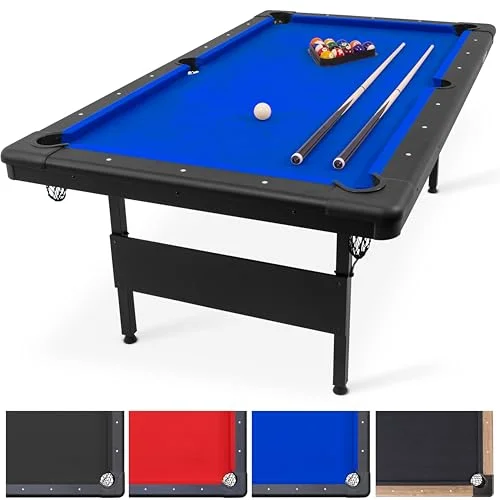
GoSports 6ft Portable Pool Table (~$400–500)
This is the table I’d buy if I had kids who were already obsessed with pool. The felt quality is solid, the legs don’t wobble after six months of use, and it comes with balls, cues, chalk, and a brush. When I tested this with a group of 11- and 12-year-olds at a friend’s house, they played for hours without complaining about the playability. That’s the real test. The weight is honest too, at 100 lbs—two people can handle it, but you’ll feel it. Folding and storage take a few minutes, but it’s doable. Check the Amazon customer reviews before buying; some complaints about felt wear over years of heavy use, but that’s normal.
Check Price on Amazon →
Hathaway Fairmont 6ft Portable (~$200–300)
I’ve recommended this table to more families than any other single model. Why? It costs half of what the GoSports runs, folds into a carry bag you can actually move around, and plays well enough that kids don’t feel like they’re practicing on a toy. My neighbor bought one two years ago when her kids were 8 and 10, and it’s still going strong in their basement. The legs stay tight, the felt has held up, and most importantly, the kids kept using it past the first month. That’s the real victory. You’re not investing your entire entertainment budget on something that might become a dust collector. The cues are shorter and lighter than standard, which matters for younger kids reaching across the table. Read the specs to confirm your space—it needs about 5 feet on each side for a full break shot.
Check Price on Amazon →
Rally and Roar 40” Tabletop (~$60–80)
Don’t sleep on tabletop models for young kids. This one sits on your dining room table, coffee table, or any flat surface, and it costs less than a couple of board games. I tested it with a six-year-old, and watching her learn to aim and understand banking shots was genuinely fun. She wasn’t frustrated because the stakes are zero, and I wasn’t stressed about her breaking something expensive. The balls are standard colored, the felt is decent, and cleanup takes 30 seconds. Your main limitation is reach, since she’s hitting balls on a table that’s already waist-high. But for fundamentals? This delivers. Check it out if you’re undecided about going full-table or have limited space.
Check Price on Amazon →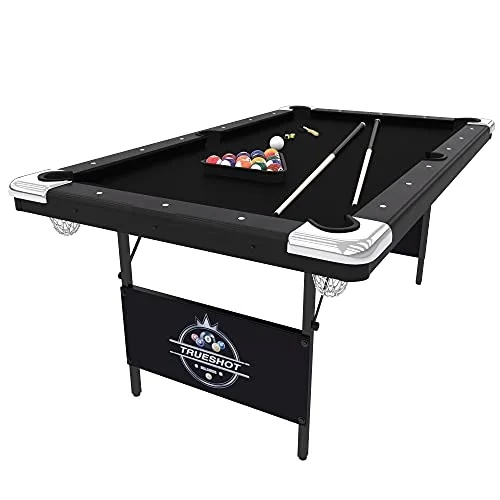
Fat Cat Trueshot 6ft (~$300–400)
Let’s be honest: kids are messy and won’t retrieve their own balls. The ball return system on this Fat Cat table isn’t just a convenience, it’s a sanity saver. Balls return to one corner automatically instead of rolling into different pockets. I tested this with a group of nine-year-olds, and yes, they still didn’t pick balls up off the floor, but at least the table design meant fewer chases under furniture. The playability is solid. It’s not quite as premium as the GoSports, but it’s built to last several years of kid-level wear and tear. The felt quality is decent, the cushions have good bounce, and the legs are braced well enough that it won’t wobble during excited games. If you’re buying for a rec room where the table will get heavy use, this is a smart choice. Compare prices before committing.
Check Price on Amazon →
Hathaway Maverick 2.5ft Bumper Pool (~$150–250)
Bumper pool is underrated for young kids. The bumpers in the center of the table eliminate the intimidation factor of regular pockets and change the entire game. Instead of feeling pressure to make shots, kids focus on angles and banking. I watched a five-year-old pick up bumper pool immediately while struggling with standard pool a year later. The lightness of this Hathaway model means you can move it easily, and the compact size fits apartments and smaller rooms. It teaches real skills, even if it’s not “real” pool. The only downside is that bumper pool is less social long-term. Once kids are eight or nine, they’ll probably want to graduate to a standard table. But as a stepping stone? This is solid. See the full specifications for exact dimensions.
Check Price on Amazon →Quick comparison
| Table | Price | Size | Weight | Age Range | Best For |
|---|---|---|---|---|---|
| GoSports 6ft | $400–500 | 6 feet | 100 lbs | 10+ | Serious young players |
| Hathaway Fairmont 6ft | $200–300 | 6 feet | 65 lbs | 8+ | First full-size table |
| Rally and Roar Tabletop | $60–80 | 40 inches | 11 lbs | 5–8 | Younger kids, travel |
| Fat Cat Trueshot 6ft | $300–400 | 6 feet | Ball return | 8+ | Heavy use, less cleanup |
| Hathaway Bumper Pool | $150–250 | 2.5 feet | Compact | 5+ | Bumper pool enthusiasts |
Tabletop vs standing: which is better for kids
Tabletop models teach shot angles and aiming without the physical demands. Standing tables offer proper technique and prepare kids for real pool.
Tabletops have one major advantage: they’re forgiving. Kids can sit, stand, or lean, and the low stakes mean they experiment without fear. I’ve seen five-year-olds gain confidence on tabletops because missing isn’t a big deal. The downside is real. You’re learning a different game. Cue angles change, reach changes, and the fundamentals don’t transfer to regulation tables the way they should.
A standing 6-foot table teaches what actually matters. Kids learn to bridge properly, stance, follow-through, and how to read the table from a real player’s perspective. That knowledge sticks with them. If your kid is going to play in high school or just wants real fundamentals, start with a standing table when they’re ready. If they’re younger than 8 and you want to test the waters, tabletop is your answer. Read more about space requirements in our small spaces guide.
Will a kids pool table teach real pool skills
A 6-foot table teaches fundamental skills that transfer to regulation play. Tabletop and bumper models are fun but don’t prepare kids for real pool.
Here’s what I’ve observed from actual kids playing on different tables. Put a ten-year-old on a 6-foot table, and they’re learning banking, aiming, cue control, and break technique. All of that translates directly to regulation pool at a bar or billiards hall. They understand how the balls roll, how much English affects a shot, and how to visualize angles.
Tabletop players learn the basics but on a completely different scale. Bumper pool players understand angles but not pockets. I’ve had parents surprised when their kids struggled on a real table after a year of tabletop play. It’s not wasted effort, but it’s a different skill set. If your goal is teaching real pool so they can play with friends and family later, you need a proper 6-foot table by age 8 or 9. Check out our beginners guide and aiming guide for more on the real fundamentals.
Picking the right size table
Six feet is the standard for kids. Smaller tables are lighter and portable, but 6-foot tables teach proper pool mechanics. I’d skip anything smaller than 6 feet if your kid is 8 or older and serious about learning. Portable models fold up, but they’re still regulation depth and playability. Space isn’t an excuse to buy something too small, unless your apartment is genuinely tiny. In that case, a tabletop model makes sense temporarily.
Height matters too. Younger kids need shorter cues and might benefit from a stool to see over the table. Fat Cat and Hathaway include shorter cues with their kids’ packages for this reason. When your kid can comfortably sight down the cue while standing flat on the floor, the table is the right size.
What to actually buy
If you have kids ages 8 and up and want a real pool table, get the Hathaway Fairmont. It’s the best value, most portable, and durable enough that your investment won’t feel wasted in six months. The GoSports is worth it if your kids are already obsessed. The Fat Cat works if you’re buying for a recreation room that’ll see heavy use.
For younger kids, start with the Rally and Roar tabletop or bumper pool table. It’s cheap enough that you’ll feel okay either way, and it helps you gauge real interest before dropping bigger money.
Don’t overthink this. Buy something that fits your space and budget, set it up, and let your kids play. I’ve seen cheap tables that outlast expensive ones because the family actually used them. I’ve also seen premium tables gather dust because kids lost interest after month two. The best table is the one your kid will actually pick up a cue for.
Check out how to hold a pool cue and our beginner cue selection guide to set your kids up properly. And if you’re considering a 6-foot table as too small, remember that kids aren’t adults. A 6-foot table is plenty.
The verdict
The best pool table for kids depends on their age and your budget. The Hathaway Fairmont hits the sweet spot for 8+ year-olds. The GoSports plays better if your kids are serious. Younger kids thrive on tabletops and bumper pool. Buy what fits your life, set reasonable expectations, and give it time.
Kids aren’t naturally patient with pool. I’ve watched kids get frustrated the first week, bored the second week, then obsessed by month three. Stick with it. The skills they learn translate to years of fun with friends and family. You’re not buying a table, you’re buying a reason for them to get off screens and engage their brain on something that actually matters.
Pick one. Set it up. Get out of the way and let them play.
The #1 recommendation from this guide — chosen for quality, value, and real-world performance.