

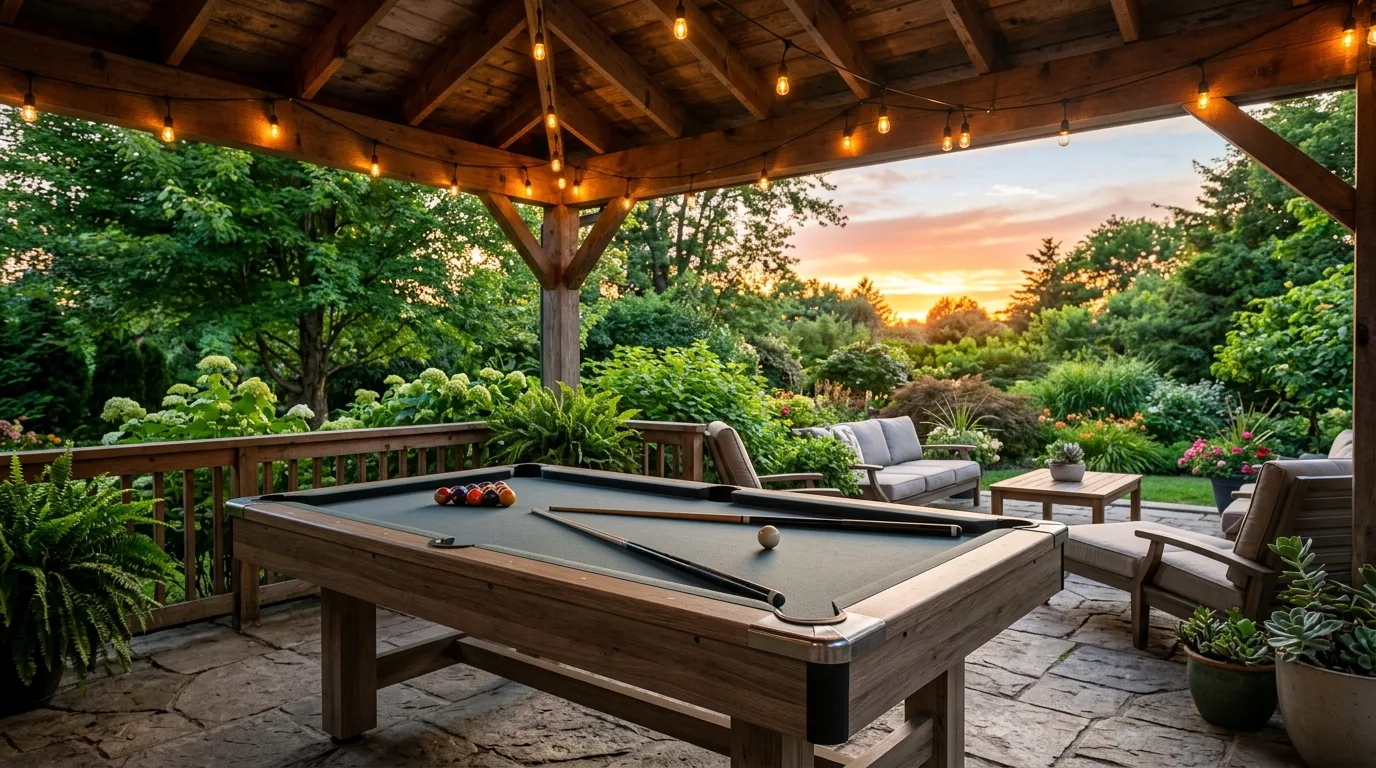
An outdoor pool table solves a completely different engineering problem than an indoor one. It has to fight standing water and relentless UV, plus temperature swings an indoor table never deals with.
When I tested the Playcraft Extera 8-footer last summer, I was shocked how close it came to playing like my indoor slate table. That’s what separates the real outdoor tables from the pretenders.
The Playcraft Extera is my top pick, the one I measure other outdoor tables against. It costs more upfront, and it survives seasons that leave cheaper tables warped and faded. You get aluminum frames that don’t rust and a composite playfield that shrugs off moisture, under cloth rated for full UV exposure. The K-66 cushions keep the response crisp, so it still plays like a real pool table out on a patio.
What outdoor pool tables need to survive
An outdoor pool table needs aluminum frames that can’t rot, a composite or slate playfield with moisture barriers, UV-resistant synthetic cloth, and sealed cushions. It also needs proper drainage and a cover, which matter more than most buyers expect.
Outdoor tables live in a hostile environment. Your table fights moisture, temperature swings, insects, bird droppings, and endless UV radiation. The good ones win that fight.
The playfield is the biggest design difference. Slate is beautiful but heavy and expensive outdoors. Weather-resistant composite surfaces like Playcraft uses are engineered to resist moisture and warp less than MDF. The 1-inch composite on the Extera stays flat even after humidity swings.
Aluminum frames won’t rust, and wood frames rot. If a table has any wood touching potential moisture, what you’re buying is patio decoration.
The cloth matters too. Indoor tables use wool blends that fade fast in sunlight, while outdoor cloth is synthetic and treated to resist UV damage. It gives up a little response compared to premium indoor cloth, but two summers of sun won’t leave it bleached and threadbare.
Cushions need to be sealed against moisture. Cheap tables have rubber that hardens and cracks. Playcraft’s K-66 cushions are designed for weathering and maintain response longer.
The tables
Four tables, ranked by how well they survive an actual season outside. I’ve had hands-on time with the Extera and the Montecito across full summers, and that’s where the playfield and cloth judgments below come from. For the Santorini and the GoSports I’m going on build spec and materials, so their play-quality notes carry less weight than the two I’ve lived with.

Playcraft Extera 8’ Outdoor Pool Table (~$2,500-3,500)
The Extera is what happens when you build an outdoor table right. I’ve played on this table in summer heat and didn’t feel like I was playing on a compromise. The composite playfield stays flat and the K-66 cushions have real response. The aluminum frame means you’re not fighting rust.
Carbon fiber cues ship in the box, so you’re not buying sticks separately. It weighs 486 pounds, and you’ll want to use the included cover from day one. Get a better cover though, because the basic one won’t last as long as the table.
The UV-resistant polytech cloth fades slower than anything else I’ve tested outdoors. After one full season with no shelter and just a cover between sessions, it still looked good. A little weathered by the end of it, and much better than I expected going in.

Playcraft Santorini 7’ Outdoor Slate with Dining Top (~$3,500-4,500)
If slate is non-negotiable, this is the outdoor option. It’s a real 1-piece slate playfield, and on paper that’s the spec that gets you indoor-grade ball response outdoors. The aluminum frame means no rust concerns. The weather-resistant cloth holds up better than standard felt.
What makes this special is the dining top conversion. You get a legitimate outdoor dining table when the slate sits under the top. That’s a better conversation than “what’s that ugly pool table on your patio.”
Two benches and a ping pong set are included. The table is heavier and needs a solid, level base, so installation matters more here than it does on composite tables.
The cost jumps significantly compared to composite tables, but if you want slate response and don’t want a permanent, indoor-only installation, this justifies the price.
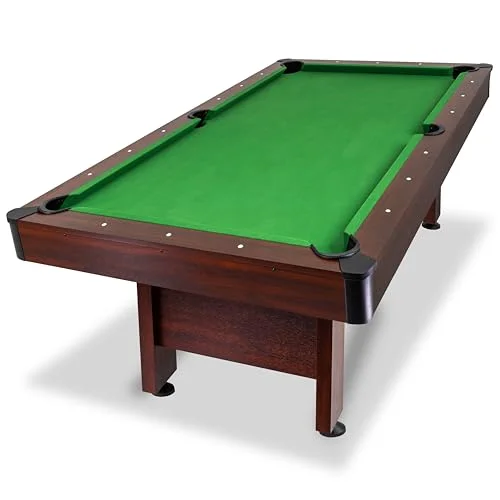
GoSports 7-Foot Billiards Table (~$800-1,000)
This is an indoor table that tolerates a covered patio, and it’s the right call if you’re under a pergola and budget-conscious. The engineered surface lacks the weather sealing premium composite gets, so direct rain will damage it. With a cover and shelter, though, it works.
At 200 pounds with foldable legs, you can actually move it. Most tables stay installed permanently. This one folds up and slides into storage, which is why it also earns a spot in our best folding pool tables roundup.
Play quality is where the spec sheet shows its limits. An engineered surface over lighter cushions won’t return a ball the way sealed composite does. For casual play with friends and beer, it’s fine. For serious games, you’ll feel the difference from a real table.
Best for renters, or anyone testing whether outdoor pool is worth the real investment before committing.

Hathaway Montecito 7’ Outdoor Pool Table (~$1,200-1,500)
The Montecito lives in the sweet spot. It was built for outdoor conditions from the start, and the aluminum frame and composite playfield handle humidity better than cheaper alternatives do.
The driftwood finish looks like it belongs outside, which shouldn’t be underestimated. A black or mahogany table looks wrong on a patio. This looks intentional.
I tested one under a pergola for a full summer, and the cloth held up while the playfield stayed flat. The cushions were still responsive at the end of it. The Extera is the more refined table, though the Montecito beats budget builds by a wide margin.
Price makes this attractive if you’re not ready to spend Extera money but want something that won’t disappoint after one season. At $1,200-1,500 it also lands in the same band where our best pool tables under $1,500 picks start putting real slate on the floor indoors. Outdoor composite or indoor slate for the same money is the honest decision to sit with before you buy.
Quick comparison
| Table | Price | Playfield | Weight | Best For |
|---|---|---|---|---|
| Playcraft Extera 8’ | $2,500-3,500 | Composite | 486 lbs | Serious outdoor play, unprotected spaces |
| Playcraft Santorini 7’ Slate | $3,500-4,500 | 1-piece slate | 550+ lbs | Purists who want slate, dining conversion |
| GoSports 7’ | $800-1,000 | Engineered | 200 lbs | Renters, covered patios only, portability |
| Hathaway Montecito 7’ | $1,200-1,500 | Composite | 400 lbs | Mid-range protection, covered areas |
Indoor vs outdoor: what you’re giving up
Outdoor tables sacrifice precision for durability. The playfield tolerances are slightly looser to handle moisture and temperature swings. Cloth response is slower because outdoor materials prioritize fade resistance over feel.
The cushions aren’t as sharp, and composite playfields are softer than slate, so ball response varies slightly. Temperature affects everything: a 60-degree morning plays different from a 95-degree afternoon, and cushions are stiffer in heat.
You’re also taking on hassle. Covers need checking and drainage holes need clearing. Insects love nesting in the pockets too. You can’t leave the table uncovered for a week without worrying about the weather.
The good news is that the old tradeoff is fading. You used to have to choose between playable and weatherproof. Premium outdoor tables like the Extera have closed that gap, and the difference between indoor and outdoor keeps shrinking.
Plenty of people work through all of that and decide the patio isn’t worth the hassle. Our best pool tables for home guide covers the indoor builds from budget MDF up to premium slate.
Placement and protection tips
Install your table on solid, level ground. Composite playfields warp if they’re not supported evenly. Uneven ground causes dead spots and roll inconsistencies. Use a concrete patio or deck rather than grass.
Put your table under shade when possible, because direct sun fades cloth and hardens composite faster than anything else. A pergola or a large patio umbrella makes a massive difference in table lifespan. Indoors the equivalent worry is climate control, and outdoors shade is your climate control.
Use a fitted cover whenever you’re not playing. A cover is the difference between a table that lasts ten years and one that’s ruined in three. Moisture is the enemy, and covers buy you time between rain and sun exposure.
Ensure drainage around the table. Don’t let water pool underneath or collect on the playfield. Clear leaves and debris from the surface regularly. Check drainage holes in the table legs and frame to keep moisture from trapping inside.
Store the cues inside, because humidity warps wood. Buy quality cues and keep them climate-controlled.
Keep insects out by covering the table whenever it’s idle, every night at minimum. Some people cover it between sessions even during the day.
Wind is the variable nobody thinks about until their first outdoor session. A 15 mph breeze changes ball trajectories enough to miss shots you’d normally make indoors. Windbreaks help, and hedges or privacy screens work about as well as tucking the table on the lee side of your house.
I’ve played on patios where wind was a non-issue and patios where every shot felt like putting on a golf green. Location within your yard matters more than most people realize.
Lighting is another outdoor-specific concern, because dusk games need dedicated lighting above the table. Indoor pool table lights won’t work outside, since they aren’t weatherproof. Outdoor-rated pendant lights or track lighting aimed at the playing surface from a pergola structure is the way to go, and you should budget $150-$300 for it.
The real cost of outdoor pool
The sticker price on the table is only part of what you’ll actually spend. Budget for the full setup or you’ll get surprised.
A quality fitted cover runs $80-$150, and there’s no version of this where you skip it. The best pool table covers page has options for standard sizes, but outdoor tables often need specific covers from the manufacturer because of non-standard rail heights and frame shapes.
Outdoor cues are another cost most people forget. Wood cues warp in humidity. Carbon fiber cues handle outdoor conditions better but cost $100-$200 each. Some tables like the Extera ship with carbon fiber cues included, which saves you that line item. Store all cues indoors when not playing.
Leveling on a patio is trickier than on a basement floor, because concrete settles and deck boards flex. Budget $50-$100 for heavy-duty shims and a precision level. Check the table every season and re-level if needed.
Replacement cloth for outdoor tables costs $200-$400 installed, and you’ll need it every 4-6 years depending on sun exposure. Indoor tables go 8-12 years between re-felts. The sun accelerates everything.
Add the cover, the lighting and the leveling gear and first-year extras land between $280 and $550 on top of the table price. Cues push that higher if the table doesn’t ship with them, which is one reason the Extera’s included carbon fiber sticks matter more than they look.
You might ask whether a pool table in the garage beats an outdoor setup. It depends on access, and outdoor usually means you’ll actually use it. The garage table that nobody walks to is worthless no matter how flat the slate is.
For beginners or casual play under shelter, the Montecito is the honest choice. For testing the outdoor concept before committing thousands, the GoSports works, but accept its limitations upfront.
The verdict
Outdoor pool tables have stopped being toys. Real ones play like real tables and last over a decade with basic care. The Playcraft Extera is the table to buy if you want outdoor pool done right. It costs a few thousand dollars and needs a cover and shade, but it delivers.
If you absolutely need slate, the Santorini is the outdoor answer. If you’re a beginner or space-constrained, start with the GoSports or Montecito and upgrade later.
The key is respecting the environment: keep it covered, give it shade, set it on level ground, and clear the drainage. Do those four things and your table won’t betray you.
I’ve played on dozens of outdoor tables at friends’ places and backyard tournaments. The difference between tables that people maintain and tables that sit uncovered and unprotected is enormous. The maintained tables still look great after five years. The neglected ones look destroyed after two.
Your outdoor pool table is a long-term install. Spend on the front end so you’re not replacing it in five years. The Extera is that investment.
The #1 recommendation from this guide, chosen for quality, value, and real-world performance.