

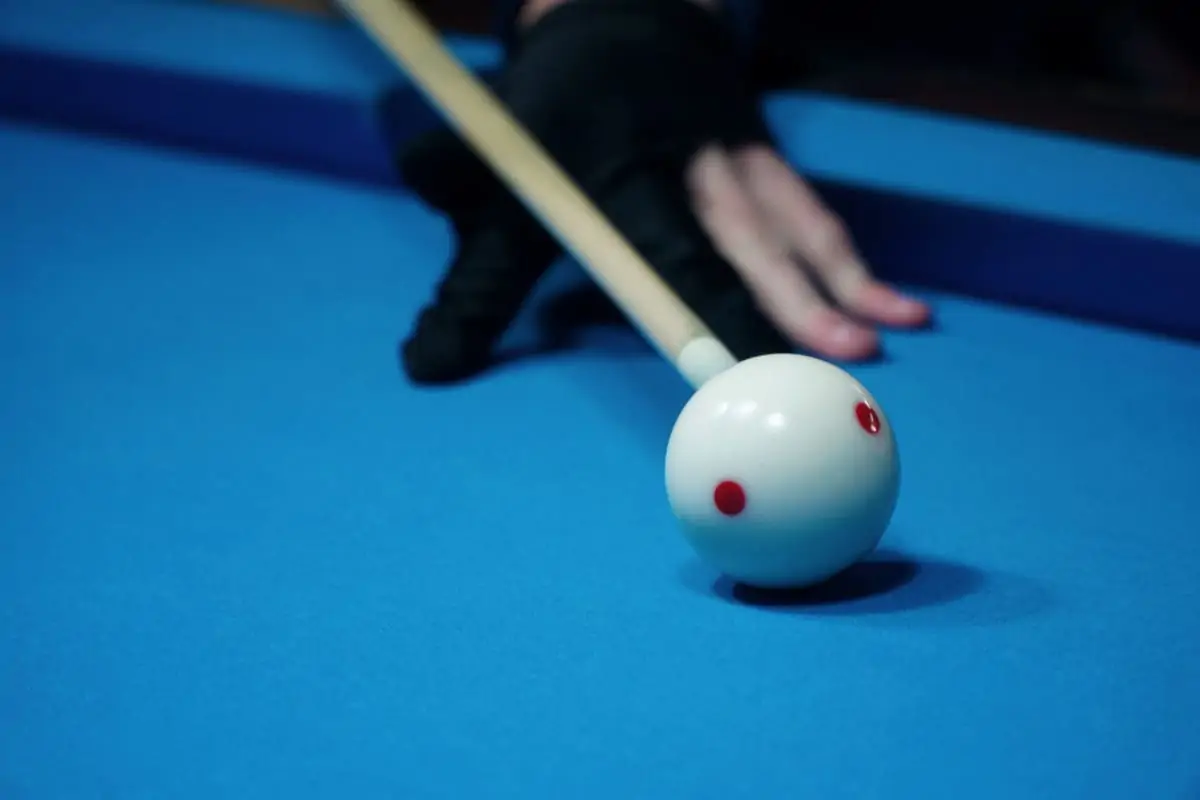

Your bridge hand is slipping, and that half-inch of movement kills your shot. You blame the cue or the table when the real culprit is the one variable you can actually control.
A pool glove fixes this.
The whole idea is a piece of fabric that lets your hand slide smoothly across the cue without friction gumming everything up. I’ve played with and without gloves for years, and every serious player I know has one. Most casual players don’t, which is why most casual players miss shots they should make.
Consistency is what separates an $8 glove from a $30 glove. The cheap ones give you a few weeks of reliable grip before the seams go. The good ones hold their feel for months.
A few things actually matter when you’re shopping.
The quick take
Predator Second Skin is the best glove for most people. $25-30, fits right out of the box, lasts 4-6 months with heavy use. It’s the default answer because it works and doesn’t require five YouTube videos to figure out.
If you want to save money, McDermott does the job at $10-15. You’ll replace it sooner, but you’ll spend less overall if you play casually.
If you want the best value on Amazon, the YFY at $8-9 is the #1 seller with 1,300+ reviews and Amazon’s Choice. Hard to beat for the price.
Everything else sits between these three. The full rankings are below.
The gloves, ranked
Predator Second Skin Glove (~$25-30)
Predator Second Skin is what happens when a glove company doesn’t overthink it. The fit is immediate, with no break-in period where your hand feels weird. The fabric weight lands right where you want it, and the seams hold up through thousands of shots. You’ll see this glove in pool halls everywhere because it earns the spot.
The fingerless version is also solid if you want more tip feel without sacrificing the cue control that a full glove gives you. The only real knock is price, since at $25-30 you’re paying three YFYs’ worth for one glove. Either way, this is the glove you buy when you want to stop thinking about gloves.
Check Price on Amazon →
Molinari Billiard Glove (~$20-25)
Molinari is the Italian option here, and it plays like one. The material is thinner than Predator, which means you get more feel through your fingertips. This matters if you’re reading english and speed control on every shot.
It does run small, though. Buy a size larger than you think you need. The fit is deliberate and tight, which keeps your hand stable but takes a few days to get used to. If you don’t like that locked-down feeling, stick with Predator.
Check Price on Amazon →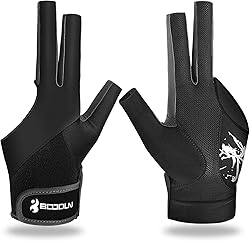
YFY Billiard Pool Glove (~$8-9)
The YFY is the most-bought pool glove on Amazon. It costs less than a meal and works better than it has any right to. The spliced construction gives it a more tailored fit than most budget gloves, and the 3-finger design covers exactly what needs covering. With over 1,300 reviews and a 4.5-star rating, the consistency is proven across thousands of players.
The material is thinner than Predator, so it won’t last as long under heavy use. Expect 2-3 months if you play several times a week. But at $9, you can buy three YFYs for the price of one Predator. Available in multiple colors and sizes.
Check Price on Amazon →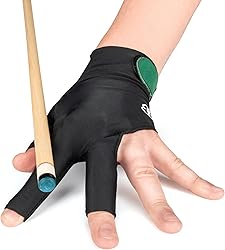
McDermott Billiard Glove (~$10-15)
McDermott works. That’s the honest assessment. For $10-15 you get a glove that will help your accuracy and last 2-3 months. The seams aren’t as reinforced as Predator, and the material thins out faster, but you’re not paying premium prices.
If you play once a month, this is your glove. You’ll spend maybe $30 a year and never worry about it. If you play twice a week, the Predator becomes the better value because you’ll go through two McDermotts in the time one Predator lasts.
Check Price on Amazon →
Cuetec Axis Glove (~$15-20)
Cuetec Axis sits in the gap between cheap and expensive. It gives up some feel to Kamui and comfortably outlasts a McDermott. The fit is consistent across sizes, so you don’t have to guess whether to size up or down.
This is a fine glove that never quite becomes a first choice, because the other options are either cheaper or better at their specific job. If you want to try something different without losing money, though, Axis won’t disappoint you.
Check Price on Amazon →Do you actually need a pool glove?
Yes, if you play with any regularity. The price makes it an easy call.
People think they don’t need one for a simple reason: they’ve played without one and made shots. That’s possible. You can also drive a car with your eyes closed and make it to the mailbox. That doesn’t mean it’s smart.
Your bridge hand naturally has oils and moisture. These create friction against the cue shaft, and that friction is inconsistent. One shot your hand slips a millimeter, the next it doesn’t. Those millimeters add up, and over 100 shots they cost you games.
A glove eliminates the variable, and I noticed the difference in my first session with one. Your hand slides the same way every time and the cue stops catching on your palm. Your stroke stays straight because you’re no longer compensating for friction.
You don’t need a glove to win casually with friends. But nearly everyone who plays regularly, from league nights to serious money games, wears one. They’ve all done the same math.
The cost is $8-30 and the payoff shows up in your accuracy, so the math is simple.
What to look for in a pool glove
Size is the first filter. A glove that’s too loose lets your hand move around inside it, and one that’s too tight cramps your hand by the third rack. Most gloves come in small through XL, and you measure from the tip of your middle finger to your wrist.
If you’re between sizes, go down. Gloves stretch and soften with use.
Material matters more than most people think. Fabric weight trades feel against lifespan, and an overly stiff glove deadens the slide, so extra thickness has a ceiling. Predator and Kamui both land in the sweet spot on this tradeoff.
Seam quality is where cheap gloves fail. When seams start splitting, the glove is done. Look for reinforced stitching around the fingers, especially the index and middle fingers where you apply pressure. Predator and Molinari both have excellent seam work.
Fit preference matters. Some players want a tight, locked-down feel (Molinari gives this). Others want loose and comfortable (Predator is closer here). Try both styles if possible. Neither preference is wrong.
Full finger or fingerless is personal. Full-finger maximizes cue control and consistency. Fingerless trades a slice of that control for extra fingertip feel, which is why players learning touch often start there before graduating. Tournament players mostly run full-finger, and that’s the style to try first.
When each glove makes sense
Buy Predator if you play 2+ times a week or you’re going to tournaments. It solves the problem without making you think about it, which is exactly what you want from equipment.
Buy Molinari if you want maximum sensitivity and don’t mind a tight fit. You’re probably an experienced player who reads every shot carefully.
Buy YFY if you want the absolute best value. At $9, it’s the cheapest way to find out what a glove does for your game, and it’s great for keeping a few spares in your bag.
McDermott is the recognizable brand at a budget price. Decent quality at $10-15, fine for casual play.
Cuetec Axis covers you when the others are sold out or you want a middle option. You won’t regret it, but it won’t excite you either. It’s the sensible choice when sensible is what you need.
Quick comparison table
| Glove | Price | Best For | Lifespan | Fit Type |
|---|---|---|---|---|
| Predator Second Skin | $25-30 | Most players | 4-6 months | Comfortable |
| Molinari | $20-25 | Feel seekers | 4-6 months | Tight |
| YFY Billiard | $8-9 | Best value | 2-3 months | Comfortable |
| McDermott | $10-15 | Casual players | 2-3 months | Average |
| Cuetec Axis | $15-20 | Middle ground | 3-4 months | Average |
Frequently asked questions
Do professional pool players use gloves? Split about 50/50. Shane Van Boening shoots bare-handed, and Jayson Shaw wore a glove for his record 832-ball straight pool run. It comes down to personal preference rather than skill level.
Which hand do you wear a pool glove on? Your bridge hand, meaning the hand that slides along the cue on the table. If you’re right-handed, that’s your left hand; if you’re left-handed, your right.
Can I just use baby powder instead of a glove? You can, but it gets everywhere and gums up your shaft. Powder also wears off mid-game and needs reapplying. A glove is cleaner and more consistent, and it lasts the whole session without maintenance.
How long do pool gloves last? 2-6 months with regular play, depending on the glove. The finger seams wear first. For a weekly player that works out to roughly $30-90 a year. A heavy stroke wears a Predator out closer to 4 months, and a light touch can stretch it past 6.
Are fingerless pool gloves any good? Some players like them for better tip feel. The Predator comes in a fingerless version that’s excellent. Most tournament players use full-finger because the extra control is worth losing a small amount of tip sensitivity, so try both styles and see what works for your stroke.
Related reading
Once you’ve got a glove situation sorted, the next step is your stroke. A good bridge hand position matters more than the glove, so it’s worth learning how to hold a pool cue properly. Then learn about english in pool so you understand what that smooth glide actually lets you accomplish.
If you’re upgrading your game equipment, check out our guides to pool cue tips and pool chalk. And if you need a new cue to go with that glove, we’ve got you covered on beginner cues.
The #1 recommendation from this guide, chosen for quality, value, and real-world performance.