
You’re losing games because of chalk.
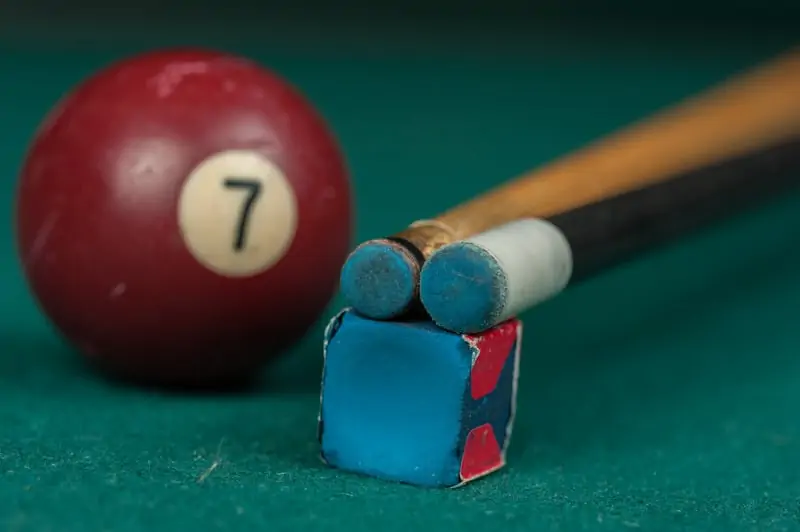
Not directly, obviously. But every time you miss the sweet spot on your cue tip, it’s because your chalk isn’t gripping the leather. Every time your break is inconsistent. Every time you miscue on an easy shot. That’s chalk.
Most pool players think chalk is chalk. They grab whatever blue cube is sitting on the table at their local hall and move on. Then they wonder why their stroke feels off at a serious tournament. The difference between Master chalk and Taom is like the difference between a $50 cue and a $500 cue. Nnot game-changing by itself, but it removes excuses.
Here’s what you need to know about pool chalk in 2026: there are two tiers. Below $10, you’re picking between competent enough. Above $15, you’re paying for engineering and consistency. The gap matters more than pool players admit.
The Quick Take
If you want one answer: Get Taom Pyro ($25-30). It works. You’ll replace it half as often as cheap chalk. The cost-per-hour is actually lower. It doesn’t dust everywhere. Move on.
If you’re broke or casual, Master ($2-5) does the job. Billions of shots have been played with it. You won’t regret it.
Everything else is picking based on what you value: price, dust, feel, durability, or how much you hate re-chalking during a match.
The Chalks, Ranked by Honesty
Master Chalk (~$2-5)
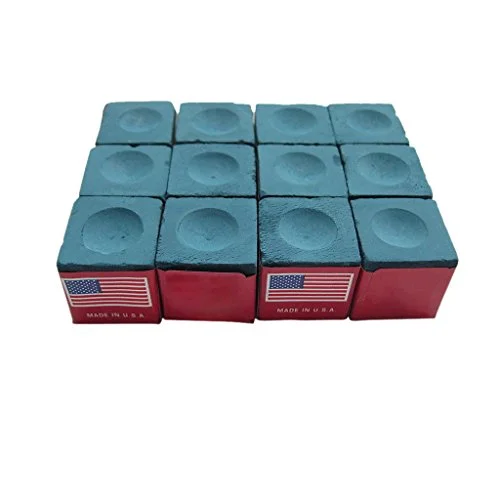
Master Chalk is everywhere at $2-5 per cube and works fine for casual play. The downside: it sheds dust everywhere and hardens after a few hours. Once you try something better, you notice the difference.
Check Price on Amazon →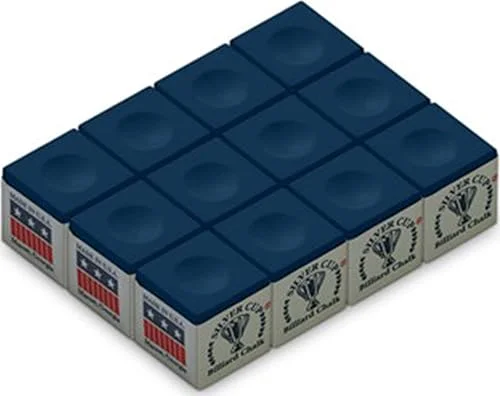
Silver Cup (~$3-5)
Silver Cup is softer than Master with better compression and noticeably less dust. It’s a lateral move—better, but not a leap. If you’re thinking about spending more, jump to Predator or Kamui.
Check Price on Amazon →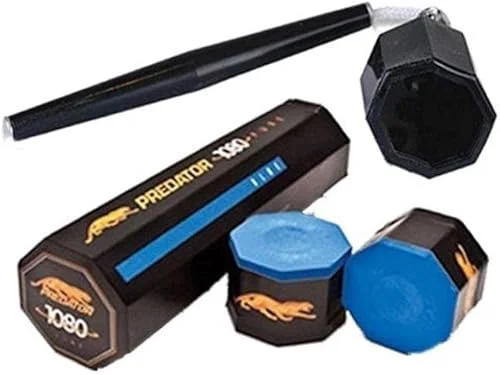
Predator 1080 (~$7-10)
Predator 1080 uses compression engineering to compact onto the cue tip instead of sitting on top like dust at $7-10. The jump from Master to Predator is bigger than the jump from Predator to Taom—this is the move most players should make.
Check Price on Amazon →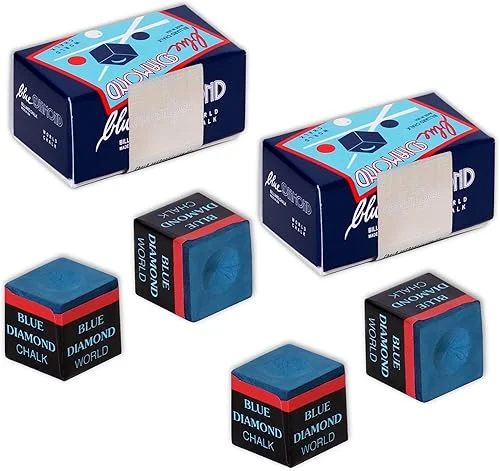
Blue Diamond (~$8-12)
Blue Diamond is the international standard at $8-12 with solid compression and minimal dust. It’s good chalk, but harder to find in the US—worth trying if you’re experimenting with international gear.
Check Price on Amazon →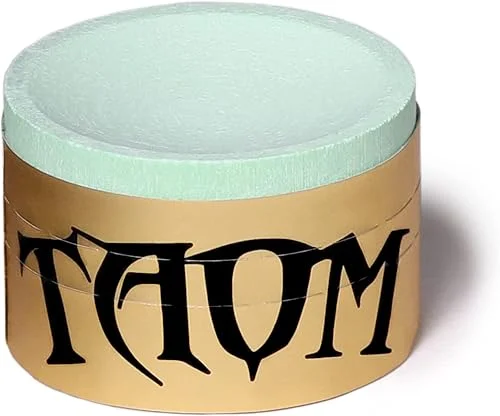
Taom Soft (~$20-25)
Taom Soft at $20-25 offers 80% of Pyro’s durability with a softer feel closer to traditional chalk. It’s the bridge chalk for players who want premium engineering without the concrete-hard Pyro feel.
Check Price on Amazon →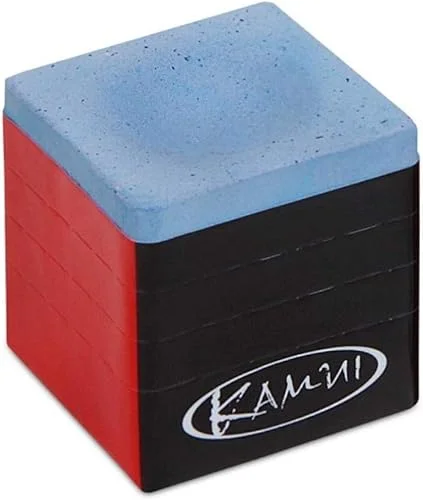
Kamui 0.98 (~$25-30)
Kamui 0.98 is the snooker-derived premium at $25-30 with a smoother feel and more control over layer thickness. It requires more technique than Taom—both are excellent, but Taom just works while Kamui rewards optimization.
Check Price on Amazon →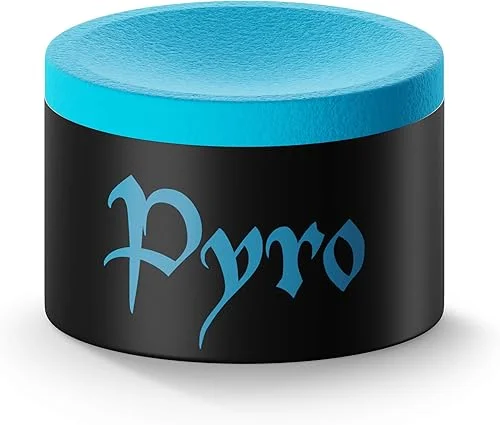
Taom Pyro (~$25-30)
Taom Pyro lasts 150+ hours at $25-30—just 10-15 cents per hour despite the premium price. It’s engineered so hard it barely sheds and locks onto leather. The round shape reduces breakage. This is the right chalk for serious play.
Check Price on Amazon →When Each Chalk Makes Sense
Master or Silver Cup . Casual play at pool halls. You’re not spending serious money. You want the cheapest way to have something to chalk with.
Predator 1080 . You own your cue. You play weekly. You want a noticeable upgrade from hall chalk without spending serious money. This is where most serious amateurs should land.
Blue Diamond . You’re already in the international market. You want to experiment. You’re not in a hurry to buy from the obvious suppliers.
Taom Soft . You’re going premium but traditional chalk feel matters to you. You don’t want the hard Pyro experience.
Kamui 0.98 . You want the best and you don’t mind paying for it. You like tweaking technique and equipment. You’re willing to learn a new application style.
Taom Pyro . You play seriously. Money isn’t the main consideration. You want the benchmark. You want it to work and not think about it again.
The Honest Truth About Chalk Cost
Here’s the thing people get wrong: expensive chalk saves money.
Master chalk at $3 lasts 60 hours. That’s 5 cents per hour.
Taom Pyro at $28 lasts 160 hours. That’s 17.5 cents per hour.
So Taom costs 3.5x more per hour. But you’re also not carrying a bag of crumbling blue cubes. You’re not stopping mid-match to re-chalk because your tip lost grip. You’re not explaining to people why there’s chalk dust on everything.
The real cost isn’t the price tag. It’s what you’re not getting: reliability, consistency, one less variable in your game.
If you play pool once a month, Master is fine. If you play more than that, Predator is worth it. If you play competitively or multiple times a week, Taom Pyro or Kamui saves money.
Quick Comparison
| Chalk | Price | Durability | Dust Level | Best For |
|---|---|---|---|---|
| Taom Pyro | $25-30 | 150+ hours | Very low | Serious players |
| Kamui 0.98 | $15-20 | 100+ hours | Low | Spin players |
| Predator 1080 | $7-10 | 80-100 hours | Low | Best upgrade |
| Blue Diamond | $8-12 | 80-100 hours | Low | UK players |
| Silver Cup | $3-5 | 50-80 hours | Medium | Budget alternative |
| Master | $2-5 | 50-100 hours | High | Casual play |
FAQ
Is expensive chalk actually better?
Sometimes. Master chalk works fine for casual play, but premium chalks like Taom and Kamui have better compression and stay on the tip longer. The jump from $2 to $8 is noticeable. The jump from $10 to $30 depends on your game level and how much you hate re-chalking mid-match.
Why does chalk mess up my cue tip?
Low-quality chalk is too hard and doesn’t compress onto the leather. It just sits on top, bounces off, and leaves a mess. Better chalk adheres to the tip and creates a consistent surface. Taom and Kamui are specifically engineered to minimize this.
Can I use pool chalk for something else?
Not really. Cue sports chalk is compressed CaCO3 engineered for the specific hardness needed for pool tips. Regular blackboard chalk or sidewalk chalk will wreck your cue tip. Stick to pool chalk.
How long does one piece of chalk last?
A cube of Master chalk lasts maybe 50-100 hours of play. Taom Pyro lasts longer—sometimes 150+ hours because it doesn’t flake off. Premium chalks cost more but you replace them less often, so the per-hour cost isn’t as brutal as it looks.
What’s the difference between Taom Pyro and Taom Soft?
Taom Pyro is harder and lasts forever. Taom Soft is closer to traditional chalk—it feels more familiar if you’ve been using Master your whole life. Pyro is the workhorse. Soft is if you want premium quality with a classic feel.
Related Articles
For more on this topic, check out how long cue tips last, what tips pros use, screw-on cue tips, what chalk is made of, and chalk color.
The #1 recommendation from this guide — chosen for quality, value, and real-world performance.