

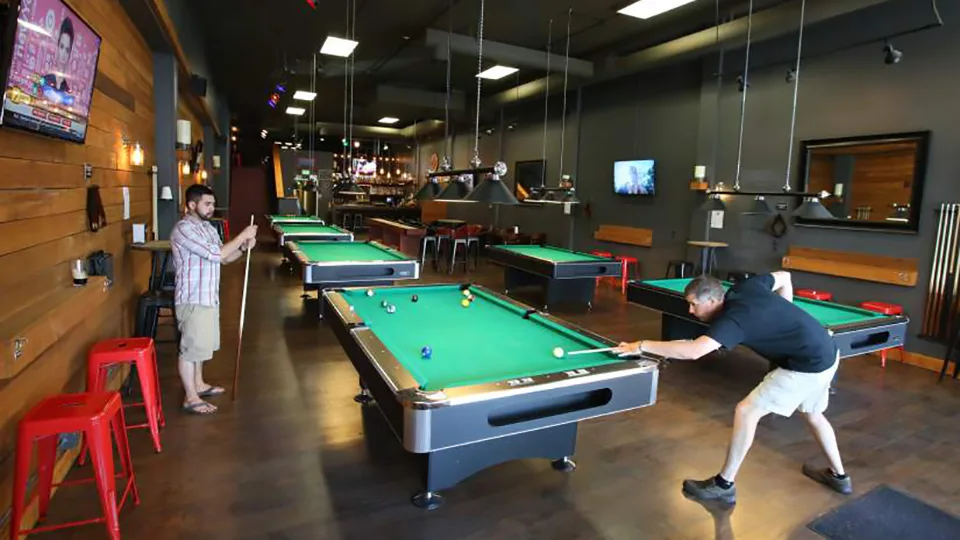
A Slatron pool table has a playing surface made from particleboard sandwiched between layers of hard plastic. It’s designed to be a more durable alternative to standard MDF while costing significantly less than real slate. Slatron won’t match slate for playability or longevity, but it sits at the top of the non-slate category.
I’ve played on Slatron tables at friends’ houses and at a few bars that opted for them over slate. The first thing you notice is that they look identical to slate tables from the outside. There are a few quick ways to tell slate from wood without playing a single shot, but Slatron is sneakier than either. The difference only shows up when you play on one for a while and start paying attention to how the balls respond on longer shots.
Why the Playing Surface Material Matters
The playing surface is the flat bed underneath the felt where all the action happens. Every shot you take depends on that surface being perfectly flat and staying flat over years of use. If the bed warps even slightly, balls will drift off-line on long shots and the table becomes frustrating to play on.
Slate is the best playing surface there is because it’s rock. It doesn’t absorb moisture, it doesn’t expand or contract with temperature changes, and it stays flat for decades. The problem is that slate is expensive and extremely heavy. A three-piece slate bed can weigh 400 to 500 pounds by itself. That’s why manufacturers developed alternatives like MDF and Slatron for players who want a pool table without the cost and weight of slate.
How Slatron Is Made
Slatron starts with a particleboard core, similar to what you’d find in budget furniture. That core is then coated on both sides with layers of hard, smooth plastic. The plastic serves two purposes: it creates a smoother playing surface than bare wood, and it acts as a moisture barrier that helps prevent warping.
The result is a surface that feels closer to slate than plain MDF does. The plastic layer gives the balls a cleaner roll compared to the slightly fibrous texture of exposed MDF. It’s not identical to slate, but the gap is smaller than you might expect on casual shots.
Slatron vs. MDF
MDF (Medium-Density Fiberboard) is the most common non-slate surface. It’s smooth and affordable, but it has a major weakness: moisture. MDF absorbs water from humid air, which causes it to swell and warp over time. Once an MDF bed warps, the table is effectively ruined.
Slatron’s plastic coating gives it a real advantage here. The sealed surface resists moisture penetration much better than exposed MDF. That doesn’t make Slatron waterproof, but it buys you significantly more time in environments with moderate humidity. An MDF table in a slightly damp basement might warp in 3 to 4 years. A Slatron table in the same spot could hold up for 6 to 8 years.
The playing feel is different too. MDF has a slightly soft, muted response when balls make contact. Slatron feels firmer and crisper because of the hard plastic layer. I’ve noticed that balls seem to roll a bit more true on Slatron surfaces, especially on cross-table shots where small surface imperfections show up the most.
Slatron vs. Slate
This comparison isn’t close, and manufacturers don’t pretend it is. Slate is better in every measurable way: flatness, durability, moisture resistance, ball response, and longevity. A quality slate table will outlast multiple Slatron tables.
Where Slatron wins is on cost and convenience. A decent Slatron table runs $300 to $800. A comparable slate table starts at $1,000 and goes up quickly from there. Slatron tables are also dramatically lighter, which means cheaper shipping, easier setup, and you can actually move one without hiring professionals.
For casual players who aren’t chasing tournament-level playability, Slatron delivers a solid experience at a price point that makes pool accessible. You won’t practice bank shots with the same confidence as you would on slate, but for 8-ball with friends on a Friday night, Slatron tables get the job done.
Construction Quality Varies
Not all Slatron tables are built the same. The surface material is just one component. The frame and legs affect stability, while the rail cushions determine how balls bounce off the bumpers.
I’ve seen Slatron tables that were rock solid with thick legs and reinforced frames. I’ve also seen cheap ones that wobbled every time someone leaned on the rail. The playing surface might be identical, but the overall build quality makes a huge difference in the experience.
If you’re shopping for a Slatron table, pay attention to the total weight of the table. Heavier generally means sturdier construction. Look at the leg design (wider legs with cross-bracing are more stable) and check whether the rails use real rubber cushions or cheap foam. The cushions affect ball bounce more than the playing surface does on most shots.
Who Should Buy a Slatron Table
Slatron makes sense for specific situations. If you want a home table for casual play and your budget is under $800, Slatron is the best surface material you’ll find at that price. It’s also a good choice if you have kids who want to learn pool without you investing thousands in a slate table they might outgrow.
Players who move frequently benefit from Slatron’s lighter weight. Relocating a slate table costs $300 or more in professional moving fees. A Slatron table can usually be disassembled and moved by two people with a truck.
If you play in leagues or practice seriously, save for slate. The difference in ball response and surface consistency will affect your development as a player. But if pool is a recreational activity in your house, Slatron gives you the best non-slate experience available.
Worth checking out: For more on table surfaces and options, see our guide to how long MDF tables last and our pool table reviews.
FAQ
What is a Slatron pool table?
A Slatron pool table has a playing surface made from particleboard sandwiched between layers of hard plastic. The plastic coating gives it a smoother feel than bare MDF and provides some protection against moisture. Slatron is considered the most durable non-slate surface option.
Is Slatron better than MDF?
For durability, yes. The plastic coating on Slatron resists moisture better than exposed MDF, which absorbs water and warps. The playing feel is also slightly smoother on Slatron. However, neither material comes close to matching real slate for long-term flatness and ball response.
Can you tell the difference between Slatron and slate?
Visually, no. A Slatron table looks identical to a slate table from the outside. The difference shows up in weight (Slatron is much lighter) and in how the balls respond. Experienced players notice that balls roll slightly differently on Slatron, especially on long shots where surface flatness matters most.
How long does a Slatron pool table last?
A well-maintained Slatron table in a climate-controlled room can last 8 to 12 years. The plastic coating gives it a longer lifespan than standard MDF tables, which typically last 6 to 8 years. Slate tables still outlast both by decades.
Related Articles
For more on this topic, check out pool table reviews, best pool tables for small spaces, standard pool table sizes, how heavy slate tables are, and how long MDF tables last.
Browse our full Pool Tables hub for tested picks, buying guides, and head-to-heads.