

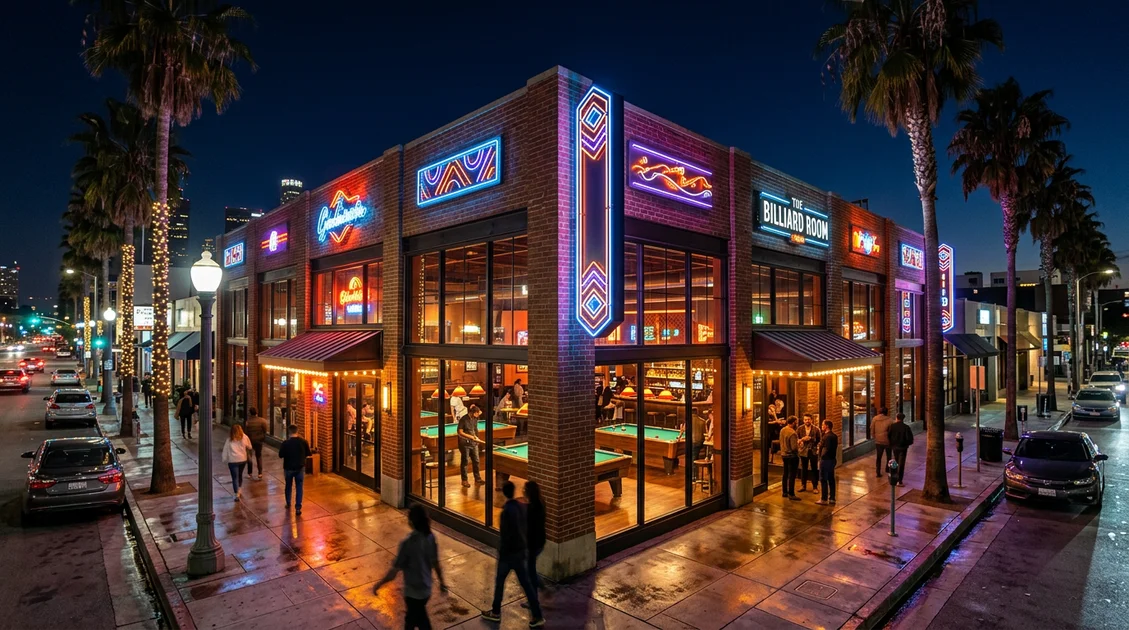
LA’s got plenty of places to shoot pool, but most of them aren’t pure pool halls anymore. They’ve evolved into hybrid bars and restaurants where you can actually get food and drinks while you play. That’s not necessarily bad. It means you can spend three hours on the tables without getting hungry or thirsty, and you’ve got social options if someone in your group doesn’t play.
Q’s Billiard Club on Wilshire Boulevard in West LA is the one everyone knows about, and for good reason. It’s been around since 1989—survived the dot-com crash, streaming wars, and a whole pandemic. That’s more staying power than most small businesses have.
Q’s Billiard Club: The West LA Standard
Two floors, 10 tables, and enough TVs and projection screens to make every game on earth watchable at once. If you’re into sports betting or just want background noise while you play, this place delivers. The tables are maintained well enough for casual league play, though don’t expect tournament-grade conditions.
The crowd here is mixed. You’ll see serious players on weeknight tournaments and casual groups on weekends. That’s actually an advantage if you’re intermediate level, because you’ll find people at your own skill range and people better than you (for practice) in the same venue.
Two full bars run the length of the place, and they actually have a real kitchen, not just frozen wings. Happy hour pricing and late-night food help if you want to make an evening of it. The DJ running nightly doesn’t help you concentrate on your shots, but it’s part of the Q’s experience—this is where you come if you want pool plus nightlife, not if you want monastery-level silence.
Outdoor seating is heated and covered, which matters in LA more than people realize. If you’re there on a Thursday-Saturday and the inside gets packed, you’ve got an escape route. The place advertises free Wi-Fi and multiple parking options. The Wi-Fi part matters if you’re coordinating with friends or checking league standings. Parking in West LA is genuinely valuable real estate.
Fair warning: it’s loud. If you hate crowds and noise, this isn’t your room. The 3.3-star rating with over 500 reviews tells the real story. People either love Q’s because it’s a full experience with pool as one component, or they skip it because the atmosphere isn’t pool-focused enough.
Cost runs roughly $18-$24 per hour depending on when you play, with discounts during slower times.
What to Look for in LA Pool Halls
LA sprawls in all directions, so “best pool hall” really depends on whether you want to drive to West LA or find something closer to you. Most venues share common features: they’re attached to a bar and restaurant, they have tables from decent to mediocre quality, and they serve alcohol.
The advantage of the bar-adjacent model is flexibility. You can play for two hours and grab food without leaving. The disadvantage is that the tables are never the primary focus. Maintenance gets scheduled around happy hour traffic. New felt happens when budget allows, not when the tables need it.
Hours matter more than people think. Some rooms don’t open until 5 PM. Some close at 2 AM. Check before you drive. League play typically happens weeknights, which is worth knowing if you want to join or avoid the competitive crowd.
If you’re visiting from out of town, call ahead. Staffing changes, pricing shifts, and a room that was great last year might’ve gone downhill. The internet moves slow on pool hall updates.
Playing Around LA
For competitive games, weeknight tournaments at established rooms like Q’s filter out the most casual players and give you legitimate competition. Weekends get younger crowds and more casual vibes. If you’re learning, weekends are actually better because people are less serious and more willing to play with someone still developing their game.
Practice during off-peak hours if you can. Most rooms have slower times mid-week during business hours. You’ll get better rhythm on the tables when there’s no pressure and someone isn’t waiting for your game to end.
Join a league if you’re planning multiple visits. Most LA rooms have league play with a mix of skill levels. You get consistent partners, regular schedule, and the social aspect that keeps people playing pool instead of just picking it up for a night. Check out billiard games if you want to understand different game formats before joining a league.
Gear and Setup
If you’re serious about playing, bring your own cue. House cues at bars range from acceptable to bent. A decent cue costs $60-150 and lasts you years. Snooker players invest way more, but standard pool cues are affordable compared to most hobbies.
Get a cue case. Traveling between pool halls with an unprotected cue leads to warping and damage. A basic hard case runs $30-50.
Chalk. Every table has it, but bring your own if you’re picky. Most players develop a preference.
Glove or bridge hand trainer if you’re working on form. These are optional but help with consistency during practice sessions.
If you need a refresher on fundamentals, how to play pool for beginners covers stance and stroke basics.
Finding Your Room
Q’s works for West LA, but LA is huge. Your neighborhood probably has options that nobody’s written about yet. Use Google Maps, check Yelp reviews (look for comments about table condition and maintenance), and ask local players where they go.
The best pool hall for you isn’t necessarily the one with the most tables or the fanciest setup. It’s the one where you can play regularly, afford to play, and enjoy the people there. Those three factors beat everything else.
If you play snooker or want to understand the differences between games, check snooker vs pool comparison to see how equipment and rules vary.
Start at Q’s if you’re visiting LA for the first time and want a guaranteed solid room with enough atmosphere to make an evening of it. Then explore from there based on what you liked and what you’d change.
Worth checking out: Grab a copy of the official rule book, take a look at the Official BCA Rules Book on Amazon.
Related Articles
For more on this topic, check out Efren Reyes, how to play pool, pool table reviews, pool cue reviews, and billiard game types.
The #1 recommendation from this guide — chosen for quality, value, and real-world performance.