

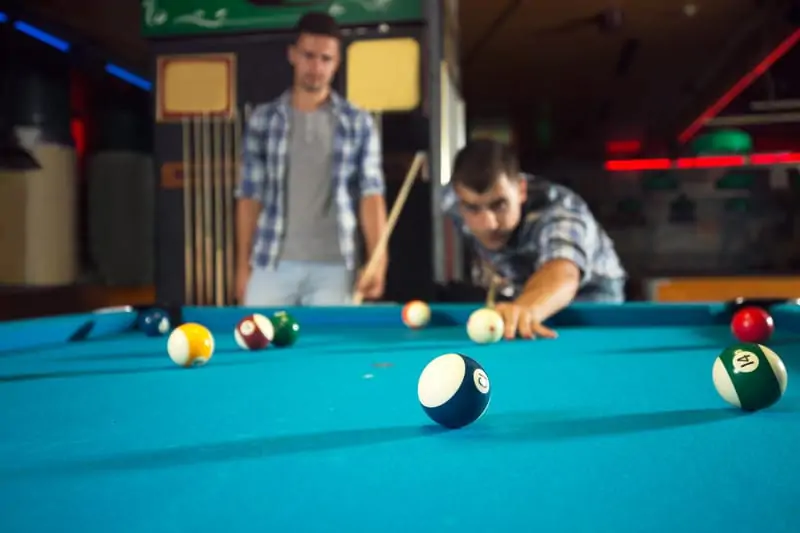
Why Your First Pool Cue Matters More Than You Think
So you’ve caught the pool bug. Maybe you’ve been shooting at your local bar, crushing it on a friend’s table, or you’re just intrigued by this timeless game. Either way, you’re thinking about getting your own cue. Aand that’s a smart move.
Here’s the thing: your first pool cue can make or break your improvement as a player. I know that sounds dramatic, but stick with me. A bad cue won’t stop you from learning, but it will make every shot harder. Imagine trying to paint with a brush that’s falling apart, or playing guitar with a neck that’s warped. That’s what playing with the wrong beginner cue feels like.
The good news? You don’t need to spend $500 on a pro-level cue to get started. You need a cue that’s well-balanced, has decent construction, and won’t betray you when you need consistency. That’s what this guide is for.
The Most Common Beginner Mistakes (So You Don’t Make Them)
Before we dive into what makes a good beginner cue, let’s talk about what NOT to do:
Mistake #1: Buying the Absolute Cheapest Cue That $20 cue from the department store? Skip it. Cheap cues warp, have terrible tips, and will frustrate you daily. Your money is better spent in the $50–150 range.
Mistake #2: Going Too Heavy Beginners often think a heavier cue equals more power. Nope. A heavy cue tires your arm, makes precise shots harder, and throws off your stroke. Most beginners should be looking at 18–19 oz cues, not 20+ oz.
Mistake #3: Ignoring Cue Balance An unbalanced cue feels awkward in your bridge hand. You’ll constantly fight against it. Balance point matters.
Mistake #4: Thinking You Can Upgrade Later You can, but your first cue sets your baseline. Learning a consistent stroke with a quality beginner cue means you won’t have to relearn your entire game when you upgrade.
Mistake #5: Not Considering Joint Type The joint (where the cue comes apart) seems minor, but a loose joint creates spin and inconsistency. More on this below.
What to Look for in a Beginner Pool Cue
Before we recommend specific cues, let’s break down the specs that actually matter. This knowledge will make you a smarter buyer, whether you go with our recommendations or find something else.
Weight: The Goldilocks Zone
Pool cues typically range from 16 oz to 21 oz. For beginners, 18–19 oz is the sweet spot.
Why? Heavier cues (20+ oz) give you more mass behind the ball, but they require more arm strength and make delicate shots harder. Lighter cues (under 18 oz) are easier to control but can feel “whippy” and unpredictable.
A well-balanced 18.5 oz cue will let you develop a smooth, consistent stroke without fighting physics.
Tip Size: 12mm or 13mm?
Cue tips typically come in 12mm, 13mm, or 14mm diameters.
- 12mm: Smaller sweet spot, better for precision and draw shots. Requires good technique.
- 13mm: The Goldilocks of tips. Forgiving enough for beginners, precise enough for improvement.
- 14mm: Largest sweet spot, most forgiving. Great for pure beginners or players with a loose stroke.
Recommendation: Start with 13mm. It’s widely available, gives you a decent margin for error, and won’t pigeonhole your technique.
Wrap Material: What Your Hand Touches
The wrap is the handle section where you grip the cue.
- Leather: Classic, feels premium, requires some maintenance to avoid drying out.
- Irish Linen: Breathable, doesn’t absorb sweat like cotton, extremely popular at better cue shops.
- Synthetic/Nylon: Durable, low-maintenance, sometimes feels a bit slippery.
- No Wrap (Wood Grain): Some players love bare wood, but it can feel slick when your hand sweats.
For beginners, Irish linen or leather is ideal. They provide grip without feeling sticky. Avoid cheap synthetic. Iit tends to be slippery and doesn’t age well.
Joint Type: Where the Cue Connects
The joint is where the shaft meets the butt. This matters more than most beginners realize.
- 11/16” x 14 (Standard American): The most common joint. Solid, reliable, lots of replacement shafts available.
- 5/16” Screw-On: European style. Creates a slightly different feel at the cue ball.
- Uni-Loc / Proprietary: Some brands use their own joint system. Fine, but harder to replace shafts.
Recommendation: Go with a standard 11/16” x 14 joint. Why? Compatibility. Tons of replacement shafts exist, and you’ll have options down the road without being locked into one brand.
Shaft Taper: Thick to Thin
The taper is how quickly the shaft transitions from thick to thin as you move toward the tip.
- Aggressive/Pro Taper: Thicker shaft for more power, requires better stroke.
- Moderate Taper: Balanced, forgiving, great for beginners.
- Soft Taper: Very gradual, super forgiving, can feel less responsive.
Recommendation: Moderate taper. You want enough feedback to develop good form, but not so aggressive that you’re fighting the cue.
Overall Construction: What to Check
Before you buy, inspect these:
- Straightness: Sight down the shaft. Any curve? Pass.
- Finish Quality: Rough spots, splintering, or cheap paint job? Red flags.
- Grain: Well-sealed wood that doesn’t look dry or cracked.
- Joint Tightness: A good cue should barely move when you connect the pieces. Slight play is normal, but it should feel snug.
- Tip Quality: Firmness should be consistent. Tap it lightly. Iit should feel alive, not dead.
Budget Tiers: What You Get at Different Price Points
Budget Tier 1: $50–$100
What to expect: Solid beginner cues with decent construction. Not fancy, but functional.
Pros: Affordable, less guilt if you ding it up, good way to test the hobby.
Cons: Construction might be basic, tips might not hold shape perfectly, finishes can be simple.
Best for: Absolute beginners who want to test the waters without a big investment.
Budget Tier 2: $100–$200
What to expect: This is where quality jumps noticeably. Better wood, nicer finishes, more consistent construction.
Pros: Sweet spot for serious beginners. Lasts years, won’t hold you back, feels premium.
Cons: More expensive, overkill if you only play casually.
Best for: Committed beginners who plan to play regularly and want a cue they’ll enjoy using.
Budget Tier 3: $200+
What to expect: Premium materials, high-end finishes, sometimes fancy inlays or wood selections.
Pros: Beautiful, top-tier construction, will last a lifetime.
Cons: More than beginners need. Some features are diminishing returns.
Best for: Not for beginners. Bbut if you’re borderline and plan to play seriously, consider jumping here instead of upgrading later. Specialty retailers like Billiard & Pool Center carry deeper selections from McDermott, Lucasi, and other premium brands—with free shipping over $99—that you won’t always find on Amazon.
Top 9 Recommended Pool Cues for Beginners
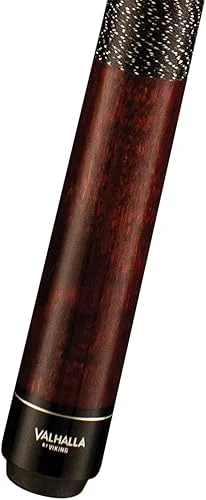
Viking Valhalla 100 Series (~$30)
Most popular beginner cue among our readers. Irish linen wrap at $30 is unheard of. 18–21 oz options, 13mm tip, solid construction with excellent quality control—plays far above its price.
Check Price on Amazon →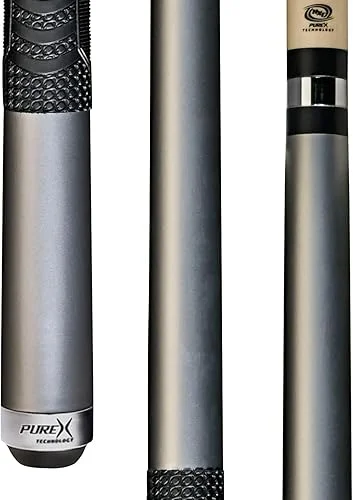
PureX Technology Pool Cue (~$75)
Low-deflection technology at under $100 (rare). Same parent company as Lucasi and Players. 12.75mm tip gives more precision on off-center hits—fewer frustrating misses while learning english.
Check Price on Amazon →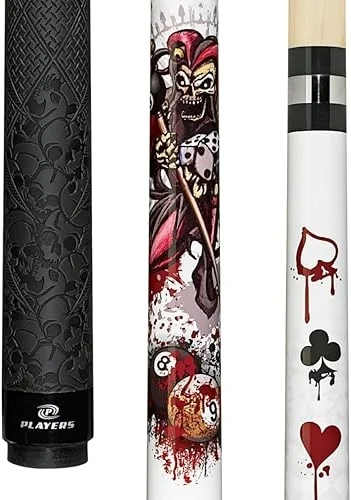
Players G-2401 (~$65)
Players’ entry-level cue—straight and balanced right out of the box. 18 oz, 13mm tip, plastic wrap. Plastic wrap instead of linen, but excellent quality control.
Check Price on Amazon →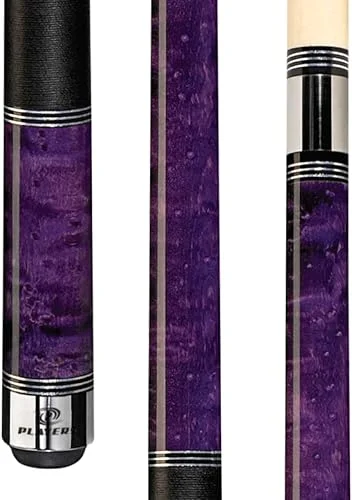
Players G-3401 (~$120)
Step up from G-2401 with noticeably better construction. 19 oz (perfect weight), 13mm tip, solid maple, Irish linen wrap, moderate taper. You get 80% of a $300 cue at this price.
Check Price on Amazon →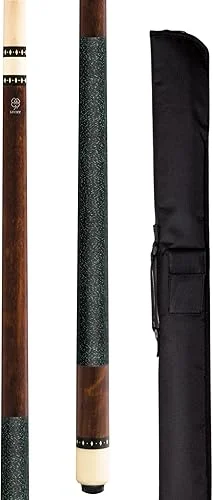
McDermott ES-1 (~$150)
McDermott’s reputation and quality control at entry level. 19 oz, 13mm tip, solid maple, leather wrap. Beautiful finish—looks and feels premium. If you fall in love with the McDermott feel and want to level up later, their G-Series and Star lines are worth a look.
Check Price on Amazon → Browse McDermott Cues at Billiard & Pool Center →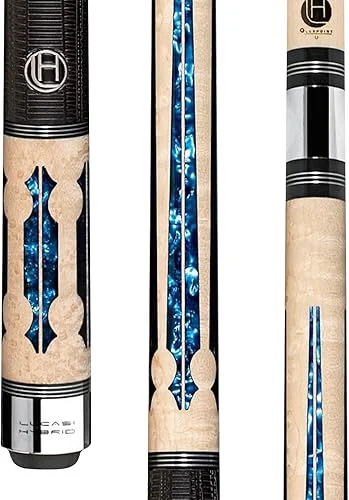
Lucasi Hybrid LH7 (~$180)
Lucasi’s reputation for straightness is legendary. 18.5 oz, hybrid construction, Irish linen wrap, plays extremely consistent. Performs like a cue costing $100 more. The Hybrid line goes deep—once you outgrow the LH7, you’ve got a clear upgrade path without switching brands.
Check Price on Amazon → Browse Lucasi Hybrids at Billiard & Pool Center →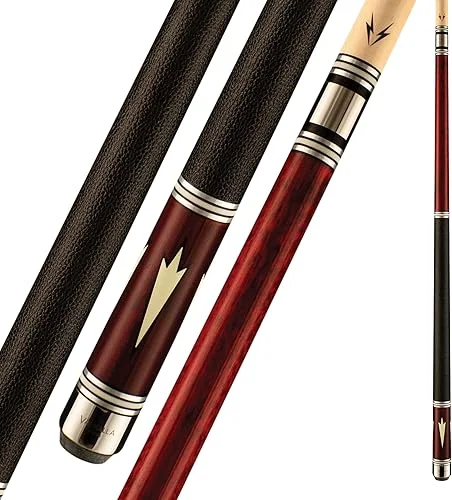
Viking A200 (~$140)
Tournament-quality Viking at beginner price. 18.5–19 oz options, 13mm tip, solid maple. Nylon wrap, extremely well-balanced, excellent straightness.
Check Price on Amazon →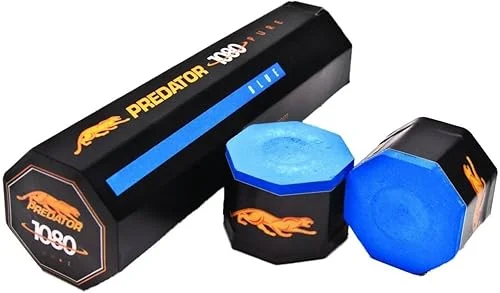
Predator Roadline (~$200)
Luxury brand entry point with Predator’s signature shaft technology. 18.5 oz, 13mm tip, leather wrap, modern looks. Predator shafts have a distinctive feel—not for everyone.
Check Price on Amazon →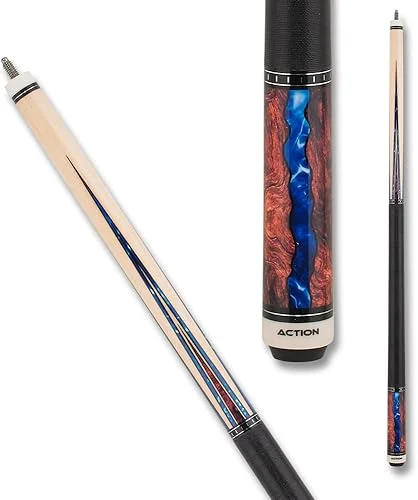
Action Advantage AAD-1 (~$55)
Basic but honest—18.75 oz, 13mm tip, plastic wrap, standard joint. Surprisingly playable for the price, though Players G-2401 ($10 more) feels substantially better.
Check Price on Amazon →Recommended Brands: Building Your Knowledge
Players Cues
Reputation: The budget king. Players consistently offers massive value without sacrificing quality.
Best for: Anyone watching their wallet but wanting real quality.
Why Beginners Love It: You can afford to buy a decent cue instead of renting at the bar, without guilt if you ding it.
McDermott
Reputation: American premium brand. Solid construction, beautiful finishes, consistent quality.
Best for: Beginners who want to feel like they invested in something special.
Why Beginners Love It: Builds confidence. You feel like you’re holding a real cue. Browse McDermott cues at Billiard & Pool Center for their full lineup—they carry models Amazon doesn’t.
Lucasi
Reputation: Known for straightness and consistency. High-quality construction without premium pricing.
Best for: Players who prioritize performance over aesthetics.
Why Beginners Love It: Performance-focused without being pretentious. Improves your game faster. Browse Lucasi Hybrids at Billiard & Pool Center when you’re ready to step up.
Viking
Reputation: Scandinavian quality. Tournament-grade cues at semi-accessible prices.
Best for: Beginners who want to skip steps and play with serious equipment.
Why Beginners Love It: You feel like you’re using a pro cue. Because you kind of are.
Predator
Reputation: The luxury brand. Premium prices, high-tech shafts, distinctive feel.
Best for: Serious players who plan to go competitive.
Why Beginners Should Be Careful: Overkill for most beginners. The high price isn’t always necessary to improve.
Common Beginner Mistakes When Buying (Detailed)
Mistake #1: Buying Based on Looks Alone
That cue with the fancy inlays and exotic wood? Stunning. But if the shaft isn’t straight or the balance is off, you’re paying for beauty, not playability.
Solution: Test the cue in hand. Sight down it. Shoot a few practice shots. Looks are secondary.
Mistake #2: Confusing Weight with Power
“I need a heavy cue to break better.” Wrong. Your technique breaks the balls, not weight. A too-heavy cue actually makes it harder to control the cue ball.
Solution: Stick to 18–19 oz. Learn to break with technique, not brute force.
Mistake #3: Ignoring the Tip
A bad tip ruins everything. Some budget cues come with tips that can’t hold shape. They mushroom, scratch the cloth, and make English nearly impossible.
Solution: If buying used, ask about the tip specifically. If buying new, check that the tip is firm and level.
Mistake #4: Not Considering Your Playing Style
Some players love a whippy, responsive shaft. Others want solid feedback. Your style should influence your choice.
Solution: If possible, try before you buy. Ask experienced players at your local pool hall what they use.
Mistake #5: Underestimating Joint Quality
A loose joint means the cue will flex unpredictably where the butt and shaft meet. This kills consistency.
Solution: Gently twist the joint when assembled. It should barely move. Some play is normal, but it should feel solid.
Quick Comparison
| Cue | Price | Weight | Tip Size | Best For |
|---|---|---|---|---|
| Viking Valhalla 100 | ~$30 | 18-21 oz | 13mm | Try-before-commit |
| Players G-2401 | ~$65 | 19 oz | 13mm | Budget-friendly |
| PureX Technology | ~$75 | 18.5 oz | 12.75mm | Smartest buy |
| Players G-3401 | ~$120 | 19 oz | 13mm | Top overall pick |
| McDermott ES-1 | ~$150 | 19 oz | 13mm | Premium feel |
| Lucasi Hybrid LH7 | ~$180 | 18.5 oz | 11.75mm | Performance focus |
Frequently Asked Questions
Q: Should I buy a one-piece or two-piece cue?
A: Two-piece. One-piece cues look cool and play great, but they’re harder to store, transport, along with protect. Two-piece is standard for good reason.
Q: What’s the difference between a “break cue” and a “playing cue”?
A: Break cues are shorter, more rigid, and designed to take the impact of breaking. Playing cues are longer and more flexible. Most beginners use one cue for both (it’s fine), but serious players keep separate cues.
Q: Do I need to buy a case?
A: Not immediately, but soon. A good soft case ($30–50) protects your investment and makes transport easy. Cues left loose in a car get warped.
Q: How often do I need to replace the tip?
A: With normal play, a good tip lasts 1–2 years. Heavy players replace every 6–12 months. You’ll know when it’s time. Tthe tip will mushroom or won’t hold chalk.
Q: Can I try a friend’s cue first?
A: Absolutely. In fact, I recommend it. Borrowing a variety of cues helps you understand what weight, balance, along with feel you prefer.
Q: Will I eventually need to upgrade?
A: Maybe. If you fall in love with pool and play regularly, you might want a $300–500 cue in 2–3 years. But a good $100–150 beginner cue will never feel “wrong”. Iit’ll just feel less fancy than a pro cue.
Q: Are expensive cues worth it for beginners?
A: Not really. The jump from a $70 cue to a $150 cue is huge. The jump from $150 to $500? Much smaller. Master the basics first.
Q: What’s “ferrule” and does it matter?
A: The ferrule is the small ring at the tip of the shaft that holds the tip in place. Quality ferrules are durable and maintain their finish. Cheap ferrules crack or chip. On beginner cues, it’s not deal-breaker, but nicer is better.
Q: Should I condition my leather wrap?
A: Yes, occasionally. Leather can dry out and crack. A light leather conditioner once or twice a year keeps it supple. It’s not mandatory for casual players, but it extends life.
Q: Can I use my cue for trick shots and jumping?
A: Theoretically yes, but trick shots and jumps are hard on a cue. If you plan to do a lot of this, consider a dedicated cue, or just accept your main cue will show wear.
Final Verdict: What Should You Actually Buy?
Here’s the short version:
Just getting started? Not sure you’ll stick with it? Get the Viking Valhalla 100 , Check Price on Amazon (~$30). Thirty bucks. Irish linen wrap. Plays way above its price. This is the cue our readers buy most, and they keep coming back to the site for more gear — which tells me they stuck with the game.
Ready to invest in something you’ll keep for years? The PureX Technology (~$75) is the smartest money in the $50-100 range. Low-deflection tech at this price is hard to find anywhere else.
Want the safe, proven choice? Players G-3401 (~$120). Solid construction, good weight, nice wrap. Zero risk of disappointment.
Want to feel like you invested in something special? McDermott ES-1 (~$150). The name, the finish, the leather wrap. Confidence matters at the table.
Performance above everything? Lucasi Hybrid LH7 (~$180). Plays like a $300 cue. Straight, consistent, no nonsense.
Already know you’re going all in? Skip the beginner tier entirely and shop the full catalogs at Billiard & Pool Center—they carry 400+ cues from McDermott, Lucasi, Meucci, Pechauer, and more, with free shipping over $99.
Conclusion
Your cue is a tool. It should get out of the way and let you practice the fundamentals — stance, bridge, stroke, shot selection. A $30 Valhalla does that. A $180 Lucasi does that. Everything on this list does that.
Buy something from a real cue maker, not a department store. Stay in the $30-200 range. Prioritize straightness and how it feels in your hand. If you can, try a friend’s cue before buying.
Then stop reading gear reviews and go shoot some pool. In a year or two, you’ll know exactly what you want in your next cue.
Good luck out there. I’ll see you at the tables.
Related Articles
For more on this topic, check out pool cue reviews, best pool cues under $100, best pool cues for the money, best pool cue brands, and what a good cue costs.
The #1 recommendation from this guide — chosen for quality, value, and real-world performance.