

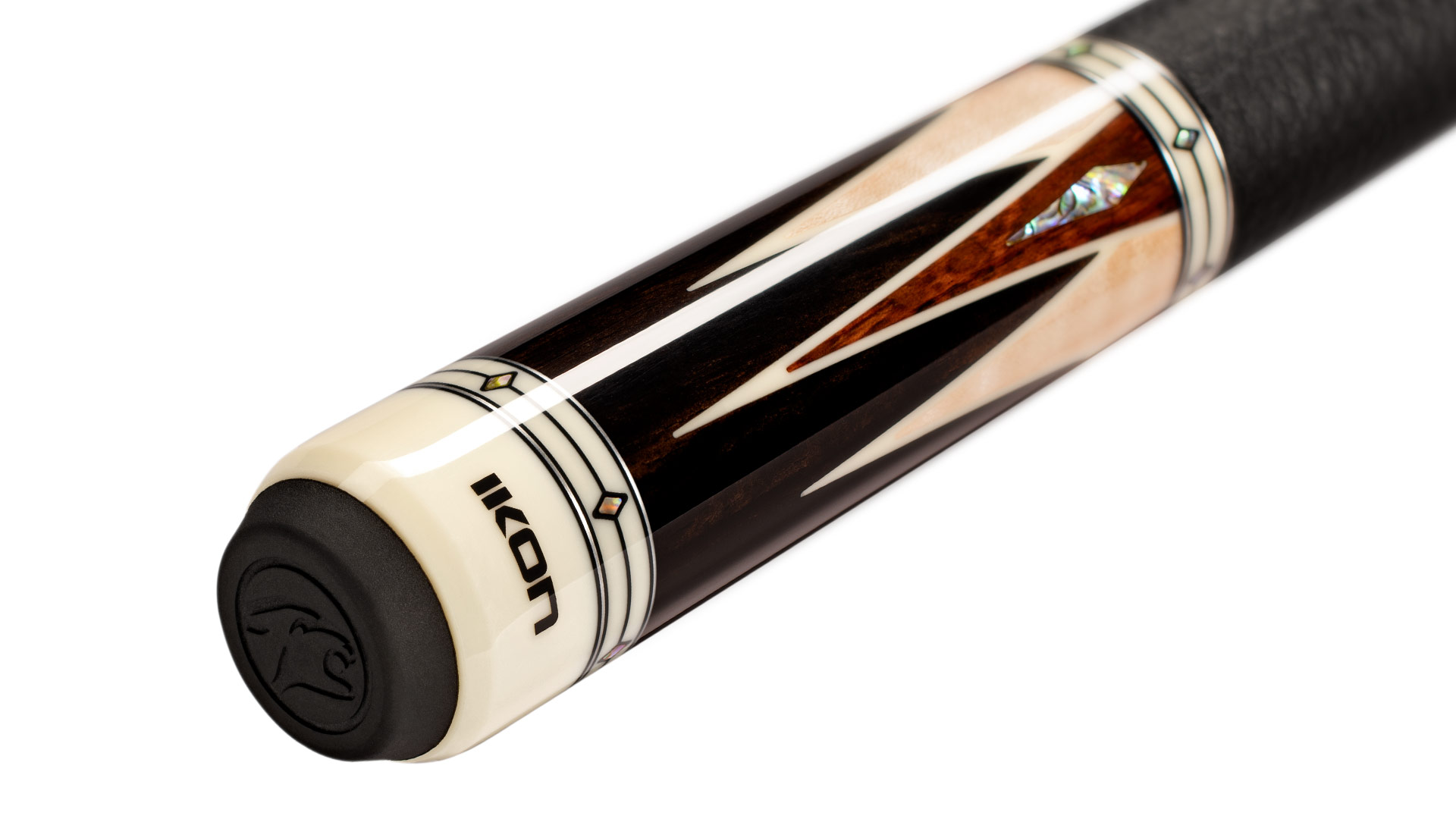
The Cuetec Cynergy ($200-350 complete cue) is the best carbon fiber pool cue for the money in 2026. It gives you a full carbon fiber shaft and butt for less than what most brands charge for the shaft alone. If you want the industry standard trusted by thousands of pros, grab the Predator REVO shaft ($400-500)—that’s the safe pick. The Collapsar CXL500 ($150-200) proves you don’t need a big brand logo either. A straight, warp-proof shaft is all that matters.
Here’s every cue compared:
| Cue | Price | Type | Deflection | Made In | Best For |
|---|---|---|---|---|---|
| Cuetec Cynergy | $200-350 | Complete cue | Low | USA-designed | Best value overall |
| Collapsar CXL500 | $150-200 | Complete cue | Low | China | Budget carbon fiber |
| Jacoby Black | $300-400 | Shaft only | Very low | USA (Wisconsin) | Hand-wrapped quality |
| Mezz Ignite | $350-450 | Shaft only | Very low | Japan | Precision engineering |
| Predator REVO | $400-500 | Shaft only | Lowest | USA-designed | Industry standard |
But they cost $200 to $800. So which ones are actually worth it?
The quick take
The Predator REVO ($400-500 shaft) is the standard everyone measures against. Thousands of players use them. They work. If you want the safest pick, buy that.
The Cuetec Cynergy ($200-350 complete cue) is the actual best value. Solid carbon fiber shaft and butt for less than a REVO shaft alone. That’s not a typo.
The Collapsar CXL500 ($150-200) proves you don’t need a big brand logo. Plays straight, stays straight.
If you want something different: the Mezz Ignite ($350-450) and Jacoby Black ($300-400) are both underrated. Mezz is Japanese precision engineering. Jacoby is hand-wrapped in Wisconsin.
Most players don’t need carbon fiber. If you play once a week, stick with wood. If you’ve been frustrated by shaft warp, humidity swings, or tip deflection, carbon fiber solves those things. But be ready for the hit feel to be different.
Carbon fiber vs wood: what actually changes
Wood shafts warp. Not dramatically. A couple millimeters over a few years, usually from humidity swings. Carbon fiber doesn’t. It stays straight in a basement, stays straight in a garage, stays straight if you live where the seasons actually change.
The hit feels different. Carbon fiber sounds like you’re hitting a rubber ball. Maple sounds more wooden, more organic. Some players prefer carbon fiber’s feedback. You feel the strike crisper. Other players hate it and want to switch back after a week.
Deflection is lower. A 13mm maple shaft at 50 mph deflects about 1.6 inches off the center line. Most carbon fiber shafts are around 0.9 inches. That matters if you’re playing position and need the cue ball to go exactly where you’re aiming. It doesn’t matter much if you’re playing 9-ball and you’re breaking balls every shot anyway.
The maintenance is honestly better. Wipe a carbon fiber shaft down and you’re done. Maple needs shaft conditioner, needs to be stored properly, needs babying. Carbon fiber is indestructible in normal use.
The ferrule and tip still wear out normally. A leather tip lasts 6-12 months depending on how much you play. The ferrule lasts 3-5 years before it gets loose or damaged. Neither of those problems is related to the carbon fiber. They’re just cue math.
The cues, ranked
Predator REVO Shaft (~$400-500)
The REVO is not the newest Predator shaft (the REVO MAX came out a few years ago). But the original REVO is still the most-played carbon fiber shaft in pool halls and tournaments. It’s what players measure all other shafts against. That track record means something.
It shoots straight. Deflection is low. The feel is crisp without being harsh. If you buy a REVO, you’re not taking a risk. You’re joining 50,000 other players who already made this choice and never looked back.
The downside is price. You’re paying for the name. The shaft itself doesn’t feel $400 better than a Cuetec Cynergy. It feels maybe 10% better. But that 10% compounds over time if you play seriously.
Check Price on Amazon →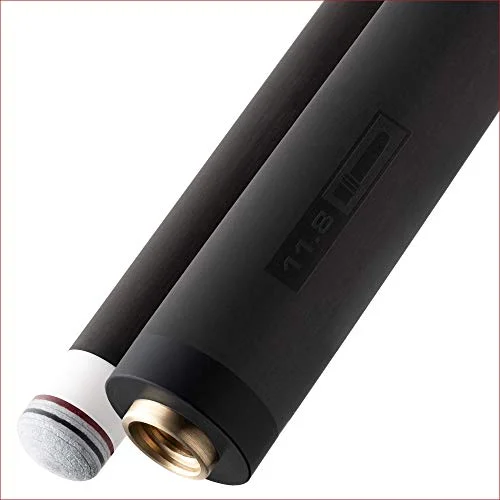
Cuetec Cynergy (~$200-350)
Cuetec figured out how to make carbon fiber cheap. The Cynergy is a complete cue (shaft and butt together) with a carbon fiber shaft that plays nearly identical to the Predator REVO. Deflection is 0.88 inches. The REVO is 0.86. That difference is not noticeable when you’re playing.
You get the whole package. No need to buy a separate butt. The wrap is decent. The balance is right. It’s a finished cue that you unbox and play.
The hit feel is slightly less crisp than the REVO. It’s more forgiving. If you mishit slightly, you feel it less. Some players like that. Others prefer the REVO’s sharper feedback.
This is the cue to buy if you want carbon fiber but don’t want to spend $800 on a complete Predator setup. You’re getting 95% of the performance for 50% of the price.
Check Price on Amazon →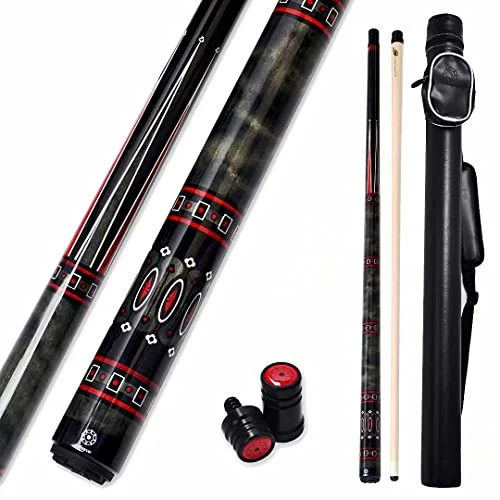
Collapsar CXL500 (~$150-200)
Collapsar is not Predator. There’s no heritage here. But the CXL500 is a working carbon fiber shaft that costs $150-200 and does exactly what you need it to do: stay straight and not warp.
Deflection is higher than the premium shafts (around 1.15 inches). You notice that in bank shots and kick shots where precision matters. In regular play, you probably won’t. The hit feel is decent. Not as crisp as the REVO, but not mushy either.
The wrap looks cheap. The butt is plain. It’s the cue equivalent of a Honda Civic. No style points, but it runs forever. Players use these in league matches. They break with them. Some keep them for five years.
This is the right choice if you want to try carbon fiber without committing $400. If you hate it, you’ve only lost $200. If you love it, you can upgrade to a Predator or Mezz later.
Check Price on Amazon →Mezz Ignite (~$350-450)
Mezz makes cue shafts in Japan and actually obsesses over the details. The Ignite is a shaft only. You’ll need to buy a butt separately unless you already have one you like. But if you do, this is worth trying.
The deflection is 0.91 inches (between the Cuetec and the REVO). The hit is quieter, softer. Some players describe it as more “liquid” than the Predator’s crisp feedback. It’s harder to explain than it is to feel.
Mezz doesn’t have Predator’s marketing budget. Most American pool players have never heard of them. But in Japan and Europe, Mezz is considered equal or better than Predator in terms of engineering. They’re simply quieter about it.
If you already have a butt you like and you want to try something that’s not the REVO, the Ignite is the move. It plays different in a way you might prefer.
Check Price on Amazon →Jacoby Black Carbon Fiber (~$300-400)
Jacoby Cues are made in Wisconsin by people who’ve been wrapping cue shafts for decades. The Black Carbon Fiber is their answer to the Predator REVO. It’s hand-wrapped, not mass-produced in a factory.
Does hand-wrapping matter? In terms of performance, probably not. But in terms of quality control, absolutely. Every Jacoby shaft gets more attention than every 10,000th Predator shaft rolling off a line. You notice that in the finish and the feel.
Deflection is 0.93 inches, right in the sweet spot. Not as low as the REVO, but good enough that position players won’t complain. The hit is solid and direct. Very American, very straightforward.
This is the shaft to buy if you want to support a small American manufacturer and get a quality product at the same time. It’s not cheaper than the REVO, but you’re paying for the craftsmanship, not the logo.
Check Price on Amazon →Shaft only vs complete cue: which should you buy?
If you already have a cue you like (you love the butt, the wrap, the weight distribution), buy a shaft only. Replacement shafts are available from most manufacturers: Predator makes premium options; Mezz offers precision engineering; Jacoby delivers hand-wrapped quality; Cuetec provides budget-friendly versions. All fit standard joint types. You keep your butt, swap the shaft, and you’re playing carbon fiber in five minutes.
If you don’t have a cue you love, or you want everything new, buy a complete cue. The Cuetec Cynergy is the only complete carbon fiber cue that makes sense in this price range. It’s cheaper than buying a Predator shaft alone and then buying a butt separately.
One caveat: check your joint type. Most cues use 5/16x18. Some use Uni-Loc. Some use Radial. If you’re buying a shaft for an existing cue, you need to match the joint. If you get it wrong, it won’t fit. Most retailers list joint compatibility. If they don’t, ask.
When carbon fiber makes sense (and when it doesn’t)
Carbon fiber is worth buying if:
You play twice a week or more. At that frequency, shaft consistency matters. You want the same feel every session, and carbon fiber delivers that. Wood can warp after three years of regular play.
You break hard. Breaking warms up the wood and introduces stress. Carbon fiber shrugs that off.
You play in variable conditions. If you sometimes play in a cold basement and sometimes in a humid room, carbon fiber is proof against that. Wood’s playing characteristics drift with humidity. Carbon fiber doesn’t care.
You’re serious about position play. Lower deflection means your cue ball goes where you aim. That matters in 9-ball and 8-ball when position is everything.
You want a shaft you can hand down. Carbon fiber won’t degrade. Twenty years from now, it’ll still be straight.
Carbon fiber is probably not worth buying if:
You play once a month. That’s not enough frequency to justify the expense. A good maple shaft will outlast your interest in the game at that pace.
You hate how carbon fiber feels. This is real. Some players play a REVO for two weeks and switch back to wood. Taste is taste. If you’re one of those people, no amount of lower deflection will make you happy.
Quick comparison
| Cue | Price | Type | Deflection | Best For |
|---|---|---|---|---|
| Predator REVO | $400-500 | Shaft | 0.86” | Players who want the standard |
| Cuetec Cynergy | $200-350 | Complete | 0.88” | Budget-conscious buyers |
| Collapsar CXL500 | $150-200 | Complete | 1.15” | First-time carbon fiber |
| Mezz Ignite | $350-450 | Shaft | 0.91” | Players who value quietness |
| Jacoby Black | $300-400 | Shaft | 0.93” | American-made preference |
Frequently asked questions
Is a carbon fiber pool cue better than wood?
It depends on what bugs you about wood. Carbon fiber doesn’t warp, has lower deflection, and needs less maintenance. But some players hate the hit feel. If you’ve been playing with maple your whole life, carbon fiber will feel different for a few weeks.
How long do carbon fiber shafts last?
Basically forever. The carbon fiber itself won’t warp, crack, or degrade from humidity. The ferrule and tip still wear normally. Budget for tip replacements but the shaft itself should outlast you.
Can I put a carbon fiber shaft on my existing cue?
Usually yes if the joint type matches. Predator REVO, Mezz Ignite, and Jacoby all sell shafts that fit common joints (5/316x18, Uni-Loc, Radial, etc.). Check your joint type before buying.
Why are carbon fiber cues so expensive?
The manufacturing process. Wrapping carbon fiber layers around a mandrel, curing under heat and pressure, and finishing to exact tolerances costs more than turning a piece of maple on a lathe. The Cuetec Cynergy is the exception—they figured out a way to make it cheaper.
Do carbon fiber shafts need to be cleaned?
Less than wood, but yes. Wipe down with a damp microfiber cloth after playing. You don’t need shaft cleaners or conditioners. That alone saves money and time.
Related Reading:
The #1 recommendation from this guide — chosen for quality, value, and real-world performance.