

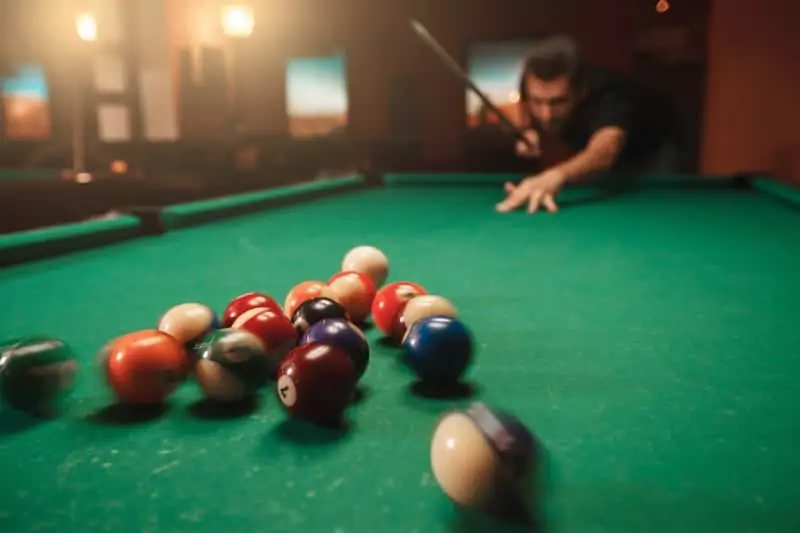
Every time you break with your playing cue, you’re doing damage. Not dramatic, snap-the-shaft damage (usually). Slow, cumulative damage. The ferrule absorbs shock it wasn’t designed for. The tip compresses unevenly. The shaft develops micro-stress fractures that affect straightness over months. One day you notice your playing cue doesn’t hit as true as it used to, and the break is why.
A dedicated break cue costs $75-$200. A replacement shaft for your playing cue costs $150-$300. The math is simple.
If you want to understand the full difference between break cues and playing cues, we have a detailed comparison. This article is about which break cue to buy.
What Makes a Break Cue Different
Break cues are built for one thing: transferring maximum energy into the cue ball on a center-ball hit. Everything about them is optimized for power over finesse.
The shaft is stiffer. Playing cue shafts flex slightly on impact, which gives you feedback and feel. Break cue shafts resist flexing to push more energy forward. Some use carbon fiber, some use reinforced maple with thicker walls. The result is the same: more of your stroke energy reaches the cue ball instead of being absorbed by the shaft.
The tip is hard. Playing tips are soft or medium leather designed to grip the cue ball for spin. Break tips are phenolic resin or hard polymer designed to repel the cue ball with maximum force. A Predator Victory tip (phenolic) transfers roughly 8-12% more energy than a standard leather tip on the same hit, according to Predator’s testing data.
The joint is reinforced. The joint between shaft and butt absorbs the most stress during a break. Break cue joints use heavier hardware and tighter tolerances to prevent loosening over thousands of impacts.
Weight distribution favors the back. Most break cues are slightly butt-heavy compared to playing cues. This encourages a pendulum-style break stroke where the weight of the cue does more of the work, reducing strain on your wrist and forearm.
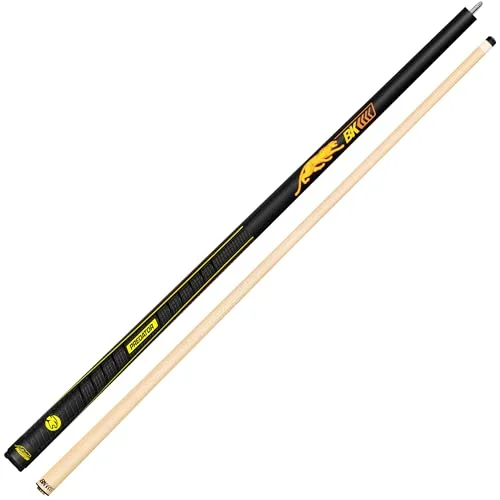
Predator BK Rush ($250-$350)
The Predator BK Rush generates 5-7% higher cue ball speed than maple break cues, which means wider racks and more consistent spreads under tournament pressure. The carbon fiber shaft is immune to humidity warping. This is the break cue you buy once and never think about again.
Check Price on Amazon →Players HXT-BRK ($100-$140)
The Players HXT-BRK handles 90% of what casual and league players need at $100-$140. The stiff maple shaft and phenolic tip produce consistent racks without the premium price tag. Most recreational players won’t notice a meaningful difference between this and a $300 breaker.
Check Price on Amazon →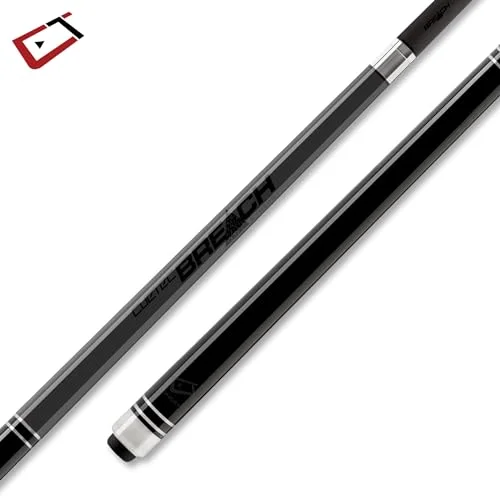
Cuetec Cynergy Breach ($200-$280)
The Cuetec Cynergy Breach uses the same 15K carbon fiber shaft technology as Shane Van Boening’s break cue, delivering similar stiffness to Predator at $50-$75 less. The Tiger Everest tip offers slightly more grip on the cue ball, reducing hop on off-center breaks. The matte grip finish prevents slipping during power strokes.
Check Price on Amazon →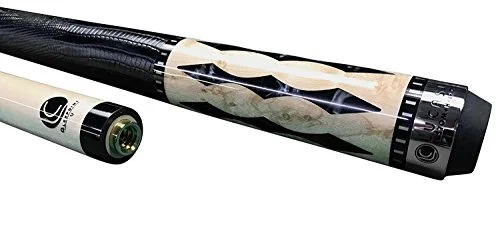
Lucasi Hybrid Break ($75-$120)
The Lucasi Hybrid break cue is the cheapest dedicated breaker worth owning at $75-$120. Stiffened maple shaft with a hard break tip and stainless steel joint pays for itself after saving your playing cue from about 500 breaks—roughly 6-8 months of weekly league play.
Check Price on Amazon →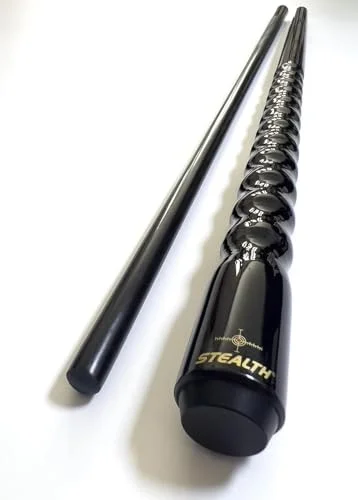
Poison VX-BRK ($150-$200)
The Poison VX-BRK uses the same phenolic tip as Predator’s premium models with a carbon-core maple shaft at $150-$200. Uni-Loc joint compatibility works with Predator cue ecosystem. It’s the pick for players who want near-Predator break performance without the full price tag.
Check Price on Amazon →Quick Comparison
| Break Cue | Price | Shaft | Tip | Weight | Best For |
|---|---|---|---|---|---|
| Predator BK Rush | $250-350 | Carbon fiber | Phenolic | 18-21 oz | Tournament players |
| Players HXT-BRK | $100-140 | Stiff maple | Phenolic | 19-21 oz | Best value |
| Cuetec Cynergy Breach | $200-280 | Carbon fiber | Tiger Everest | 18-21 oz | Carbon on budget |
| Lucasi Hybrid Break | $75-120 | Stiff maple | Hard break | 19 oz | Budget dedicated |
| Poison VX-BRK | $150-200 | Carbon core maple | Phenolic | 19-21 oz | Mid-range power |
How to Break Better (Regardless of Cue)
The cue is half the equation. Mechanics are the other half.
Hit the head ball as full as possible. A lot of players try to cut the rack or hit the second ball. In 8-ball and 9-ball, a full hit on the 1-ball with center cue ball produces the widest, most consistent spread. According to Dr. Dave Billiards (the deepest physics-of-pool resource on the internet), a full hit transfers 96% of the cue ball’s kinetic energy versus 70% for a half-ball hit.
Grip the cue loosely. A death grip on the butt creates tension in your forearm that slows your stroke. The fastest break strokes come from a relaxed grip that tightens naturally at the moment of impact. Think about throwing a ball: you don’t squeeze the ball, you accelerate through the release.
Stand closer than you think. Most players stand too far back on the break, which forces a longer stroke and introduces accuracy problems. Moving 6-8 inches closer shortens the stroke, keeps your bridge more stable, and often increases cue ball speed because the shorter stroke has less time to go off-line.
Follow through. The cue tip should finish 4-6 inches past where the cue ball was. A punched or stabbed break (stopping at contact) wastes 15-20% of your stroke energy. Let the cue travel through the ball.
Keep your bridge hand flat and solid. Your bridge takes the full recoil of a power break. A wobbly bridge or an elevated bridge lets the shaft bounce on impact, which costs energy and sends the cue ball unpredictably. Use a closed bridge with your hand flat on the cloth for maximum stability. If you’re not sure about bridge technique, our guide on how to hold a pool cue covers the fundamentals.
The Bottom Line
The Players HXT-BRK ($100-$140) is the right break cue for most home and league players. It protects your playing cue and breaks well enough that you won’t blame the equipment. If you play competitively and the break matters to your win rate, the Predator BK Rush ($250-$350) or Cuetec Cynergy Breach ($200-$280) justify their premium with measurably better energy transfer.
Whatever you pick, using a separate break cue is the single cheapest way to extend the life of your playing cue. Your shaft will stay straighter, your tip will last longer, and your game will thank you for it.
The #1 recommendation from this guide — chosen for quality, value, and real-world performance.